In this comprehensive guide for practicing engineers and students, Ertugrul explains the field of renewable energy and distributed generation technologies and describes the transformation occurring in power grids due to the rise of renewable energy sources and emerging technologies.
There is growing interest in the food, supplements, cosmetics, and pharmaceutical industries in improving the healthiness of their products by incorporating lipophilic bioactive substances like oil-soluble vitamins (A, D and E), omega-3 fatty acids, and nutraceuticals (carotenoids, curcuminoids and flavonoids).
This updated version covers the considerable work on research and development to determine elastic properties of materials undertaken since the first edition of 1987.
Although the analysis of scattering for closed bodies of simple geometric shape is well developed, structures with edges, cavities, or inclusions have seemed, until now, intractable to analytical methods.
Although the analysis of scattering for closed bodies of simple geometric shape is well developed, structures with edges, cavities, or inclusions have seemed, until now, intractable to analytical methods.
This textbook provides a thorough presentation of the phenomena related to the transport of mass (with and without electric charge), momentum and energy.
In this audacious book, Ana Maria Ochoa Gautier explores how listening has been central to the production of notions of language, music, voice, and sound that determine the politics of life.
This textbook takes a broad yet thorough approach to mechanics, aimed at bridging the gap between classical analytic and modern differential geometric approaches to the subject.
The revised and enlarged third edition of this successful book presents a comprehensive and systematic treatment of linear and nonlinear partial differential equations and their varied and updated applications.
One of the mathematical challenges of modern physics lies in the development of new tools to efficiently describe different branches of physics within one mathematical framework.
In recent years kinetic theory has developed in many areas of the physical sciences and engineering, and has extended the borders of its traditional fields of application.
This book is devoted to the basic variational principles of mechanics: the Lagrange-D'Alembert differential variational principle and the Hamilton integral variational principle.
The spinor calculus employed in general relativity is a very useful tool; many expressions and computations are considerably simplified if one makes use of spinors instead of tensors.
R In the companion book (Continuum Mechanics Using Mathematica )to this volume, we explained the foundations of continuum mechanics and described some basic applications of ?
Several well-established geometric and topological methods are used in this work in an application to a beautiful physical phenomenon known as the geometric phase.
Direct involvement with the subject area of the present work dates from my years with NASA at its Electronics Research Center (ERC) in Cambridge, M- sachusetts, in the 1960s.
Classical mechanics is a chief example of the scientific method organizing a "e;complex"e;collection of information into theoretically rigorous, unifying principles; in this sense, mechanics represents one of the highest forms of mathematical modeling.
This monograph presents new constructive design methods for boundary stabilization and boundary estimation for several classes of benchmark problems in flow control.
This volume aims to provide an overview of some recent developments of mathematical kinetic theory focused on its application in modelling complex systems in various ?
A century ago, in 1905, Albert Einstein published, "e;On the Electrodynamics of M- ing Bodies,"e; in which the foundations were laid for the Special Theory of Relativity.
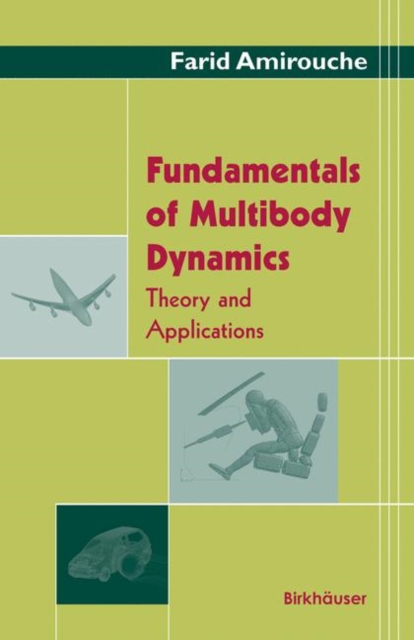
Because of its versatility in analyzing a broad range of applications, multibody dynamics has grown in the past two decades to be an important tool for designing, prototyping, and simulating complex articulated mechanical systems.
After spending over 12 years developing new microsystems for biotechnology - especially concerned with the microfluidic aspects of these devices - Jean Berthier is considered a leading authority in the field.
Offering a wide-range coverage, this book provides fundamentals as well as the applied science and technology involved in the whole hydrogen value chain, including production, storage, transportation, and utilization.
This edited guide to direct liquid fuel cells (DLFCs) provides readers with a detailed discussion of their characteristics, mechanisms, and role in global decarbonization.
This book provides a detailed, global examination of energy transitions, supplying a long-term historical perspective, an up-to-date assessment of recent and near-term advances in energy production technology and implementation, and an explanation of why efforts to limit global warming and to shift away from fossil fuels have been gradual.
Plasma Assisted Combustion and Chemical Processing provides an introduction to the opportunities of plasma-assisted combustion and chemical processing for green energy conversion using renewable electricity.
An authoritative interdisciplinary account of the historic discovery of gravitational wavesIn 1915, Albert Einstein predicted the existence of gravitational waves-ripples in the fabric of spacetime caused by the movement of large masses-as part of the theory of general relativity.
Fluvial-Tidal Sedimentology provides information on the 'Tidal-Fluvial Transition', the transition zone between river and tidal environments, and includes contributions that address some of the most fundamental research questions, including how the morphology of the tidal-fluvial transition zone evolves over short (days) and long (decadal) time periods and for different tidal and fluvial regimes, the structure of the river flow as it varies in its magnitude over tidal currents and how this changes at the mixing interface between fresh and saline water and at the turbidity maximum, the role of suspended sediment in controlling bathymetric change and bar growth and the role of fine-grained sediment (muds and flocs), whether it is possible to differentiate between 'fluvial' and 'tidally' influenced bedforms as preserved in bars and within the adjacent floodplain and what are the diagnostic sedimentary facies of tidal-fluvial deposits and how are these different from 'pure' fluvial and tidal deposits, amongst other topics.