The fifth edition of this well-established, highly regarded two-volume set continues to provide a fundamental introduction to advanced particle physics while incorporating substantial new experimental results, especially in the areas of Higgs and top sector physics, as well as CP violation and neutrino oscillations.
This book describes the computational methods most frequently used to deal with the interaction of charged particles, notably electrons, with condensed matter.
Our current concept of matter, one of scientific research's greatest successes, represents a long journey, from questions posed during the birth of philosophy in Ancient Greece to recent advances in physics and chemistry, including Quantum Physics.
This textbook provides an accessible and self-contained introduction to the physics behind fluid dynamics; exploring the laws of nature describing three out of four fundamental states of matter (liquids, gases, and plasmas).
This updated/augmented second edition retains it class-tested content and pedagogy as a core text for graduate courses in advanced fluid mechanics and applied science.
This book introduces the ideas and concepts of nonlinear dielectric spectroscopy, outlines its history, and provides insight into the present state of the art of the experimental technology and understanding of nonlinear dielectric effects.
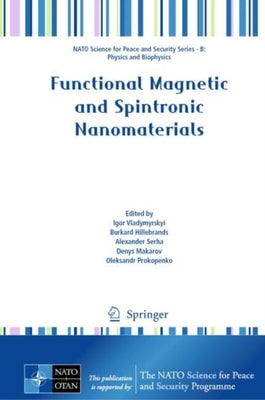
Macroscopic objects made of magnetic materials have been known to mankind for several thousand years and are widely used in various fields of human activity.
This book provides an overview of electrodeposition of nanomaterials from principles to modern concepts for advanced materials in science and technology.
This book is a collection of contributions presented at the 16th annual international symposium "e;Frontiers of Fundamental Physics"e; (FFP16), supported by Istanbul University.
This book provides for the first time an insider's view into ITER, the biggest fusion reactor in the world, which is currently being constructed in southern France.
Granular forms of common materials such as metals and ceramics, sands and soils, porous energetic materials (explosives, reactive mixtures), and foams exhibit interesting behaviors due to their heterogeneity and critical length scale, typically commensurate with the grain or pore size.