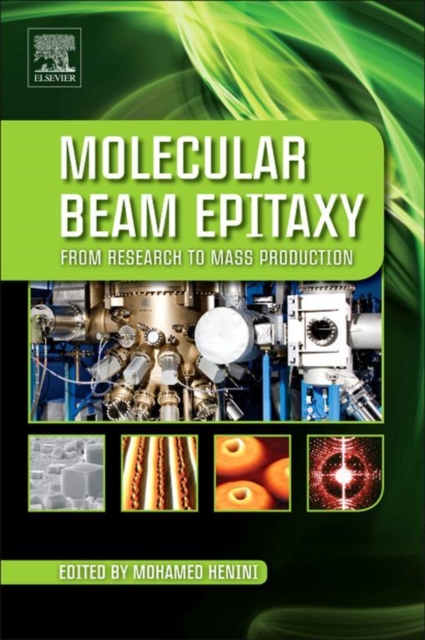
This multi-contributor handbook discusses Molecular Beam Epitaxy (MBE), an epitaxial deposition technique which involves laying down layers of materials with atomic thicknesses on to substrates.
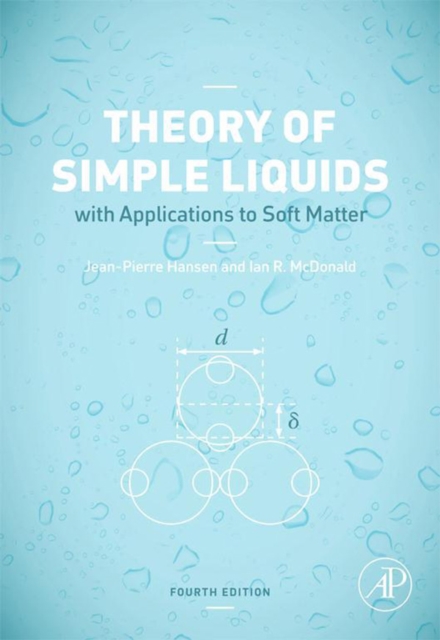
Comprehensive coverage of topics in the theory of classical liquidsWidely regarded as the standard text in its field, Theory of Simple Liquids gives an advanced but self-contained account of liquid state theory within the unifying framework provided by classical statistical mechanics.
This book presents an up-to-date overview on the main classes of metallic materials currently used in aeronautical structures and propulsion engines and discusses other materials of potential interest for structural aerospace applications.
This is the first book to systematically review and summarize the recent rapid advances and varied results of multiphysics in nanoscale materials including elastic strain engineering.
This book focuses on inorganic nanosheets, including various oxides, chalcogenides, and graphenes, that provide two-dimensional (2D) media to develop materials chemistry in broad fields such as electronics, photonics, environmental science, and biology.
As the name suggests this book discusses how nanotechnology has influenced the provision of implant treatment from surgery to prosthetic reconstruction and post treatment biological complications.
The series of books discusses the physics of laser and matter interaction, fluid dynamics of high-temperature and high-density compressible plasma, and kinetic phenomena and particle dynamics in laser-produced plasma.
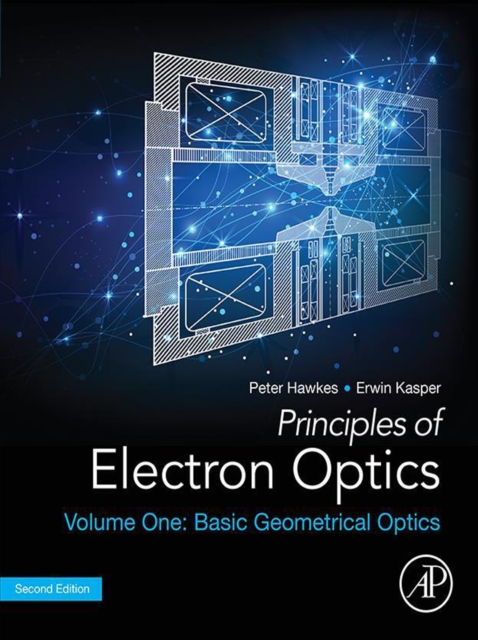
Volume one of Principles of Electron Optics: Basic Geometrical Optics, Second Edition, explores the geometrical optics needed to analyze an extremely wide range of instruments: cathode-ray tubes; the family of electron microscopes, including the fixed-beam and scanning transmission instruments, the scanning electron microscope and the emission microscope; electron spectrometers and mass spectrograph; image converters; electron interferometers and diffraction devices; electron welding machines; and electron-beam lithography devices.
Black Liquor Gasification (BLG) is a first of its kind to guide chemical engineers, students, operators of paper plants, technocrats, and entrepreneurs on practical guidelines and a holistic techno-enviro-economic perspective applicable to their future or existing projects based on the treatment of black liquor for energy production.
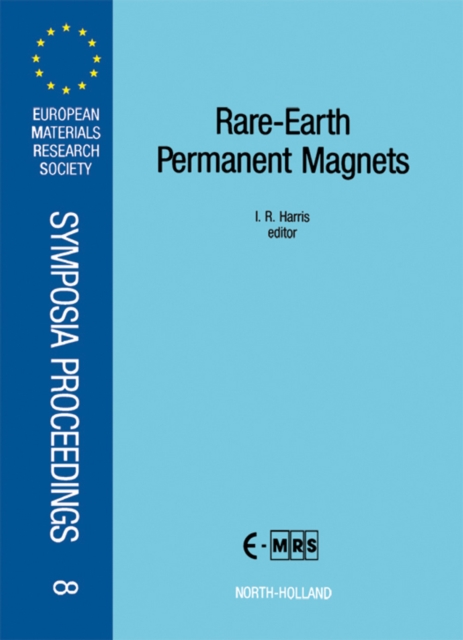
These papers provide an interesting collection of contributions on fundamental magnetic behaviour, microstructural studies, processing methods and applications of rare earth, iron-rich, high performance permanent magnets.
This Second Edition provides solid state scientists, who are not necessarily experts in crystallography, with an understandable and comprehensive guide to the new International Tables for Crystallography.
Widely adopted around the world, Engineering Materials 1 is a core materials science and engineering text for third- and fourth-year undergraduate students; it provides a broad introduction to the mechanical and environmental properties of materials used in a wide range of engineering applications.
This book proposes a completely unique reaction kinetics theory based on the uncertainty principle of quantum mechanics; the physical viewpoint and mathematical details for the theory construction are explained, and abundant applications of the theory mainly in materials science are described.
In recent years, much progress has been made in the understanding of interface dynamics of various systems: hydrodynamics, crystal growth, chemical reactions, and combustion.
The exploding number of uses for ultrafast, ultrasmall integrated circuits has increased the importance of hot-carrier effects in manufacturing as well as for other technological applications.
This book contains the Proceedings of the 25th International Free Electron Laser Conference and the 10th Free Electron Laser Users Workshop, which were held on September 8-12, 2003 in Tsukuba, Ibaraki in Japan.
Although interesting in its own right, due to the ever-increasing use of satellites for communication and navigation, weather in the ionosphere is of great concern.
Cu(In1-xGax)Se2 Based Thin Film Solar Cells provides valuable contents about the fabrication and characterization of chalcopyrite Cu(In1-xGax)Se2 based thin film solar cells and modules.
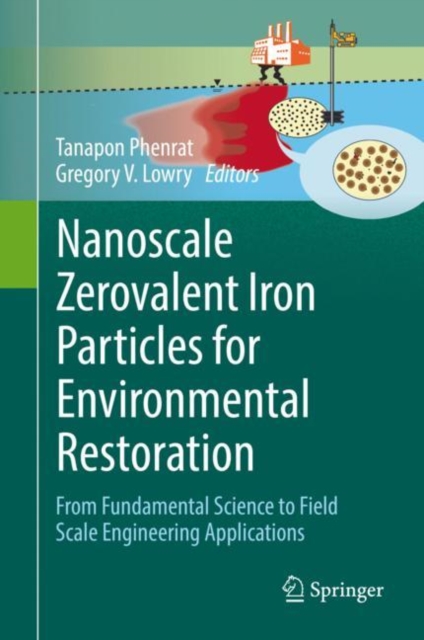
This is the first complete edited volume devoted to providing comprehensive and state-of-the art descriptions of science principles and pilot- and field-scaled engineering applications of nanoscale zerovalent iron particles (NZVI) for soil and groundwater remediation.
In Nucleation in Condensed Matter, key theoretical models for nucleation are developed and experimental data are used to discuss their range of validity.
The explosion of the science of mesoscopic structures is having a great impact on physics and electrical engineering because of the possible applications of these structures in microelectronic and optoelectronic devices of the future.
Solid State Physics, Volume 51 continues the serial's tradition of excellence by focusing on the optical and electronic properties and applications of semiconductors.
Solid State Physics, Volume 50 continues the series' tradition of excellence by focusing on the optical and electronic properties and applications of semiconductors.
Since its inception in 1966, the series of numbered volumes known as Semiconductors and Semimetals has distinguished itself through the careful selection of well-known authors, editors, and contributors.
Since its inception in 1966, the series of numbered volumes known as Semiconductors and Semimetals has distinguished itself through the careful selection of well-known authors, editors, and contributors.
Since its inception in 1966, the series of numbered volumes known as Semiconductors and Semimetals has distinguished itself through the careful selection of well-known authors, editors, and contributors.
Since its inception in 1966, the series of numbered volumes known as Semiconductors and Semimetals has distinguished itself through the careful selection of well-known authors, editors, and contributors.
Defects in ion-implanted semiconductors are important and will likely gain increased importance as annealing temperatures are reduced with successive IC generations.
Since its inception in 1966, the series of numbered volumes known as Semiconductors and Semimetals has distinguished itself through the careful selection of well-known authors, editors, and contributors.
Since its inception in 1966, the series of numbered volumes known as Semiconductors and Semimetals has distinguished itself through the careful selection of well-known authors, editors, and contributors.
This volume contains two articles on topics in materials science of great importance: the thermodynamics of stressed solids, a fundamental problem that goes back to Gibbs, and hydrogen in materials, an area that is both scientifically rich and of great current technological importance.
In pursuit of the objective of the series which is to present considered reviews of areas concerned with quantitative study of organic compounds and their behaviourNphysical organic chemistry in its broadest senseNina manner accessible to a general readership, this twenty-ninth volume contains five contributions on a diversity of topics.