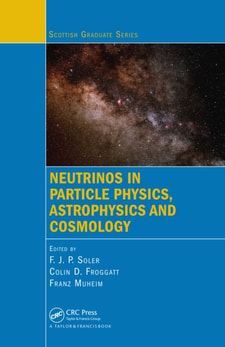
Up to date and comprehensive in its coverage, Neutrinos in Particle Physics, Astrophysics and Cosmology reviews the whole landscape of neutrino physics, from state-of-the-art experiments to the latest phenomenological and theoretical developments to future advances.
Covers the State of the Art in Superfluidity and SuperconductivitySuperfluid States of Matter addresses the phenomenon of superfluidity/superconductivity through an emergent, topologically protected constant of motion and covers topics developed over the past 20 years.
Concepts and Methods in Modern Theoretical Chemistry: Electronic Structure and Reactivity, the first book in a two-volume set, focuses on the structure and reactivity of systems and phenomena.
The tools of nanodiagnostics, nanotherapy, and nanorobotics are expected to revolutionize the future of medicine, leading to presymptomatic diagnosis of disease, highly effective targeted treatment therapy, and minimum side effects.
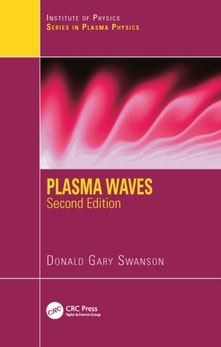
Extended and revised, Plasma Waves, 2nd Edition provides essential information on basic formulas and categorizes the various possible types of waves and their interactions.
Reflecting new developments in the study of Saint-Venant's problem, Classical and Generalized Models of Elastic Rods focuses on the deformation of elastic cylinders for three models of continuum: classical elastic continuum, Cosserat elastic body, and porous elastic material.
Transport phenomena in plasmas are the relatively slow processes of particle momentum and energy transport systems in a state of mechanical equilibrium.
Doped by isovalent or heterovalent foreign impurities (F), II-VI semiconductor compounds enable control of optical and electronic properties, making them ideal in detectors, solar cells, and other precise device applications.
One of the Top Selling Physics Books according to YBP Library ServicesOrder can be found in all the structures unfolding around us at different scales, including in the arrangements of matter and in energy flow patterns.
Assuming no prior knowledge of plasma physics or numerical methods, Computational Methods in Plasma Physics covers the computational mathematics and techniques needed to simulate magnetically confined plasmas in modern magnetic fusion experiments and future magnetic fusion reactors.
Fluid Dynamics via Examples and Solutions provides a substantial set of example problems and detailed model solutions covering various phenomena and effects in fluids.
Through the 'magic' of averages it is shown that Maxwell's equations can be used in a simple way to describe filamentary composites as well as pure bulk superconductors.
Through its inclusion of specific applications, The Mathematical Theory of Elasticity, Second Edition continues to provide a bridge between the theory and applications of elasticity.
Physics: An Introduction to Physical Dynamics provides an accessible introduction to the fundamentals of physics for science and engineering undergraduates who are studying elementary physics.
Straddling the traditional disciplines of nuclear and particle physics, hadron physics is a vital and extremely active research area, as evidenced by a 2004 Nobel prize and new research facilities, such as that scheduled to open at CERN.
Aerospace Materials provides a grounding in state-of-the-art aerospace materials technology, including developments in aluminum, titanium, and nickel alloys, as well as polymers and polymer composites.
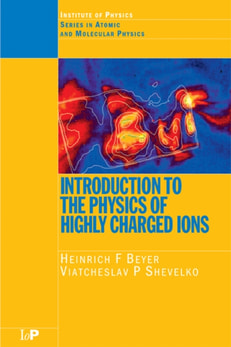
Emphasizing a physical understanding with many illustrations, Introduction to the Physics of Highly Charged Ions covers the major areas of x-ray radiation and elementary atomic processes occurring with highly charged ions in hot laboratory and astrophysical plasmas.
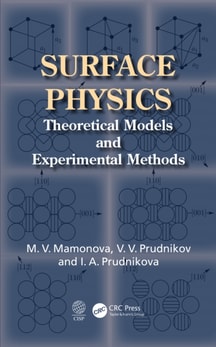
This text describes the physical properties of surfaces and explores modern theoretical and experimental methods for calculating the surface and adhesive characteristics of various materials and coatings.
Providing new insights into the molecular and electronic processes involved in the conversion of sunlight into chemical products, Photoelectrochemical Solar Conversion Systems: Molecular and Electronic Aspects begins with an historical overview and a survey of recent developments in the electrochemistry of semiconductors and spectroscopic technique
Although the origin of Earth's and other celestial bodies' magnetic fields remains unknown, we do know that the motion of electrically conducting fluids generates and maintains these fields, forming the basis of magnetohydrodynamics (MHD) and, to a larger extent, dynamo theory.
At the interface between chemistry, biology, and physics, fullerenes were one of the first objects to be dissected, scanned, and studied by the modern multi-specialty biotech community and are currently thriving in both research and practical application.
Compared to the traditional modeling of computational fluid dynamics, direct numerical simulation (DNS) and large-eddy simulation (LES) provide a very detailed solution of the flow field by offering enhanced capability in predicting the unsteady features of the flow field.
Physics: An Introduction to Physical Dynamics provides an accessible introduction to the fundamentals of physics for science and engineering undergraduates who are studying elementary physics.
Doped by isovalent or heterovalent foreign impurities, II-VI semiconductor compounds enable control of optical and electronic properties, making them ideal in detectors, solar cells, and other precise device applications.
While the macroscopic phenomenon of superconductivity is well known and in practical use worldwide, the current theoretical paradigm for superconductivity suffers from a number of limitations.
The Microtron: Development and Applications is a comprehensive monograph that sums up more than 30 years of research and development in microtron technology and applications and provides a systematic presentation of results from investigations carried out in Russia and abroad.
Exploring recent developments in continuum mechanics, Configurational Forces: Thermomechanics, Physics, Mathematics, and Numerics presents the general framework for configurational forces.
Neutrons, which are a penetrating yet non destructive probe, are ideally suited to studying the structure, organisation and motion of molecules responsible for the physical properties of materials under a variety of conditions.
Despite the vast knowledge accumulated on silicon, germanium, and their alloys, these materials still demand research, eminently in view of the improvement of knowledge on silicon-germanium alloys and the potentialities of silicon as a substrate for high-efficiency solar cells and for compound semiconductors and the ongoing development of nanodevic
Dark Matter: An Introduction tackles the rather recent but fast-growing subject of astroparticle physics, encompassing three main areas of fundamental physics: cosmology, particle physics, and astrophysics.
The theoretical methods of quantum chemistry have matured to the point that accurate predictions can be made and experiments can be understood for a wide range of important gas-phase phenomena.
Soft condensed matter physics, which emerged as a distinct branch of physics in the 1990s, studies complex fluids: liquids in which structures with length scale between the molecular and the macroscopic exist.
Melt quenching-the method of quenching from the liquid state-provides new opportunities for producing advanced materials with a unique combination of properties.