This book provides an intimate look into the lives and careers of five groundbreaking women in solid-state physics: Mildred Dresselhaus, Elsa Garmire, Myriam Sarachik, Gertrude Neumark, and Esther Conwell.
Thoroughly revised and expanded, the Fourth Edition of Chemical Engineering Fluid Mechanics continues to provide a balanced treatment of the basics and applications the practicing chemical engineer needs to know.
Aimed at undergraduates, graduate students, and practicing engineers, this textbook covers the essential principles of organic electronics from its fundamental concepts through to describing archetype devices that exploit the unique properties of the immense materials family of organic semiconductors in use today.
Thoroughly revised and expanded, the Fourth Edition of Chemical Engineering Fluid Mechanics continues to provide a balanced treatment of the basics and applications the practicing chemical engineer needs to know.
This book provides an intimate look into the lives and careers of five groundbreaking women in solid-state physics: Mildred Dresselhaus, Elsa Garmire, Myriam Sarachik, Gertrude Neumark, and Esther Conwell.
This book provides an advanced-level exploration of lead-free perovskite materials, covering their synthesis, structural and electronic properties, and diverse applications.
Scientists are increasingly finding themselves engaged in research problems that cross the traditional disciplinary lines of physics, chemistry, biology, materials science, and engineering.
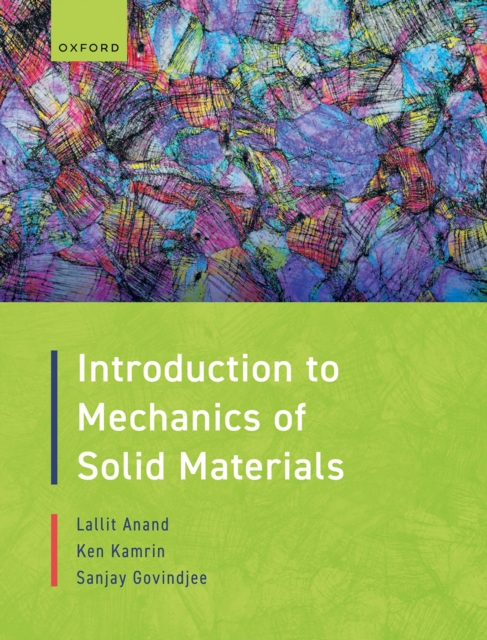
The coupled response of solid materials to multiple fields, such as deformation, heat, electricity, and magnetism, plays a crucial role in modern engineering applications, from soft robotics to energy storage.
The central focus of this textbook is the elucidation of the interplay between the principle of stationary action and Schrodinger's equation, and its solution using the finite element method (FEM), a method of solving differential equations, in physical systems whose dimensions are on the order of nanometers.
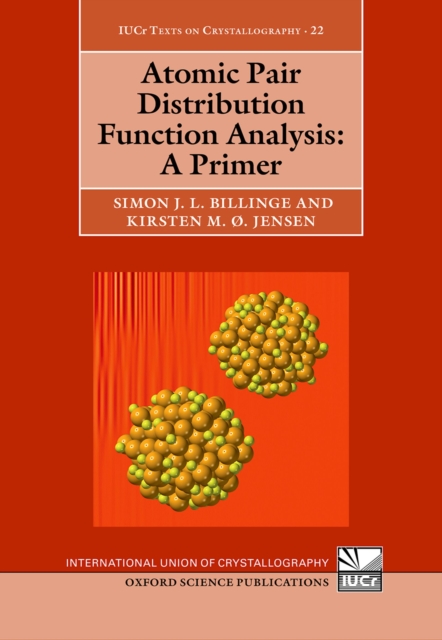
Since the early 1990s the atomic pair distribution function (PDF) analysis of powder diffraction data has undergone something of a revolution in its ability to do just that: yield important structural information beyond the average crystal structure of a material.
Embark on a fascinating exploration of molecular dynamics, which combines the authors' new probabilistic interpretation with cutting-edge simulations, some of which are performed on the largest supercomputers on our planet.
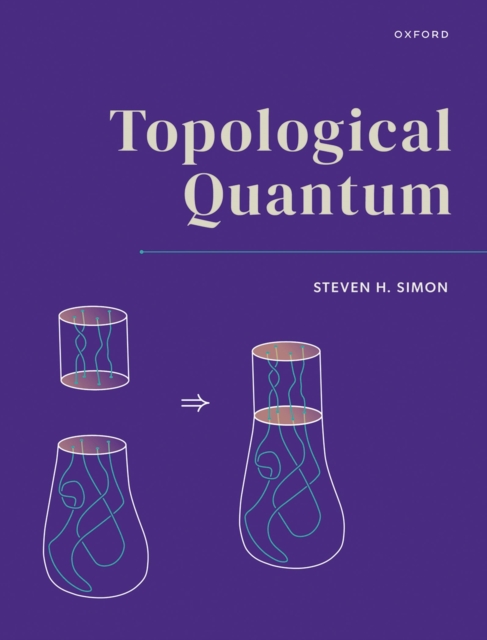
Quantum information- the subject- is a new and exciting area of science, which brings together physics, information theory, computer science and mathematics.
Aimed primarily at experimental chemists, physicists, electronic engineers and material scientists interested in particulate and granular magnetic materials, this textbook is the culmination of over 40 years' research into the subject.
The second edition of Introduction to Microfluidics captures all the new exciting developments in the field of microfluidics over the last twenty years.
The electrical properties of materials are fundamental to many devices encountered in daily life and in today's industry, ranging from the semiconductors used in microelectronics to the dielectric materials in liquid crystal displays, the magnetic materials in the motors of electric cars and the superconducting materials in MRI scanners.
This book provides an advanced-level exploration of lead-free perovskite materials, covering their synthesis, structural and electronic properties, and diverse applications.
This book presents a detailed theoretical and experimental overview of electron field emission phenomena from carbon-based nanostructures and discusses many promising applications in different areas of technology.
This book presents a detailed theoretical and experimental overview of electron field emission phenomena from carbon-based nanostructures and discusses many promising applications in different areas of technology.
Volume II of the second edition, subtitled Beyond Semi-Classical Concepts, expands the description of x-rays into the framework of quantum optics, rooted in the full theory of light and matter: quantum electrodynamics (QED).
Volume II of the second edition, subtitled Beyond Semi-Classical Concepts, expands the description of x-rays into the framework of quantum optics, rooted in the full theory of light and matter: quantum electrodynamics (QED).
This beginner-friendly guide takes readers on a journey to transform raw sand into advanced microchips, explaining every step in clear, simple language.
This beginner-friendly guide takes readers on a journey to transform raw sand into advanced microchips, explaining every step in clear, simple language.
This book presents peer reviewed articles from the 3rd International Conference on Recent Advances in Fluid Mechanics and Nanoelectronics—ICRAFMN-2025, held from 29th to 31st October at Bangkok in Thailand.