This volume is a compilation of works which, taken together, give a complete and consistent presentation of instanton calculus in non-Abelian gauge theories, as it exists now.
In recent years, there has been considerable growth in research activities related to spin phenomena in high energy physics and their theoretical interpretations.
In this volume, topics are drawn from field theory, especially gauge field theory, as applied to particle, condensed matter and gravitational physics, and concern a variety of interesting subjects.
This book consists of a collection of carefully selected review papers and lecture notes written by the author on Perturbative Quantum Chromodynamics (PQCD) and its experimental tests.
This volume of important papers by one the world's leading astrophysicists provides a sweeping survey of the incisive and exciting applications of nuclear and particle physics to a wide range of problems in astrophysics and cosmology.
In view of the rapid growth in both experimental and theoretical studies of multiphoton process and multiphoton spectroscopy of atoms, ions and molecules in chemistry, physics, biology, materials science, etc.
Modern particle accelerators and storage rings, whether used for high-energy physics, synchrotron light sources, or other purposes, require particle beams with the highest possible intensity.
This is an expanded version of the report by the Electroweak Symmetry Breaking and Beyond the Standard Model Working Group which was contributed to Particle Physics - Perspectives and Opportunities, a report of the Division of Particles and Fields Committee for Long Term Planning.
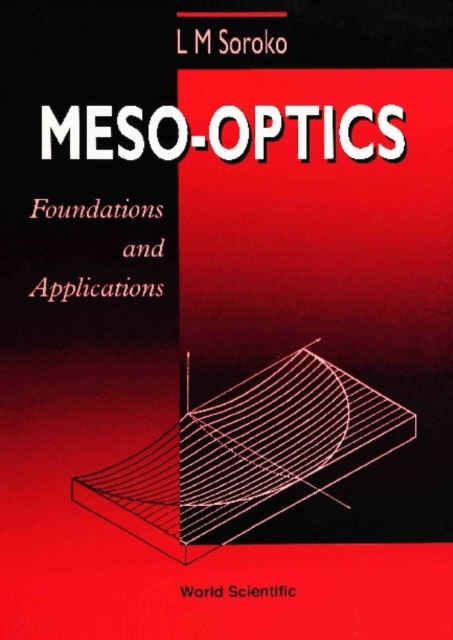
The monograph covers various meso-optical elements, diffraction free light beams, localized electromagnetic fields, gravitational lens, meso-optical devices for transportation of the synchrotron radiation, meso-optical microscopes for high energy elementary particle physics, and the history of meso-optics.
Modulation spectrometry of neutrons refers to a measuring principle, characterized by classification of neutron histories in a probabilistic way, not the usual deterministic way.
This book discusses all three formalisms used in the study of finite temperature field theory, namely the imaginary time formalism, the closed time formalism and thermofield dynamics.
This monograph surveys the role of some associative and non-associative algebras, remarkable by their ubiquitous appearance in contemporary theoretical physics, particularly in particle physics.
The purpose of this book is to give a description of the state of the art in theoretical and experimental work achieved in radiation source development.
To honour W C Rontgen and review the entire area of X-ray development in the various fields of natural, technical, and life sciences, his successors at the Physikalisches Institut of the Universitat Wurzburg organized a conference, named "e;Rontgen Centennial"e;.
The phase structure of particle physics shows up in matter at extremely high densities and/or temperatures as they were reached in the early universe, shortly after the big bang, or in heavy-ion collisions, as they are performed nowadays in laboratory experiments.
This volume is a natural continuation of the book Algebraic Renormalization, Perturbative Renormalization, Symmetries and Anomalies, by O Piguet and S P Sorella, with the aim of applying the algebraic renormalization procedure to gauge field models quantized in nonstandard gauges.
Edited by internationally recognized authorities in the field, this expanded edition of the bestselling Handbook first published in 1999 is aimed at the design and operation of modern accelerators including Linacs, Synchrotrons and Storage Rings.
In view of the rapid growth in both experimental and theoretical studies of multi-photon processes and multi-photon spectroscopy of atoms, ions and molecules in chemistry, physics, biology, materials science, etc.