An Introduction to Tensors and Group Theory for Physicists provides both an intuitive and rigorous approach to tensors and groups and their role in theoretical physics and applied mathematics.
Several well-established geometric and topological methods are used in this work in an application to a beautiful physical phenomenon known as the geometric phase.
In modern theoretical physics, gauge field theories are of great importance since they keep internal symmetries and account for phenomena such as spontaneous symmetry breaking, the quantum Hall effect, charge fractionalization, superconductivity and supergravity.
A century ago, in 1905, Albert Einstein published, "e;On the Electrodynamics of M- ing Bodies,"e; in which the foundations were laid for the Special Theory of Relativity.
Themainobjectiveofthisbookistogiveacollectionofcriteriaavailablein the spectral theory of selfadjoint operators, and to identify the spectrum and its components in the Lebesgue decomposition.
Interwoven within our semiconductor technology development had been the development of technologies aimed at identifying, evaluating and mitigating the environmental, health and safety (EH&S) risks and exposures associated with the manufacturing and packaging of integrated circuits.
This book provides a comprehensive review of the primary industrial hygiene topics relevant to semiconductor processing: chemical and physical agents, and ventilation systems.
Wide bandgap semiconductors, made from such materials as GaN, SiC, diamond, and ZnSe, are undergoing a strong resurgence in recent years, principally because of their direct bandgaps, which give them a huge advantage over the indirect gap Sic As an example, more than 10 million blue LEDs using this technology are sold each month, and new, high brightness (15 lumens per watt), long-life white LEDs are under development with the potential to replace incandescent bulbs in many situations.
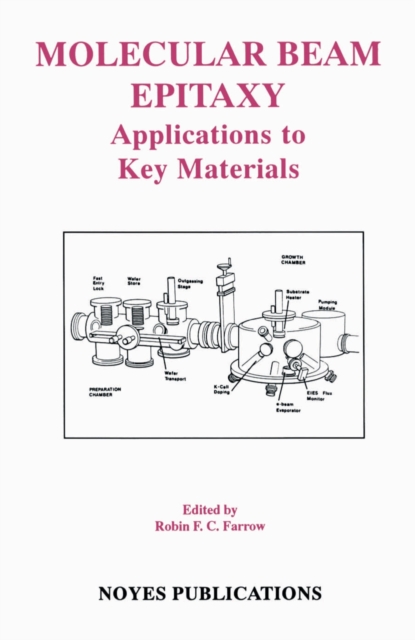
In this volume, the editor and contributors describe the use of molecular beam epitaxy (MBE) for a range of key materials systems that are of interest for both technological and fundamental reasons.
Shows how the revelations emerging from quantum physics can wake us up from the disempowering spell of the scientific materialist worldview and help dispel the collective madness that has befallen our species Explains for readers with no physics background why quantum physics is, in the words of Albert Einstein, so uncommonly important that it should be everyones concern Shows how quantum physics can help us awaken to the malleable, dreamlike nature of reality, a realization that unlocks the creative spirit within usExplaining the world-transforming effects of quantum physics, Paul Levy shows how discoveries in this fieldwidely considered the greatest in the history of sciencecan wake us up from the disempowering spell of the reductionist, materialist worldview, thereby helping to dispel the collective madness that has befallen our species.
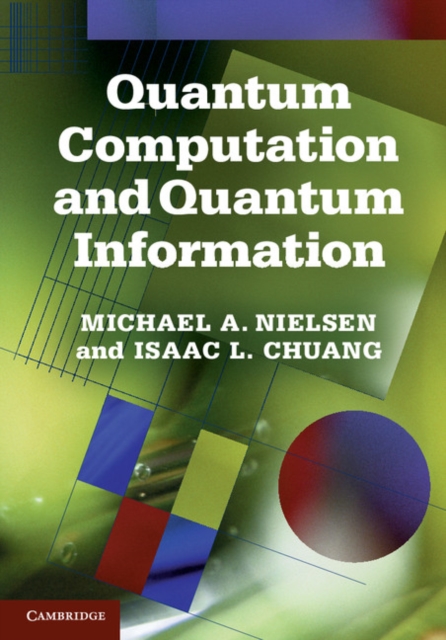
Quantum computing, particularly in conjunction with a high level of interconnectivity facilitated by quantum connectivity, can facilitate a host of new, previously unattainable applications-these include blind quantum computation, (information) teleporting, clock synchronization, quantum key distribution, secure access to remote quantum computers, superdense coding, secure identification, quantum-secure encryption, distributed sensors, and other scientific and commercial applications, including new drug development.
This book introduces quantum computing and quantum communications at the undergraduate level for students in the physical sciences, engineering, and mathematics, assuming no prior knowledge of quantum mechanics.
Among the great ironies of quantum mechanics is not only that its conceptual foundations seem strange even to the physicists who use it, but that philosophers have largely ignored it.
Among the great ironies of quantum mechanics is not only that its conceptual foundations seem strange even to the physicists who use it, but that philosophers have largely ignored it.
A concise, beginner-friendly introduction to quantum field theoryQuantum field theory is a powerful framework that extends quantum mechanics in ways that are essential in many modern applications.
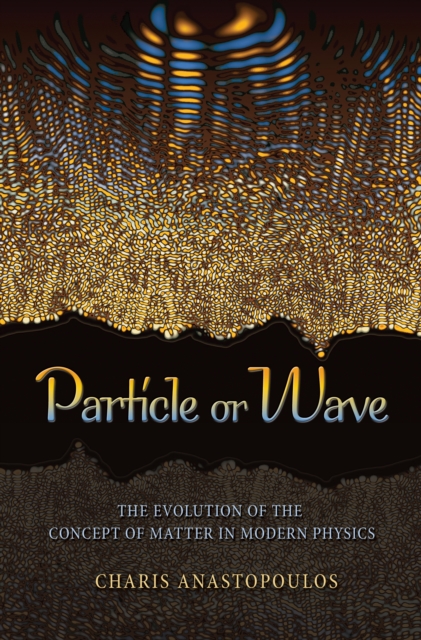
Particle or Wave is the first popular-level book to explain the origins and development of modern physical concepts about matter and the controversies surrounding them.
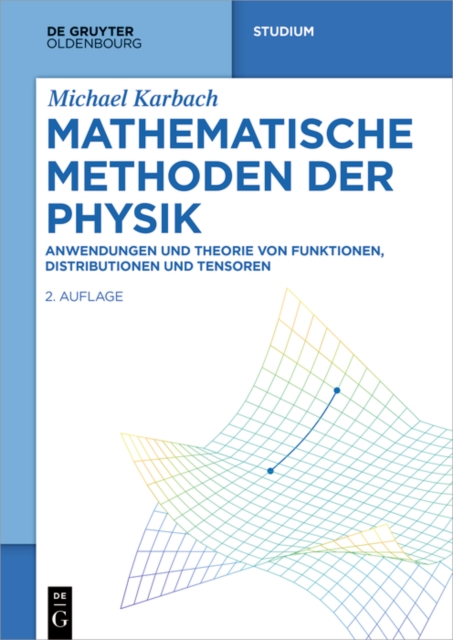
Sowohl im Studium als auch in der täglichen Arbeit benötigt der Physiker eine Vielzahl mathematischer Methoden, die über die Methoden aus den Grundvorlesungen der Analysis und linearen Algebra hinausgehen.
Dieses Buch bietet einen Überblick über die neuesten Implementierungen von Quanten-Zufallszahlengeneratoren (QRNGs) und untersucht insbesondere deren Beziehung zu klassischen statistischen Zufallsmodellen und numerischen Techniken zur Berechnung von Zufallszahlen.
Characterization of Semiconductor Heterostructures and Nanostructures is structured so that each chapter is devoted to a specific characterization technique used in the understanding of the properties (structural, physical, chemical, electrical etc.
Unified Non-Local Relativistic Theory of Transport Processes highlights the most significant features of non-local relativistic theory, which is a highly effective tool for solving many physical problems in areas where the classical local theory runs into difficulties.
Written by a pair of distinguished Soviet mathematicians, this compilation presents 160 lucidly expressed problems in nonrelativistic quantum mechanics plus completely worked-out solutions.
Based on lectures for an undergraduate UCLA course in quantum mechanics, this volume focuses on the formulas of quantum mechanics rather than applications.
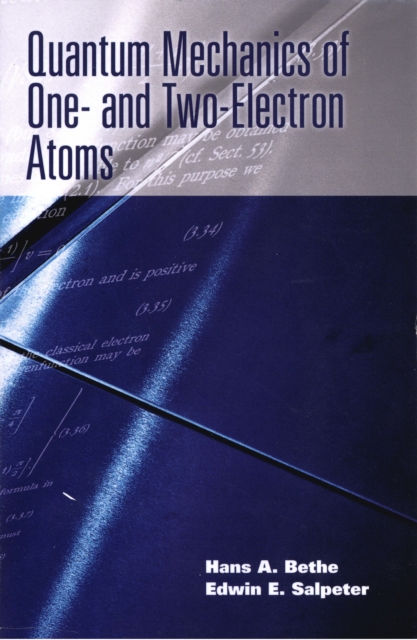
This classic of modern physics includes a vast array of approximation methods, mathematical tricks, and physical pictures that are also useful in the application of quantum mechanics to other fields.
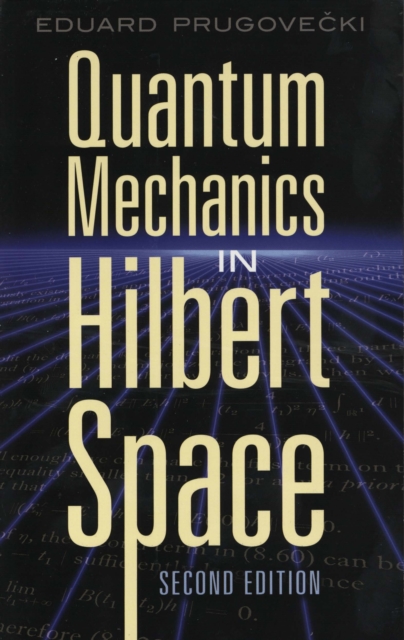
A critical presentation of the basic mathematics of nonrelativistic quantum mechanics, this text is suitable for courses in functional analysis at the advanced undergraduate and graduate levels.
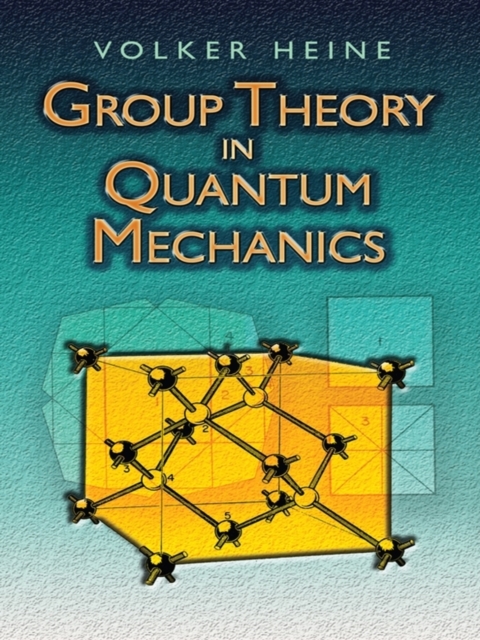
Geared toward research students in physics and chemistry, this text introduces the three main uses of group theory in quantum mechanics: (1) to label energy levels and the corresponding eigenstates; (2) to discuss qualitatively the splitting of energy levels, starting from an approximate Hamiltonian and adding correction terms; and (3) to aid in the evaluation of matrix elements of all kinds.
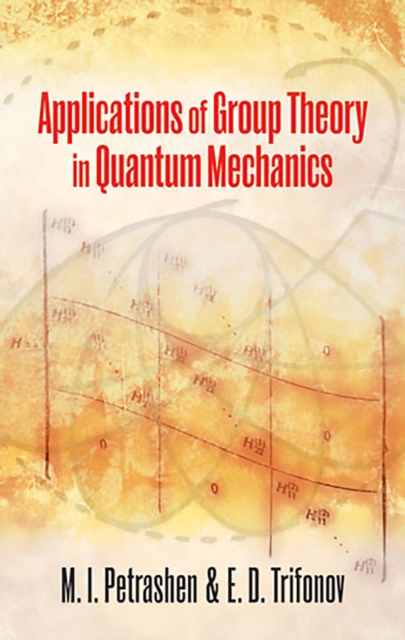
Geared toward postgraduate students, theoretical physicists, and researchers, this advanced text explores the role of modern group-theoretical methods in quantum theory.