Intended for nonspecialists with some knowledge of physics or engineering, The Quantum Beat covers a wide range of salient topics relevant to atomic clocks, treated in a broad intuitive manner with a minimum of mathematical formalism.
In recent years, classical computability has expanded beyond its original scope to address issues related to computability and complexity in algebra, analysis, and physics.
Nanotechnology provides us with tools to create functional materials, devices, and systems by controlling materials at the atomic and molecular scales by making use of novel properties and phenomena.
"e;It is our responsibility as scientists, knowing the great progress which comes from a satisfactory philosophy of ignorance, the great progress which is the fruit of freedom of thought, to proclaim the value of this freedom, to teach how doubt is not to be feared but welcomed and discussed; and to demand this freedom as our duty to all coming generations"e; -- Richard Feynman, 1955 -- First, as students from Cal Tech and MIT and then as researchers and teachers from other universities and industry, we are bene?
Beautifully illustrated and engagingly written, Twelve Lectures in Quantum Mechanics presents theoretical physics with a breathtaking array of examples and anecdotes.
This is the third and final volume of a three volumes book series devoted to photorefractive effects, photorefractive materials and their applications.
VarietyisperhapsthemostamazingattributeofNature,withanalmostendlessarrayof different molecules and aggregates and tens of millions of distinct forms of life.
Quantum Imaging is a newly born branch of quantum optics that investigates the ultimate performance limits of optical imaging allowed by the laws of quantum mechanics.
Mechanics, Electrodynamics, Quantum Mechanics, and Statistical Mechanics and Thermodynamics comprise the canonical undergraduate curriculum of theoretical physics.
The attraction of quantum computation and quantum communica- tion theory and experiments hes in the fact that we engineer both them themselves and the quantum systems they treat.
Recent significant developments in sensor science and technology, such as the design of ultramicroelectrodes and arrays, are providing considerable stimulation in research.
Remarkable progress has recently been made in the application of quantumtrajectories as the computational tool for solving quantum mechanical problems.
Practical quantum computing still seems more than a decade away, and researchers have not even identified what the best physical implementation of a quantum bit will be.
Nonlinear optical techniques are now recognized as the most efficient means available to generate laser radiation at wavelengths that are presently inaccessible via conventional sources.
Principles and Applications of NanoMEMS Physics presents the first unified exposition of the physical principles at the heart of NanoMEMS-based devices and applications.
This Springer Handbook of Atomic, Molecular, and Optical Physics comprises a comprehensive reference source that unifies the entire fields of atomic, molecular, and optical (AMO) physics, assembling the principal ideas, techniques and results of the field from atomic spectroscopy to applications in comets.
This is the first volume of a set of three within the Springer Series in Optical Sciences, and is devoted to photorefractive effects, photorefractive materials, and their applications.
The 2002 Pan-American Advanced Studies Institute School on Quantum Gravity was held at the Centro de Estudios Cientificos (CECS),Valdivia, Chile, January 4-14, 2002.
Quantum field theory, which started with Paul Dirac's work shortly after the discovery of quantum mechanics, has produced an impressive and important array of results.
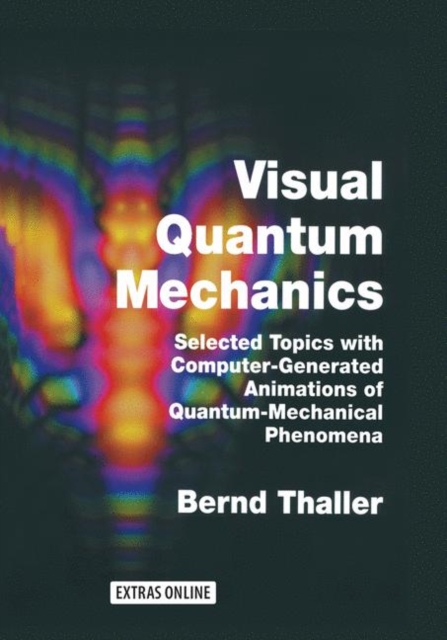
In the strange world of quantum mechanics the application of visualization techniques is particularly rewarding, for it allows us to depict phenomena that cannot be seen by any other means.
This book is a self-contained introduction to fiber spaces and differential operators on smooth manifolds that is accessible to graduate students specializing in mathematics and physics.
Derived from a course given at the University of Maryland for advanced graduate students, this book deals with some of the latest developments in our attempts to construct a unified theory of the fundamental interactions of nature.
More than a generation of German-speaking students around the world have worked their way to an understanding and appreciation of the power and beauty of modern theoretical physics-with mathematics, the most fundamental of sciences-using Walter Greiner's textbooks as their guide.