The twentieth century was astonishing in all regards, shaking the foundations of practically every aspect of human life and thought, physics not least of all.
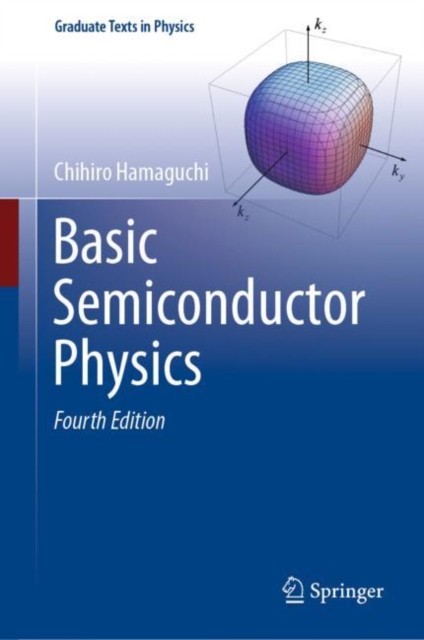
This textbook presents a detailed description of basic semiconductor physics, covering a wide range of important phenomena in semiconductors, from simple to advanced.
A brief introduction to gravity through Einstein's general theory of relativityOf the four fundamental forces of nature, gravity might be the least understood and yet the one with which we are most intimate.
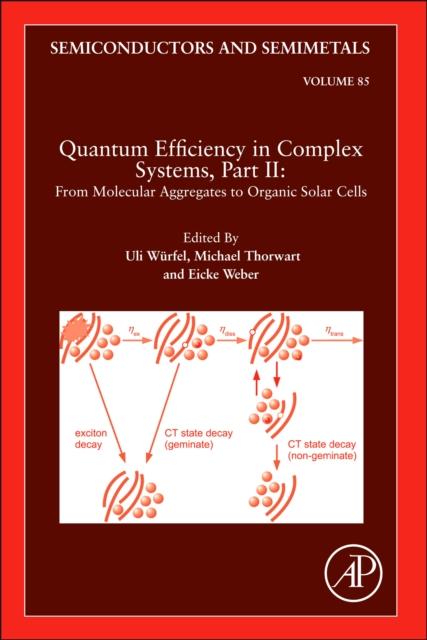
Since its inception in 1966, the series of numbered volumes known as Semiconductors and Semimetals has distinguished itself through the careful selection of well-known authors, editors, and contributors.
Nobel Prize-winning physicist Roger Penrose questions some of the most fashionable ideas in physics today, including string theoryWhat can fashionable ideas, blind faith, or pure fantasy possibly have to do with the scientific quest to understand the universe?
The complete guide to everything you ever wanted to know about EinsteinThis is the single most complete guide to Albert Einstein's life and work for students, researchers, and browsers alike.
The untold story of Albert Einstein's role as the father of quantum theoryEinstein and the Quantum reveals for the first time the full significance of Albert Einstein's contributions to quantum theory.
The physics of neutrinos--uncharged elementary particles that are key to helping us better understand the nature of our universe--is one of the most exciting frontiers of modern science.
Hugh Everett III was an American physicist best known for his many-worlds interpretation of quantum mechanics, which formed the basis of his PhD thesis at Princeton University in 1957.
Covering the fundamentals as well as many special topics of current interest, this is the most concise, up-to-date, and accessible graduate-level textbook on quantum mechanics available.
Semiconductors and the Information Revolution sets out to explain the development of modern electronic systems and devices from the viewpoint of the semiconductor materials (germanium, silicon, gallium arsenide and many others) which made them possible.
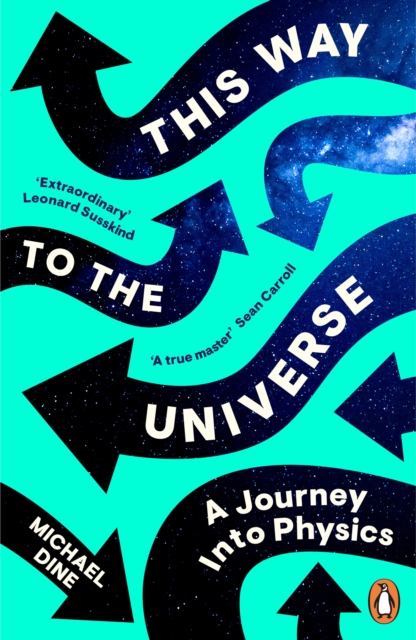
'Extraordinary' Leonard Susskind'A rare event' Sean Carroll_____When leading theoretical physicist Professor Michael Dine was asked where you could find an accessible and authoritative book that would teach you about the Big Bang, Dark Matter, the Higgs boson and the cutting edge of physics now, he had nothing he could recommend.
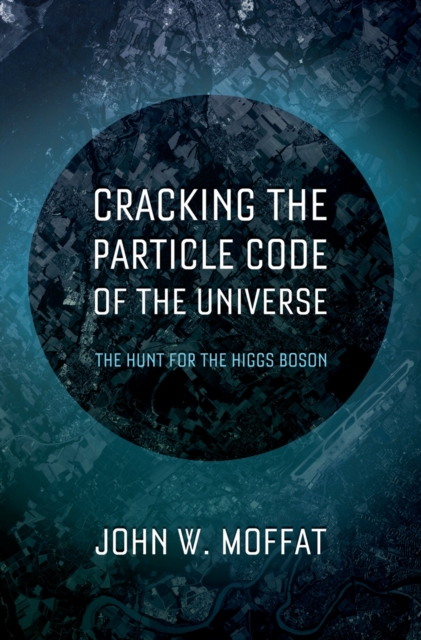
Among the current books that celebrate the discovery of the Higgs boson, Cracking the Particle Code of the Universe is a rare objective treatment of the subject.
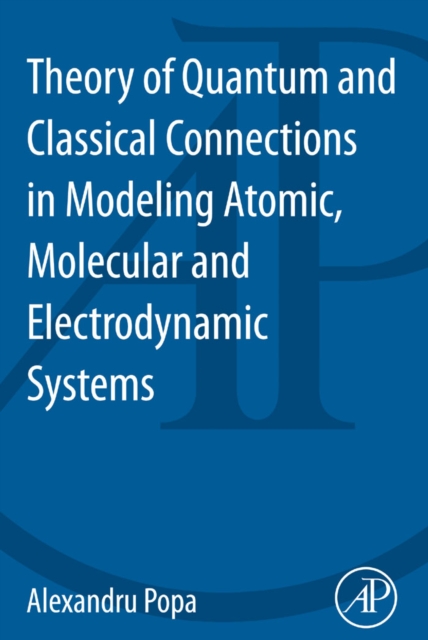
Quantum and Classical Connections in Modeling Atomic, Molecular and Electrodynamic Systems is intended for scientists and graduate students interested in the foundations of quantum mechanics and applied scientists interested in accurate atomic and molecular models.
Human beings, says Lee Smolin, author of The Trouble With Physics, have always had a problem with the boundary between reality and fantasy, confusing our representations of the world with the world itself.
Max Tegmark leads us on an astonishing journey through past, present, and future, and through the physics, astronomy, and mathematics that are the foundation of his work, most particularly his hypothesis that our physical reality is a mathematical structure and his theory of the ultimate multiverse.
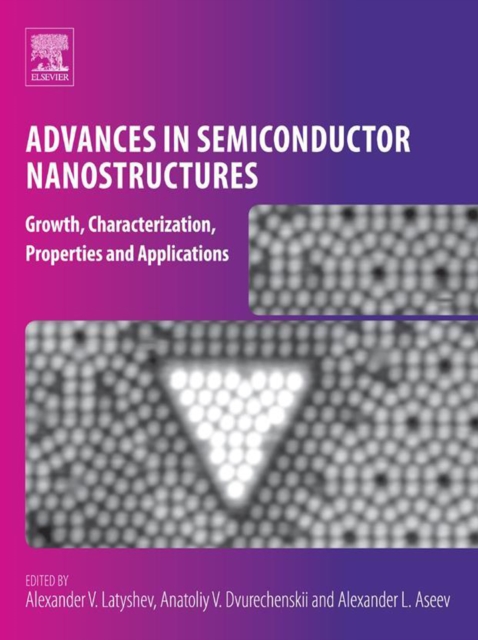
Advances in Semiconductor Nanostructures: Growth, Characterization, Properties and Applications focuses on the physical aspects of semiconductor nanostructures, including growth and processing of semiconductor nanostructures by molecular-beam epitaxy, ion-beam implantation/synthesis, pulsed laser action on all types of III-V, IV, and II-VI semiconductors, nanofabrication by bottom-up and top-down approaches, real-time observations using in situ UHV-REM and high-resolution TEM of atomic structure of quantum well, nanowires, quantum dots, and heterostructures and their electrical, optical, magnetic, and spin phenomena.
The bestselling author of Fermat's Last Theorem and The Code Book tells the story of the brilliant minds that deciphered the mysteries of the Big Bang.
A hopeful and controversial view of the universe and ourselves based on the principles of quantum physics, offering a way of making our lives and the world better, with a foreword by Deepak Chopra
In Infinite Potential, physical chemist Lothar Schäfer presents a stunning view of the universe as interconnected, nonmaterial, composed of a field of infinite potential, and conscious.
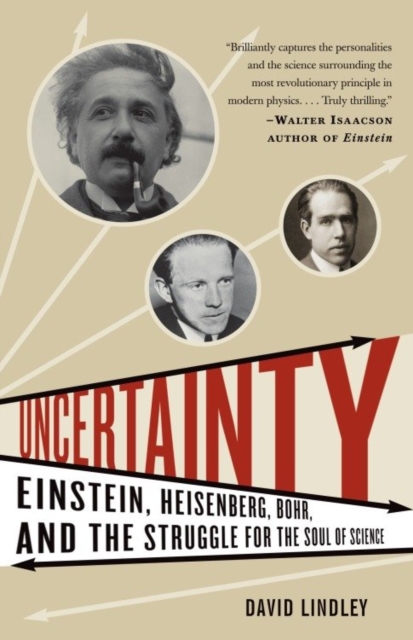
Werner Heisenberg’s “uncertainty principle” challenged centuries of scientific understanding, placed him in direct opposition to Albert Einstein, and put Niels Bohr in the middle of one of the most heated debates in scientific history.
In order to equip hopeful graduate students with the knowledge necessary to pass the qualifying examination, the authors have assembled and solved standard and original problems from major American universities - Boston University, University of Chicago, University of Colorado at Boulder, Columbia, University of Maryland, University of Michigan, Michigan State, Michigan Tech, MIT, Princeton, Rutgers, Stanford, Stony Brook, University of Tennessee at Knoxville, and the University of Wisconsin at Madison - and Moscow Institute of Physics and Technology.
These two volumes collect forty-four selected papers from the scientific contributions presented at the Third European Workshop on Quantum Systems in Chemistry and Physics, held in Granada (Spain), April 19-22, 1998.
Aimed at senior undergraduate and first-year graduate students in departments of physics and astronomy, this textbook gives a systematic treatment of atomic and molecular structure and spectra, together with the effect of weak and strong external electromagnetic fields.
A course in angular momentum techniques is essential for quantitative study of problems in atomic physics, molecular physics, nuclear physics and solid state physics.
This volume contains contributions based on the lectures delivered and posters presented at the Fifth International Conference on Quantum Communication, Measurement and Computing (QCM&C-Y2K).
Divided into four parts, this book covers recent developments in topics pertaining to gravity theories, including discussions on the presence of scalar fields.
Based on the Fourth International Conference on Quantum Communication, Measurement and Computing, this volume brings together scientists working in the interdisciplinary fields of quantum communication science and technology.
Based on a NATO Advanced Summer Institute, this volume discusses physical models, mathematical formalisms, experimental techniques, and applications for ultrafast dynamics of quantum systems.
A beloved introductory physics textbook, now including exercises and an answer key, accessibly explains electromagnetism, optics, and quantum mechanics R.