This book stresses the role of uncorrelated exchange of properties between macroscopic systems and their surroundings as the only source of dynamic irreversibility.
The book is devoted to the questions of the long-time behavior of solutions for evolution equations, connected with kinetic models in statistical physics.
The sophistication of modern tools used in the study of statistical mechanics and field theory is often an obstacle to the easy understanding of new important current results reported in journals.
The "e;Scientific Highlights in Memory of Leon Van Hove"e; meeting brought together many distinguished scientists and several top officials of the European Community in honor of Leon Van Hove, an outstanding European scientist who contributed immensely to the research and development of mathematical and theoretical physics.
The main theme of the book is the intimate connection between the two families of exactly solvable models: the inverse-square exchange (ISE) and the nearest-neighbor exchange (NNE) models.
The book is suitable for a lecture course on the theory of Brownian motion, being based on final year undergraduate lectures given at Trinity College, Dublin.
This book is intended for postgraduate students as well as researchers in various areas of physics such as statistical physics, magnetism and materials sciences.
This book aims to describe in simple terms the new area of statistical mechanics known as spin-glasses, encompassing systems in which quenched disorder is the dominant factor.
This book series in the rapidly growing field of computational physics offers up-to-date (submitted to the publisher by electronic mail) reviews for the researcher.
This book presents a systematic and coherent approach to phase transitions and critical phenomena, namely the coherent-anomaly method (CAM theory) based on cluster mean-field approximations.
The purpose of this textbook is to bring together, in a self-contained introductory form, the scattered material in the field of stochastic processes and statistical physics.
The present volume is an updated version of the book edited by C N Yang and M L Ge on the topics of braid groups and knot theory, which are related to statistical mechanics.
This volume contains the collected works of the eminent chemist and physicist Lars Onsager, one of the most influential scientists of the 20th Century.
This book discusses all three formalisms used in the study of finite temperature field theory, namely the imaginary time formalism, the closed time formalism and thermofield dynamics.
This book concerns the development of a theory of complex phenomena; using such concepts as fractals; chaos; and fractional derivatives; but; most important; the idea of an allometric control process is developed.
A small army of physicists, chemists, mathematicians, and engineers has joined forces to attack a classic problem, the "e;reversibility paradox"e;, with modern tools.
This important book presents a unified formulation from first principles of the Hamiltonian and statistical mechanics of metallic and insulating crystals, amorphous solids, and liquids.
This book contains accounts of state-of-the art approaches to the physics of granular matter, from a widely interdisciplinary and international set of experts in the field.
Equilibrium and nonequilibrium properties of correlated many-body systems are of growing interest in many areas of physics, including condensed matter, dense plasmas, nuclear matter and particles.
This volume is the second edition of the first-ever elementary book on the Langevin equation method for the solution of problems involving the Brownian motion in a potential, with emphasis on modern applications in the natural sciences, electrical engineering and so on.
This volume is the third edition of the first-ever elementary book on the Langevin equation method for the solution of problems involving the translational and rotational Brownian motion of particles and spins in a potential highlighting modern applications in physics, chemistry, electrical engineering, and so on.
This book contains comprehensive descriptions of stochastic processes described by underdamped and overdamped oscillator equations with additive and multiplicative random forcing.
A broad introduction and overview of current interdisciplinary studies on complexity, this volume is an ideal starting point for scientists and graduate students who wish to enter the field.
This volume gives an interdisciplinary discussion on the topological aspects of general networks and critical systems for physicists, chemists, biologists, mathematicians, medical scientists, social scientists, and other related researchers.
This book is the second volume of review papers on advanced problems of phase transitions and critical phenomena, following the success of the first volume in 2004.
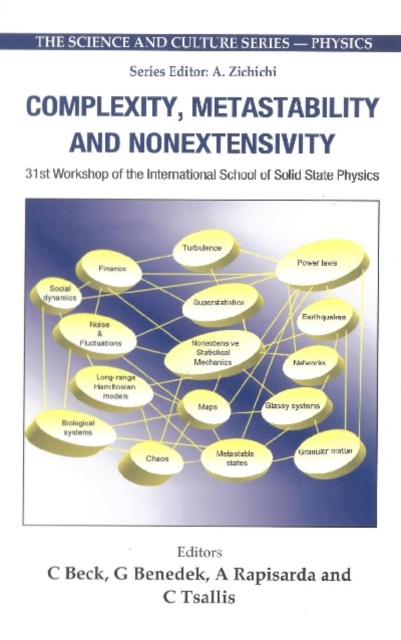
Complexity is emerging as a post-Newtonian paradigm for approaching a large body of phenomena of concern at the crossroads of physical, engineering, environmental, life and human sciences from a unifying point of view.
The science of complex materials continues to engage researchers from a vast range of disciplines, including physics, mathematics, computational science, and virtually all domains of engineering.
The Conference on Statistical Physics, High Energy, Condensed Matter and Mathematical Physics was held in honor of Professor Chen-Ning Yang's 85th birthday in Singapore in Oct-Nov 2007.
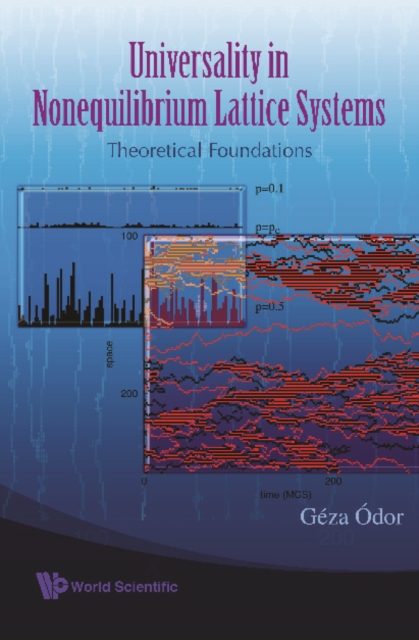
Universal scaling behavior is an attractive feature in statistical physics because a wide range of models can be classified purely in terms of their collective behavior due to a diverging correlation length.
This unique volume provides a comprehensive overview of exactly solved models in statistical mechanics by looking at the scientific achievements of F Y Wu in this and related fields, which span four decades of his career.
Pendulum is the simplest nonlinear system, which, however, provides the means for the description of different phenomena in Nature that occur in physics, chemistry, biology, medicine, communications, economics and sociology.