Nonadiabatic transition is a highly multidisciplinary concept and phenomenon, constituting a fundamental mechanism of state and phase changes in various dynamical processes of physics, chemistry and biology, such as molecular dynamics, energy relaxation, chemical reaction, and electron and proton transfer.
A small army of physicists, chemists, mathematicians, and engineers has joined forces to attack a classic problem, the "e;reversibility paradox"e;, with modern tools.
The principal message of this book is that thermodynamics and statistical mechanics will benefit from replacing the unfortunate, misleading and mysterious term "e;entropy"e; with a more familiar, meaningful and appropriate term such as information, missing information or uncertainty.
This book highlights the estimate of epidemic characteristics for different countries/regions in the world with the use of known SIR (susceptible-infected-removed) model for the dynamics of the epidemic, the known exact solution of the linear differential equations and statistical approach developed before.
This book is the fifth volume of papers on advanced problems of phase transitions and critical phenomena, the first four volumes appeared in 2004, 2007, 2012, and 2015.
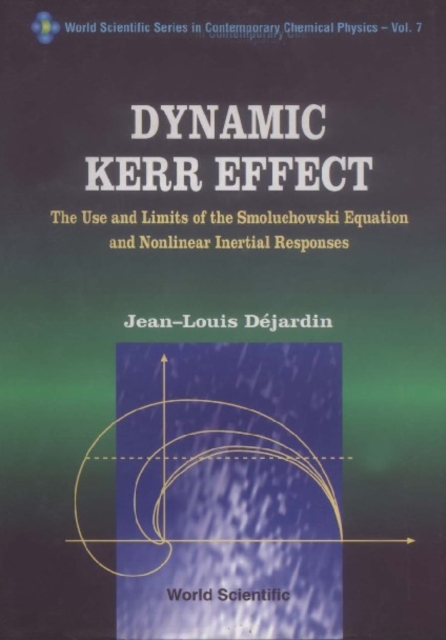
Our original objective in writing this book was to demonstrate how the concept of the equation of motion of a Brownian particle - the Langevin equation or Newtonian-like evolution equation of the random phase space variables describing the motion - first formulated by Langevin in 1908 - so making him inter alia the founder of the subject of stochastic differential equations, may be extended to solve the nonlinear problems arising from the Brownian motion in a potential.
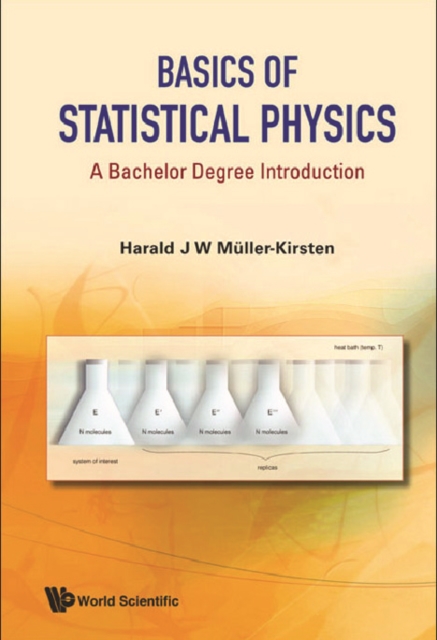
This book is an elaboration of the author's lecture notes in a graduate course in statistical physics and thermodynamics, augmented by some material suitable for self-teaching as well as for undergraduate study.
Newer Edition Available: Equilibrium Statistical Physics (3rd Edition)This revised and expanded edition of one of the important textbook in statistical physics, is a graduate level text suitable for students in physics, chemistry, and materials science.
This book begins with an introduction on continuum mechanics and a derivation of the linear partial differential equations for sound waves in fluids and elastic waves in solids.
This is a unique and exciting graduate and advanced undergraduate text written by a highly respected physicist who had made significant contributions to the subject.
The material for these volumes has been selected from the past twenty years' examination questions for graduate students at University of California at Berkeley, Columbia University, the University of Chicago, MIT, State University of New York at Buffalo, Princeton University and University of Wisconsin.
This book covers the foundations of classical thermodynamics, with emphasis on the use of differential forms of classical and quantum statistical mechanics, and also on the foundational aspects.
This third edition of one of the most important and best selling textbooks in statistical physics, is a graduate level text suitable for students in physics, chemistry, and materials science.
This textbook addresses the key questions in both classical thermodynamics and statistical thermodynamics: Why are the thermodynamic properties of a nano-sized system different from those of a macroscopic system of the same substance?
This book encompasses our current understanding of the ensemble approach to many-body physics, phase transitions and other thermal phenomena, as well as the quantum foundations of linear response theory, kinetic equations and stochastic processes.
The science of statistical mechanics is concerned with defining the thermodynamic properties of a macroscopic sample in terms of the properties of the microscopic systems of which it is composed.
This book highlights the importance of Electron Statistics (ES), which occupies a singular position in the arena of solid state sciences, in heavily doped (HD) nanostructures by applying Heisenberg's Uncertainty Principle directly without using the complicated Density-of-States function approach as given in the literature.
This book formulates a unified approach to the description of many-particle systems combining the methods of statistical physics and quantum field theory.
Presenting in a coherent and accessible fashion current results in nanomagnetism, this book constitutes a comprehensive, rigorous and readable account, from first principles of the classical and quantum theories underlying the dynamics of magnetic nanoparticles subject to thermal fluctuations.
This book is the sixth volume of reviews on advanced problems of phase transitions and critical phenomena, with the first five volumes appearing in 2004, 2007, 2012, 2015, and 2018.
Este libro, dirigido a un público amplio, surge a partir de las notas de clases de la asignatura Teoría de la Probabilidad, impartida por el autor en los programas de posgrados de Estadística y de Ingeniería de la Universidad del Norte (Colombia).
Presenting in a coherent and accessible fashion current results in nanomagnetism, this book constitutes a comprehensive, rigorous and readable account, from first principles of the classical and quantum theories underlying the dynamics of magnetic nanoparticles subject to thermal fluctuations.
This text provides an overview of important theory, principles, and concepts in the field of thermodynamics, making this abstract and complex subject easy to comprehend while building practical skills in the process.
The statistical mechanical theory of liquids and solutions is a fundamental area of physical sciences with important implications in other fields of science and industrial applications.
El objetivo de este texto es servir de apoyo al estudiante que sigue un curso básico de Física Estadística, útil también para profesores, especialmente para los que se plantean qué contenidos escoger para el curso.
Statistical mechanics provides a framework for relating the properties of macroscopic systems (large collections of atoms, such as in a solid) to the microscopic properties of its parts.
Thermodynamics can never be made easy, but with the right approach and a consistent use of scientific terms it can be made less opaque, and it can give a person, who is prepared to try, an insight into how science explains why things happen the way they do.