Advances in Heat Transfer fills the information gap between regularly scheduled journals and university-level textbooks by providing in-depth review articles over a broader scope than in journals or texts.
Design Antennas for Modern Wireless Communications SystemsWritten by a global team of expert contributors, this book offers complete details on the wide range of antennas used in today's wireless communication networks.
Control volume finite element methods (CVFEM) bridge the gap between finite difference and finite element methods, using the advantages of both methods for simulation of multi-physics problems in complex geometries.
In the past several years, there has been an explosion in the ability of biologists, molecular biologists and biochemists to collect vast amounts of data on their systems.
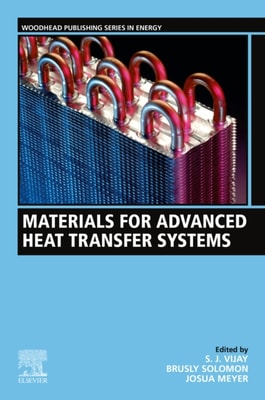
Materials for Advanced Heat Transfer Systems presents the latest research and technologies developed for high-performance materials in heat transfer and cooling.
Industrial and Process Furnaces: Principles, Design and Operation, Third Edition continues to provide comprehensive coverage on all aspects of furnace operation and design, including topics essential for process engineers and operators to better understand furnaces.
Near-Field Radiative Heat Transfer across Nanometer Vacuum Gaps provides an in-depth description of fundamentals and application of near-field radiative heat transfer.
The Classical Stefan Problem: Basic Concepts, Modelling and Analysis with Quasi-Analytical Solutions and Methods, New Edition, provides fundamental theory, concepts, modelling and analysis of the physical, mathematical, thermodynamical and metallurgical properties of classical Stefan and Stefan-like problems as applied to heat transfer problems involving phase-changes, such as from liquid to solid.
Compact Heat Exchangers: Selection, Design, and Operation, Second Edition, is fully revised to present the most recent and fundamental ideas and industrial concepts in compact heat exchanger technology.
Phase change material (PCM)-based composite heat sinks have attracted great interest in recent decades, especially in the context of thermal management of portable electronic devices such as mobile phones, digital cameras, personal digital assistants, and notebooks.
This book presents different thermodynamic approaches in the area of constitutive theory: thermodynamics of irreversible processes, rational thermodynamics, and extended thermodynamics.
This book is the second edition of Numerical methods for diffusion phenomena in building physics: a practical introduction originally published by PUCPRESS (2016).
This Brief stands as a primer for heat transfer fundamentals in heat transfer enhancement devices, the definition of heat transfer area, passive and active enhancement techniques and their potential and benefits and commercial applications.
This Brief deals with Performance Evaluation Criteria (PEC) for heat exchangers, single phase flow, objective function and constraints, algebraic formulation, constant flow rate, fixed flow area, thermal resistance, heat exchanger effectiveness, relations for St and f, finned tube banks, variations of PEC, reduced exchanger flow rate, exergy based PEC, PEC for two-phase heat exchangers, work consuming, work producing and heat actuated systems.
This book provides in-depth information about the sea ice in the Arctic at scales from paleoenvironmental variability to more contemporary changes during the past and present centuries.
Features twenty-five chapter contributions from an international array of distinguished academics based in Asia, Eastern and Western Europe, Russia, and the USA.
This book discusses the merging of nanoscale electronics and electrochemistry and how this can potentially modernize the way electronic devices are currently engineered or constructed.
This book includes innovative gas-geothermometers and geobarometers, which are urgently needed to estimate the increasingly higher temperatures and pressures present at depth below the Solfatara volcano, owing to its on-going unrest.
This monograph presents a comprehensive treatment of analytical solutions to problems in the area of non-equilibrium evaporation and condensation processes.
This authoritative but highly accessible book presents the reader with a powerful framework for understanding the critical role of the energy return on investment (EROI) in the survival and well-being of individuals, ecosystems, businesses, economies and nations.
This book is the first major work covering applications in thermal engineering and offering a comprehensive introduction to optimal control theory, which has applications in mechanical engineering, particularly aircraft and missile trajectory optimization.
This book presents new methods of numerical modelling of tube heat exchangers, which can be used to perform design and operation calculations of exchangers characterized by a complex flow system.
The second edition of this book includes the most up-to-date details on the advantages of Nuclear Air-Brayton Power Plant Cycles for advanced reactors.
This thesis demonstrates the potential of two platforms to explore experimentally the emerging field of quantum thermodynamics that has remained mostly theoretical so far.
The importance of thermodynamics, particularly its Second Principle, to all branches of science in which systems with very large numbers of particles are involved cannot be overstated.
Concise, detailed, and transparently structured, this upper-level undergraduate textbook is an excellent resource for a one-semester course on thermodynamics for students majoring in physics, chemistry, or materials science.
This book represents a journey through the history of science in regards to the concept of time, specifically, the question as to whether it is absolute, relative, or irreversible.
This textbook offers an introduction to multiple, interdependent transport phenomena as they occur in various fields of physics and technology like transport of momentum, heat, and matter.