A volume in the Progress in Optics series, the papers in this book cover a range of topics, including: anamorphic beam shaping for laser and diffuse light; ultra-fast all-optical switching in optical networks; generation of dark hollow beams and their application; and two-photon lasers.
This volume contains five articles presenting reviews of several topics of current research which are likely to be of interest to optical scientists and optical engineers.
Geochemical Anomaly and Mineral Prospectivity Mapping in GIS documents and explains, in three parts, geochemical anomaly and mineral prospectivity mapping by using a geographic information system (GIS).
Spintronics is a newly developing area in the field of magnetism, in which the interplay of magnetism and transport phenomena is studied experimentally and theoretically.
This book contains the Proceedings of the 25th International Free Electron Laser Conference and the 10th Free Electron Laser Users Workshop, which were held on September 8-12, 2003 in Tsukuba, Ibaraki in Japan.
The combination of faster, more advanced computers and more quantitatively oriented biomedical researchers has recently yielded new and more precise methods for the analysis of biomedical data.
The use of ion beams for materials analysis involves many different ion-atom interaction processes which previously have largely been considered in separate reviews and texts.
Introduction to Geophysical Fluid Dynamics provides an introductory-level exploration of geophysical fluid dynamics (GFD), the principles governing air and water flows on large terrestrial scales.
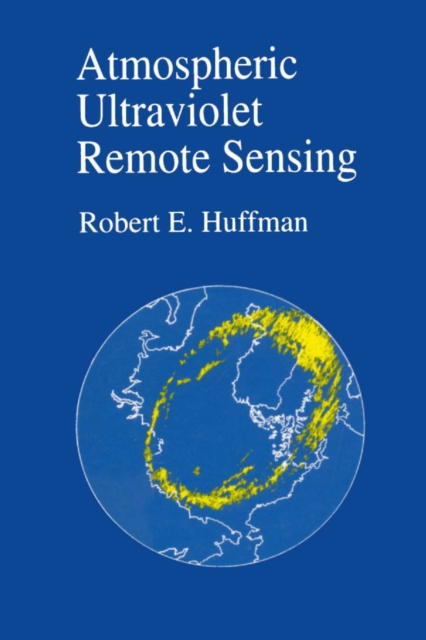
Although interesting in its own right, due to the ever-increasing use of satellites for communication and navigation, weather in the ionosphere is of great concern.
In the past several years, there has been an explosion in the ability of biologists, molecular biologists and biochemists to collect vast amounts of data on their systems.
This book describes the theory of radiation thermometry, both at a primary level and for a variety of applications, such as in the materials processing industries and remote sensing.
Cu(In1-xGax)Se2 Based Thin Film Solar Cells provides valuable contents about the fabrication and characterization of chalcopyrite Cu(In1-xGax)Se2 based thin film solar cells and modules.
This book presents an introduction to the classical theories of continuum mechanics; in particular, to the theories of ideal, compressible, and viscous fluids, and to the linear and nonlinear theories of elasticity.
This practical reference examines the structure and properties of the atmosphere, including listings of compounds in clouds, fog, rain, snow, and ice; a listing of compounds detected in the stratosphere; and a compendium of compounds in indoor air.
This book is addressed to those who wish to understand the relationship between atmospheric phenomena and the nature of matter as expressed in the principles of physics.
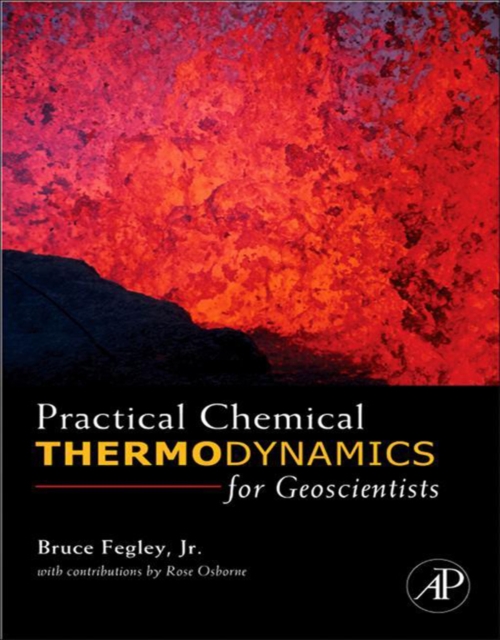
Practical Chemical Thermodynamics for Geoscientists covers classical chemical thermodynamics and focuses on applications to practical problems in the geosciences, environmental sciences, and planetary sciences.
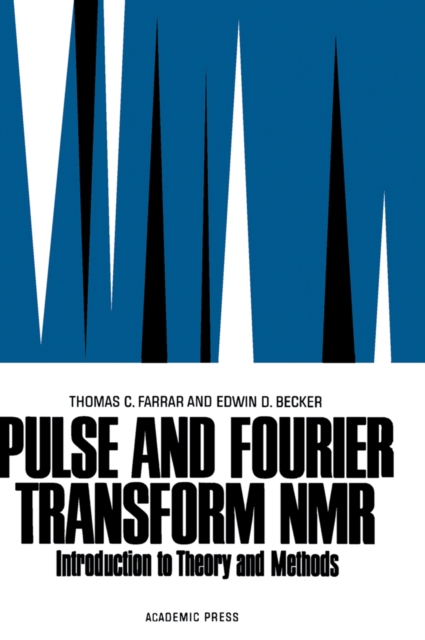
Pulse and Fourier Transform NMR: Introduction to Theory and Methods presents the different types of pulse experiments that are commonly used and provides the theoretical background necessary for understanding these techniques.
This bestselling reference bridges the gap between the introductory and highly specialized books dealing with aspects of food biochemistry for undergraduate and graduate students, researchers, and professionals in the fi elds of food science, horticulture, animal science, dairy science and cereal chemistry.
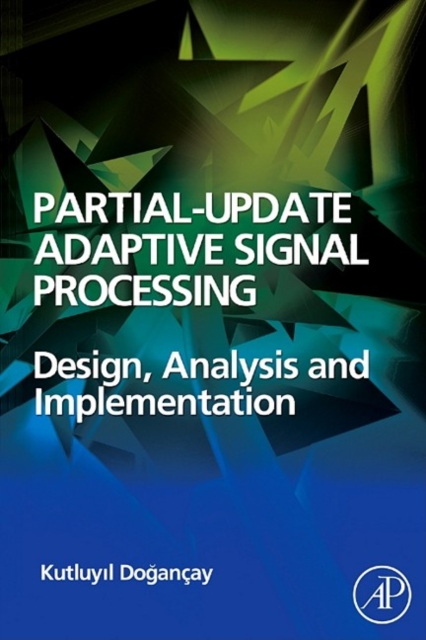
Partial-update adaptive signal processing algorithms not only permit significant complexity reduction in adaptive filter implementations, but can also improve adaptive filter performance in telecommunications applications.
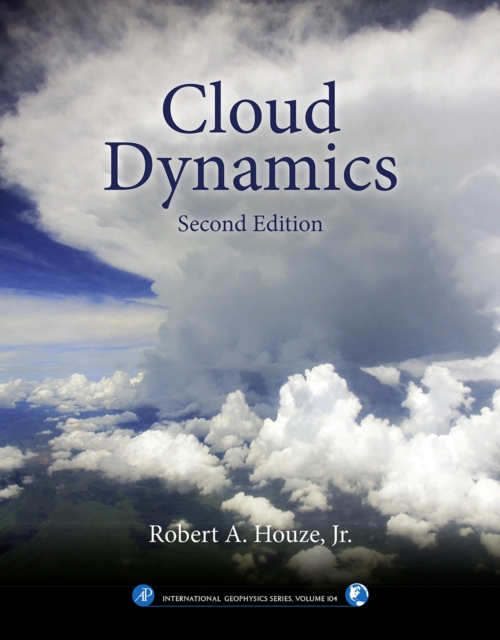
As models of the Earth/atmosphere system and observations become ever more sophisticated, and concerns about climate change and societal impacts of extreme weather and its forecasting grow, understanding the role of clouds in the atmosphere is increasingly vital.
The major developments in the fields of fluid and solid mechanics are scattered throughout an array of technical journals, often making it difficult to find what the real advances are, especially for a researcher new to the field or an individual interested in discovering the state-of-the-art in connection with applications.
Active geophysical monitoring is an important new method for studying time-evolving structures and states in the tectonically active Earth's lithosphere.
Researchers in the field of exploration geophysics have developed new methods for the acquisition, processing and interpretation of gravity and magnetic data, based on detailed investigations of bore wells around the globe.
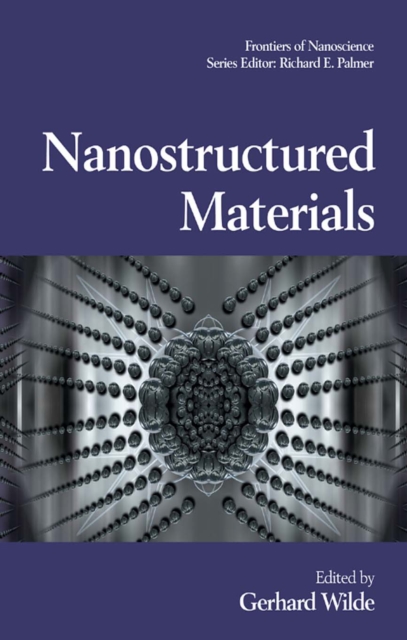
This book focuses on functional aspects of nanostructured materials that have a high relevance to immediate applications, such as catalysis, energy harvesting, energy storage, optical properties and surface functionalization via self-assembly.
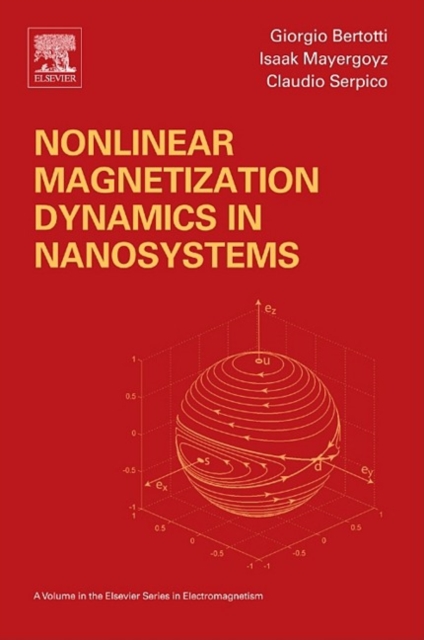
As data transfer rates increase within the magnetic recording industry, improvements in device performance and reliability crucially depend on the thorough understanding of nonlinear magnetization dynamics at a sub-nanoscale level.
Environmental Radionuclides presents a state-of-the-art summary of knowledge on the use of radionuclides to study processes and systems in the continental part of the Earth's environment.
In Nucleation in Condensed Matter, key theoretical models for nucleation are developed and experimental data are used to discuss their range of validity.
Advances in Imaging and Electron Physics merges two long-running serials--Advances in Electronics and Electron Physics and Advances in Optical and Electron Microscopy.
Advances in Imaging and Electron Physics merges two long-running serials--Advances in Electronics and Electron Physics and Advances in Optical and Electron Microscopy.
Advances in Imaging and Electron Physics merges two long-running serials--Advances in Electronics and Electron Physics and Advances in Optical and Electron Microscopy.