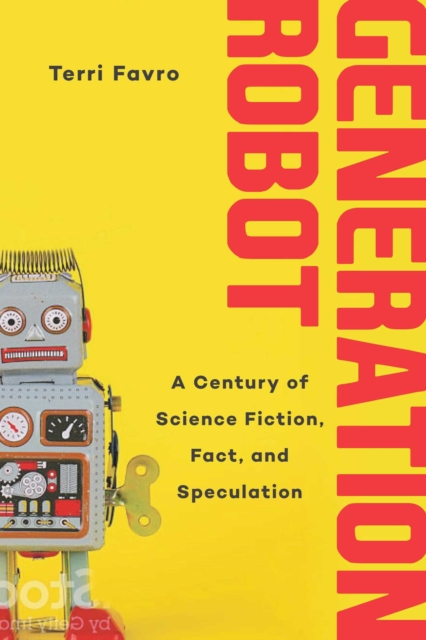
Generation Robot covers a century of science fiction, fact and, speculationfrom the 1950 publication of Isaac Asimov's seminal robot masterpiece, I, Robot, to the 2050 Singularity when artificial and human intelligence are predicted to merge.
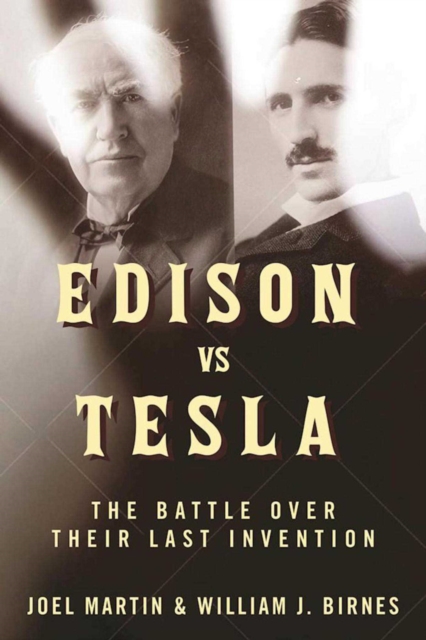
Thomas Edison closely following the alternative physics work of Albert Einstein and Max Planck, convincing him that there was an entire reality unseen by the human eye.
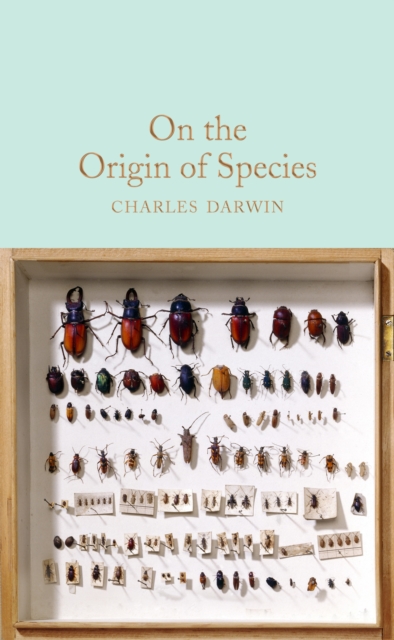
On the Origin of Species outlines Charles Darwin's world-changing theory that life on Earth had not been brought into being by a creator, but had arisen from a single common ancestor and had evolved over time through the process of natural selection.
Throughout the world, schizophrenia is a diagnosis now in decline, representing a radical shift in our historical and medical understanding of madness and mental distress.
Today we hear renewed calls for a dialogue between science and religion: why has the old question of the relations between science and religion now returned to the public domain and what is at stake in this debate?
Why has the chicken become the meat par excellence, the most plentifully eaten and popular animal protein in the world, consumed from Beijing to Barcelona?
The remarkable story of how our solar system came to beThe birth and evolution of our solar system is a tantalizing mystery that may one day provide answers to the question of human origins.
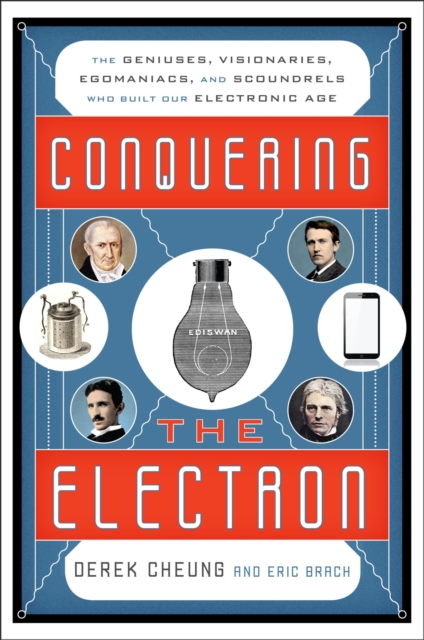
Conquering the Electron offers readers a true and engaging history of the world of electronics, beginning with the discoveries of static electricity and magnetism and ending with the creation of the smartphone and the iPad.
From one of America's best-known biologists, a revolutionary new way of thinking about evolution that shows ';why, in light of our origins, humans are still special' (Edward J.
'A fascinating and challenging story' New York Review of Books 'This is an incredibly absorbing and insightful book about the most important scientific question of our age' Mark Miodownik, author of Stuff Matters'The story of the quest to understand life's genesis is a universal one, in which everyone can find pleasure and fascination.
Inspiring life stories from BBC Radio 4's hit series The Life Scientific'In showing non-scientists why science offers so many paths to discovery it has no equal' Gillian Reynolds, TelegraphBased on Jim Al-Khalili's ground-breaking interviews, The Life Scientific: Explorers takes science out of its box and introduces us to the men and women who make it happen.
In The Moon David Whitehouse explains how our nearest celestial neighbor was created (and what moonrocks tell us of its earth-shattering origins), and how its existence may have been a crucial factor in mankind being here at all.
In The Sun, David Whitehouse takes us on a journey to the heart of our local star and beyond, relating how it was born, the many ways it influences life on Earth and how it will die.
Charles Darwin's name is among the most recognised in the world, and more than 100 years after his death his books are still best-sellers; there are more than ten modern editions of the most famous, On the Origin of Species, currently available.
Discover the second volume of an epic, beautifully illustrated graphic history of humankind, based on Yuval Noah Harari's multi-million copy bestselling phenomenon.
THE SUNDAY TIMES BESTSELLER'Explores just about every area of life' DAILY MAIL'If only Adam Rutherford and Hannah Fry were on tap to all of us, all the time .
Based on the landmark Radio 4 series, this beautifully illustrated modern history of the connections between science and art offers a new perspective on what that relationship has contributed to the world around us.
** GUARDIAN SCIENCE BOOK OF THE YEAR 2017 ** Popular science at its best Mail on Sunday Eminently accessible and enjoyable ObserverWith every breath, you literally inhale the history of the world.
Leading scholars take stock of Darwin's ideas about human evolution in the light of modern scienceIn 1871, Charles Darwin published The Descent of Man, a companion to Origin of Species in which he attempted to explain human evolution, a topic he called "e;the highest and most interesting problem for the naturalist.
#1 Bestseller in both hardback and paperback: SHORTLISTED FOR THE 2020 ROYAL SOCIETY INSIGHT INVESTMENT SCIENCE BOOK PRIZE _______'A directory of wonders.
'A dazzling chronicle, a bracing challenge to modernity's smug assumptions' - Bryce Christensen, Booklist'O what a world of profit and delightOf power, of honour and omnipotenceIs promised to the studious artisan.
On their 100th anniversary, the story of the extraordinary scientific expeditions that ushered in the era of relativityIn 1919, British scientists led extraordinary expeditions to Brazil and Africa to test Albert Einstein's revolutionary new theory of general relativity in what became the century's most celebrated scientific experiment.
The epic story of how science went big and the forgotten genius who started it allentertaining, thoroughly researchedpartly a biography, partly an account of the influence of Ernest Lawrences great idea, partly a short history of nuclear physics and the Bomb (The Wall Street Journal).
The most thrilling, genre-busting, unlikely science book you ll ever read, from the world-renowned, multi-award-winning, superstar physicist Lisa Randal.
For centuries, scientists had only one way to study the brain: wait for misfortune to strike - strokes, seizures, infections, lobotomies, horrendous accidents, phantom limbs, Siamese twins - and see how the victims changed afterwards.