This book explores the history of modern human creativity/innovation, highlighting examples of solutions to basic human' needs that have been developed over time.
This book re-examines the endosymbiotic theory, and presents various related theories and hypotheses since the first proposal in 1905 by a Russian biologist.
This book sheds light on a little-known aspect of the Imperial family of Japan: For three generations, members of the family have devoted themselves to biological research.
This book explores the history of modern human creativity/innovation, highlighting examples of solutions to basic human' needs that have been developed over time.
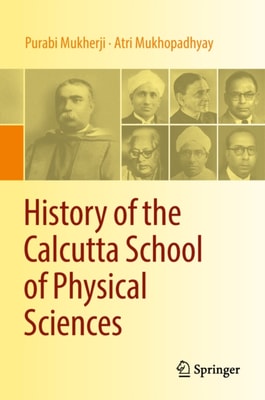
This book highlights the role of Sir Asutosh Mookerjee, founder of the Calcutta school of physics and the Calcutta Mathematical Society, and his talented scholars - Sir C.
The Marquis de Puysegur, Artificial Somnambulism, and the Discovery of the Unconscious Mind presents the first full English translation of a foundational text in the history of psychodynamic thinking, and provides a contextual explanation of its contemporary significance.
Esta es una aproximación documental al modo en que se transformó la vida económica, social y política de los muiscas en torno al beneficio de la sal en Zipaquirá, Nemocón Tausa, durante el siglo XVI y comienzos del XVII.
Durante seis años las autoridades revolucionarias de Colombia recibieron vía Londres detallados informes de cuanto acontecía en la España de Fernando VII suscritos por Thomas Farmer, inglés y comerciante de profesión.
Grete Hermann (1901-1984) was a pupil of mathematical physicist Emmy Noether, follower and co-worker of neo-Kantian philosopher Leonard Nelson, and an important intellectual figure in post-war German social democracy.
This edited volume explores the interplay between philosophies in a wide-ranging analysis of how technological applications in science inform our systems of thought.
Up to now there have been scarcely any publications on Leibniz dedicated to investigating the interrelations between philosophy and mathematics in his thought.
This book analyzes scientific problems within the history of physics, engineering, chemistry, astronomy and medicine, correlated with technological applications in the social context.
This book focuses on sciences in the universities of Europe in the nineteenth and twentieth centuries, and the chapters in it provide an overview, mostly from the point of view of the history of science, of the different ways universities dealt with the institutionalization of science teaching and research.
Recounting the compelling story of a scientific discovery that took more than a century to complete, this trail-blazing monograph focuses on methodological issues and is the first to delve into this subject.
This book brings together in a unique perspective aspects of natural history dioramas, their history, construction and rationale, interpretation and educational importance, from a number of different countries, from the west coast of the USA, across Europe to China.
This volume follows the successful book, which has helped to introduce and spread the Philosophy of Chemistry to a wider audience of philosophers, historians, science educators as well as chemists, physicists and biologists.
This book is composed of chapters that focus specifically on technological developments by distinguished figures in the history of MMS (Mechanism and Machine Science).
This book brings together a broad spectrum of authors, both from inside and from outside Cuba, who describe the development of Cuba's scientific system from the colonial period to the present.
Lazare Carnot was the unique example in the history of science of someone who inadvertently owed the scientific recognition he eventually achieved to earlier political prominence.
REFLECTIONS ON SPACETIME - FOUNDATIONS, PHILOSOPHY AND HISTORY During the academic year 1992/93, an interdisciplinary research group constituted itself at the Zentrum fUr interdisziplinare Forschung (ZiF) in Bielefeld, Germany, under the title 'Semantical Aspects of Spacetime Theories', in which philosophers and physicists worked on topics in the interpretation and history of relativity theory.
The book describes the innovations that enabled botany, in the Eighteenth century, to emerge as an independent science, independent from medicine and herbalism.
In the last years, it was observed an increasing interest of computer scientists in the structure of biological molecules and the way how they can be manipulated in vitro in order to define theoretical models of computation based on genetic engineering tools.
Music and Science in the Age of Galileo features twelve new essays by leading specialists in the fields of musicology, history of science, astronomy, philosophy, and instrument building that explore the relations between music and the scientific culture of Galileo's time.
Some time ago I published a small piece * dealing with a charming little essay on 'the state of ether in magnetic fields', which the sixteen-year-old Einstein had written while he was awaiting admission to the E.
The title of our book would lead the reader to believe that in speaking ofthe chang- ing image of the sciences, we are taking for granted the multiplicity of sciences, as these are practiced, for instance, in modern universities.
The interrelations of science and technology as an object of study seem to have drawn the attention of a number of disciplines: the history of both science and technology, sociology, economics and economic history, and even the philosophy of science.
Among the myriad of changes that took place in Great Britain in the first half of the nineteenth century, many of particular significance to the historian of science and to the social historian are discernible in that small segment of British society drawn together by a shared interest in natural phenomena and with sufficient leisure or opportunity to investigate and ponder them.
This collection of essays is a tribute to Stillman Drake by some of his friends and colleagues, and by others on whom his work has had a formative influence.
Biology and history are often viewed as closely related disciplines, with biology informed by history, especially in its task of charting our evolutionary past.
The present anthology, edited by Marcel Herbst, is partially based on a conference, held in 2009, to reflect on the legacy of Ben-David, and contains a selection of substantially revised papers, plus four contributions specifically written for this volume.
The history of artificial cold has been a rather intriguing interdisciplinary subject (physics, chemistry, technology, sociology, economics, anthropology, consumer studies) which despite some excellent monographs and research papers, has not been systematically exploited.
The book presents a new focus on the legal philosophical texts of Aristotle, which offers a much richer frame for the understanding of practical thought, legal reasoning and political experience.