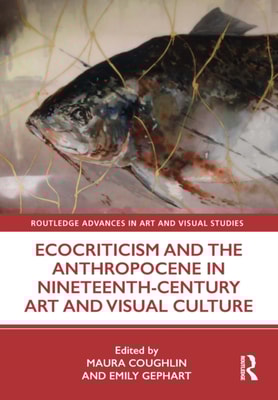
In this volume, emerging and established scholars bring ethical and political concerns for the environment, nonhuman animals and social justice to the study of nineteenth-century visual culture.
Published in 1938: The new volume presents a full and profusely illustrated account of progress made during the eighteenth century in Mathematics, Mechanics, Astronomy, Physics, Meteorology, Geography, Chemistry, Biology, Medicine, Psychology, Demography, Economics, Philosophy, and Technology.
In this volume, emerging and established scholars bring ethical and political concerns for the environment, nonhuman animals and social justice to the study of nineteenth-century visual culture.
Published in 1938: The new volume presents a full and profusely illustrated account of progress made during the eighteenth century in Mathematics, Mechanics, Astronomy, Physics, Meteorology, Geography, Chemistry, Biology, Medicine, Psychology, Demography, Economics, Philosophy, and Technology.
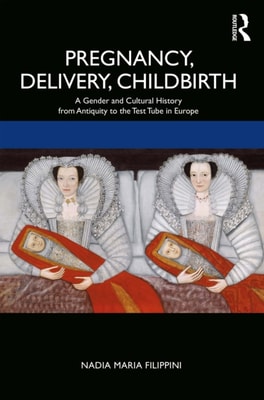
This book reconstructs the history of conception, pregnancy and childbirth in Europe from antiquity to the 20th century, focusing on its most significant turning points: the emergence of a medical-scientific approach to delivery in Ancient Greece, the impact of Christianity, the establishment of the man-midwife in the 18th century, the medicalisation of childbirth, the emergence of a new representation of the foetus as "e;unborn citizen"e;, and, finally, the revolution of reproductive technologies.
The aim of this book is to explore the body in various historical contexts and to take it as a point of departure for broader historiographical projects.
The aim of this book is to explore the body in various historical contexts and to take it as a point of departure for broader historiographical projects.
This book reconstructs the history of conception, pregnancy and childbirth in Europe from antiquity to the 20th century, focusing on its most significant turning points: the emergence of a medical-scientific approach to delivery in Ancient Greece, the impact of Christianity, the establishment of the man-midwife in the 18th century, the medicalisation of childbirth, the emergence of a new representation of the foetus as "e;unborn citizen"e;, and, finally, the revolution of reproductive technologies.
This book provides, for the very first time, a critical edition and an English translation (accompanied by critical notes and technical analyses) of the chapter on spheres (goladhyaya) from Nityananda's Sarvasiddhantaraja, a Sanskrit astronomical text written in seventeenth-century Mughal India.
Over the years, Jeremy Bernstein has been in contact with many of the world's most renowned physicists and other scientists, many of whom were involved in politics, literature, and language.
[the text below needs editing and we must be careful not to say things about Dan Brown's book that could get Springer in legal trouble]Dan Brown s novel, The Da Vinci Code, was first published in 2003; its sales have reached 40 million worldwide.
David Harland opens with a review of the robotic probes, namely the Rangers which returned television before crashing into the Moon, the Surveyors which 'soft landed' in order to investigate the nature of the surface, and the Lunar Orbiters which mapped prospective Apollo landing sites.
Scientists and other keen observers of the natural world sometimes make or write a statement pertaining to scientific activity that is destined to live on beyond the brief period of time for which it was intended.
The advancement of a scientific discipline depends not only on the "e;big heroes"e; of a discipline, but also on a community's ability to reflect on what has been done in the past and what should be done in the future.
International Federation for Information Processing The IFIP series publishes state-of-the-art results in the sciences and technologies of information and communication.
Since the discovery of ferrocene and the sandwich-type complexes, the development of organometallic chemistry took its course like an avalanche and became one of the scientific success stories of the second half of the twentieth century.
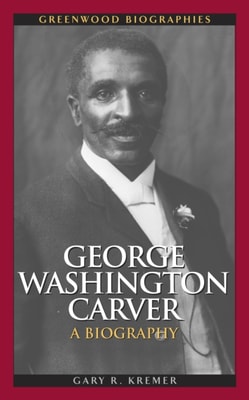
This book strips away the myths surrounding the famed scientist George Washington Carver and portrays him as a brilliant, creative man who nonetheless possessed very human peculiarities and frailties.
Revealing the career histories of successful 20th century scientists, this exciting resource offers students fascinating reads, a wonderful research tool, and tips to launching a science career.
This reference work describes the trial-and-error experiments, discoveries, and inventions of early humans who lived from before recorded history to the Middle Ages.
Science, the Singular, and the Question of Theology explores the role that the singular plays in the theories of science of Robert Grosseteste, Thomas Aquinas, Duns Scotus, William of Ockham, Marsilius of Inghen, and Pierre d'Ailly.
Increasing awareness of the extent and cause of environmental problems has fuelled the emergence of a new and timely discipline: environmental history.