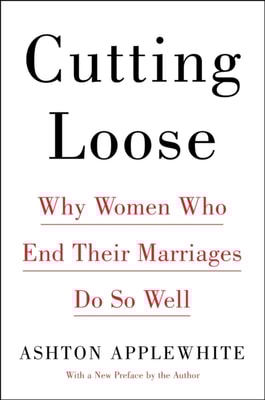
For women contemplating divorce or for those who have already divorced, Ashton Applewhite's insightful book sheds light on what to consider before making the decision to end your marriage, how to protect yourself-both financially and emotionally-and how much your life will change.
New York Times bestselling author Lee Strobel trains his investigative sights on the hot-button question: is it really credible to believe God intervenes supernaturally in people's lives today?
A leading theologian presents a hopeful account of the universe after Einstein, exploring it as a meaningful drama of awakening"e;This book is a deep and provocative piece of theology that proposes we engage with the universe as a kind of narrative of awakening and unfolding, as well as an important and useful approach for thinking about theology with respect to modern cosmology.
A revealing look at how antislavery scientists and Black and white abolitionists used scientific ideas to discredit slaveholdersIn the context of slavery, science is usually associated with slaveholders' scientific justifications of racism.
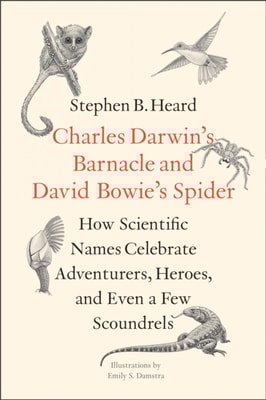
An engaging history of the surprising, poignant, and occasionally scandalous stories behind scientific names and their cultural significanceEver since Carl Linnaeus's binomial system of scientific names was adopted in the eighteenth century, scientists have been eponymously naming organisms in ways that both honor and vilify their namesakes.
The history of particle physics, the hunt for the most elusive particle, and the fundamental questions the search has inspiredHow did physicists combine talent and technology to discover the Higgs boson, the last piece in our inventory of the subatomic world?
A tour of clocks throughout the centuries-from the sandglass to the telomere-to reveal the physical, biological, and social nature of timeWhat is time?
A provocative essay challenging the idea of Buddhist exceptionalism, from one of the world's most widely respected philosophers and writers on Buddhism and scienceBuddhism has become a uniquely favored religion in our modern age.
Fifty years after the Moon landing, a new history of the space race explores the lives of both Soviet and American engineersAt the dawn of the space age, technological breakthroughs in Earth orbit flight were both breathtaking feats of ingenuity and disturbances to a delicate global balance of power.
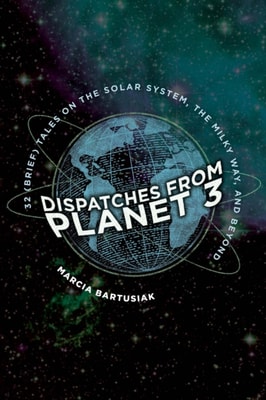
An award-winning science writer presents a captivating collection of cosmological essays for the armchair astronomerThe galaxy, the multiverse, and the history of astronomy are explored in this engaging compilation of cosmological tales by multiple-award-winning science writer Marcia Bartusiak.
A unique, beautifully illustrated exploration of our fascination with our closest primate relatives, and the development of primatology as a disciplineThis insightful work is a compact but wide-ranging survey of humankind's relationship to the great apes (chimpanzees, bonobos, gorillas, orangutans), from antiquity to the present.
A captivating historical survey of the key debates, questions, and controversies at the intersection of science and religionThroughout history, scientific discovery has clashed with religious dogma, creating conflict, controversy, and sometimes violent dispute.
Although no one had ever followed North American monarch butterflies on their annual southward journey to Mexico and California, in the 1990s there were well-accepted assumptions about the nature and form of the migration.
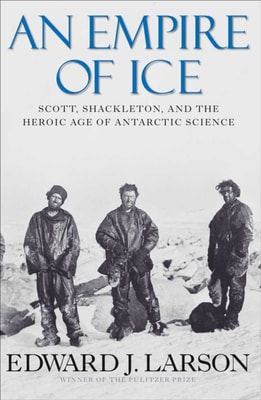
A Pulitzer Prize-winning author examines South Pole expeditions, "e;wrapping the science in plenty of dangerous drama to keep readers engaged"e; (Booklist).
Queer Feminist Science Studies takes a transnational, trans-species, and intersectional approach to this cutting-edge area of inquiry between womens, gender, and sexuality studies and science and technology studies (STS).
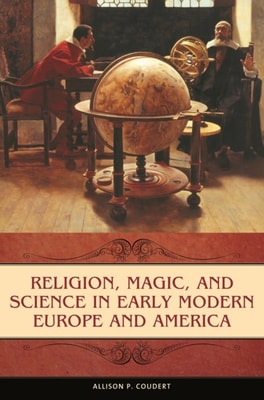
This fascinating study looks at how the seemingly incompatible forces of science, magic, and religion came together in the 15th, 16th, and 17th centuries to form the foundations of modern culture.
How cultural categories shaped--and were shaped by--new ideas about controlling nature Ranging from alchemy to necromancy, "e;books of secrets"e; offered medieval readers an affordable and accessible collection of knowledge about the natural world.
By dividing the creation of matter, energy, life, and mind into three big bangs, Holmes Rolston III brings into focus a history of the universe that respects both scientific discovery and the potential presence of an underlying intelligence.
In this book, Weikart helps unlock the mystery of Hitler's evil by vividly demonstrating the surprising conclusion that Hitler's immorality flowed from a coherent ethic.
An annotated edition of a landmark study in the history of psychology, including extensive essays and other critical apparatus that place Antoine Despine's work in its proper historical and scientific context.
This is an account of the roles of local and national movements, and of memory and regret in the destruction or preservation of the architectural, artistic, and historic legacy of Europe in which the author examines what is cultural heritage and why it matters.
Although Christianity's precise influence on the Holocaust cannot be determined and the Christian churches did not themselves perpetrate the Final Solution, Michael argues that two millennia of Christian ideas and prejudices and their impact on Christians' behaviour appear to be the major basis of antisemitism and it's apex, the Holocaust.
In this overview of secularism and its history, Kennedy traces, through a series of intellectual biographies of leading European thinkers such as Rousseau, Kant, Hegel, Marx, Dostoyevsky, and Solzhenitsyn, just how the Western world changed from religious to secular.
Arun Bala challenges Eurocentric conceptions of history by showing how Chinese, Indian, Arabic, and ancient Egyptian ideas in philosophy, mathematics, cosmology and physics played an indispensable role in making possible the birth of modern science.
This book is a survey of the relationship between the two Celtic and Roman traditions in Merovingian Gaul, Lombard Italy, and the British Isles during the period of the Easter controversy.
The purpose of this book is to show how the science of biology has been influenced by ethical, religious, social, cultural and philosophical beliefs as to the nature of life and our human place in the natural world.
In this controversial book, the authors show how the Roman-Jewish wars were precipitated partly by Jewish demographic and religious expansion and by conflict with the Greeks and their culture.