Continuing his pioneering theoretical explorations into the relationships among biosciences, the market, and political economy, Kaushik Sunder Rajan introduces the concept of pharmocracy to explain the structure and operation of the global hegemony of the multinational pharmaceutical industry.
Cultural accounts of scientific ideas and practices have increasingly come to be welcomed as a corrective to previous-and still widely held-theories of scientific knowledge and practices as universal.
In the industrialized nations of the global North, well-funded agencies like the CDC attend to citizens' health, monitoring and treating for toxic poisons like lead.
The Italian mathematician Mario Pieri (1860-1913) played a major role in the development of algebraic geometry and foundations of mathematics around the turn of the twentieth century.
A century ago, in 1905, Albert Einstein published, "e;On the Electrodynamics of M- ing Bodies,"e; in which the foundations were laid for the Special Theory of Relativity.
The science fiction genre maintains a remarkable hold on the imagination and enthusiasm of the filmgoing public, captivating large audiences worldwide and garnering ever-larger profits.
David Miller elegantly and provocatively reformulates critical rationalismthe revolutionary approach to epistemology advocated by Karl Popperby answering its most important critics.
Addressing a wide range of topics, from Newton to Post-Kuhnian philosophy of science, these essays critically examine themes that have been central to the influential work of philosopher Michael Friedman.
This collection of essays represents a reflective inquiry into the way in which our world is set apart from its past, its present defined and its destiny shaped by technology.
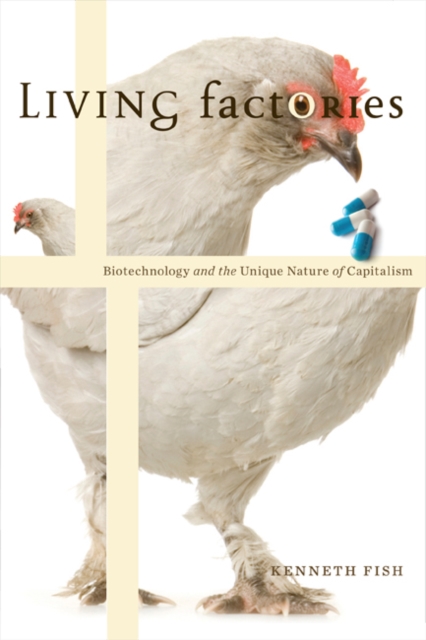
She examines the decision-making processes at Monsanto that led to their making the drug available and discusses corporate, academic, and regulatory decision-making in the context of a restructured global political economy for agriculture.
What becomes of the sublime today, in a philosophy that discards the old oppositions between body and mind and embeds human reason in the creative evolution of life?
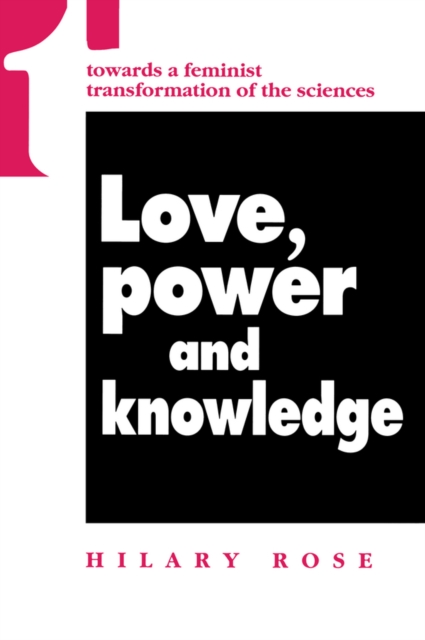
In this book Hilary Rose develops new terms for thinking about science and feminism, locating the feminist criticism of science as both integral to the feminist movement and to the radical science movement.
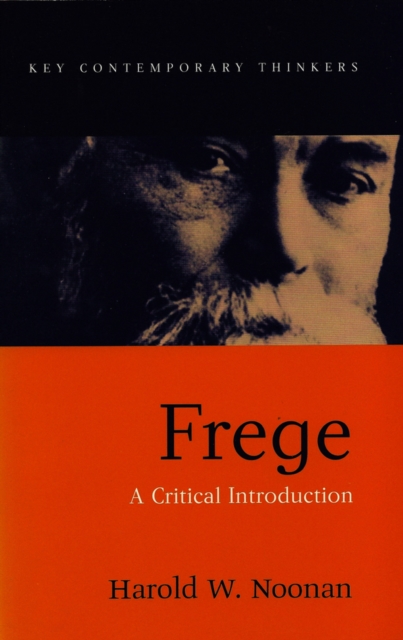
This new book offers a comprehensive and accessible introduction to Frege's remarkable philosophical work, examining the main areas of his writings and demonstrating the connections between them.
The Riddle of Organismal Agency brings together historians, philosophers, and scientists for an interdisciplinary re-assessment of one of the long-standing problems in the scientific understanding of life.
This collection responds to widespread, complex, and current environmental challenges by presenting eleven original essays on a new elemental-embodied approach in environmental humanities.
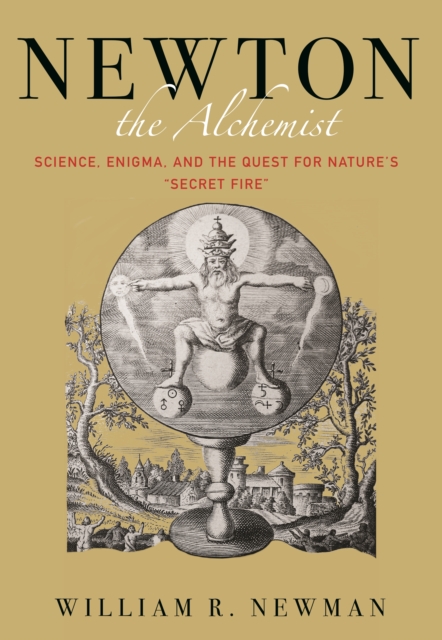
A book that finally demystifies Newton's experiments in alchemyWhen Isaac Newton's alchemical papers surfaced at a Sotheby's auction in 1936, the quantity and seeming incoherence of the manuscripts were shocking.
Among the great ironies of quantum mechanics is not only that its conceptual foundations seem strange even to the physicists who use it, but that philosophers have largely ignored it.
A beloved multidisciplinary treatise comes to Penguin Classics
Since its initial publication in 1958, The Poetics of Space has been a muse to philosophers, architects, writers, psychologists, critics, and readers alike.
Among the great ironies of quantum mechanics is not only that its conceptual foundations seem strange even to the physicists who use it, but that philosophers have largely ignored it.
From the Nobel Prizewinning physicist, a personal meditation on the quest for objective reality in natural scienceA century ago, thoughtful people questioned how reality could agree with physical theories that kept changing, from a mechanical model of the ether to electric and magnetic fields, and from homogeneous matter to electrons and atoms.
The philosophical theory of scientific explanation proposed here involves a radically new treatment of causality that accords with the pervasively statistical character of contemporary science.