How the internet and powerful online tools are democratizing and accelerating scientific discoveryReinventing Discovery argues that we are living at the dawn of the most dramatic change in science in more than three hundred years.
Why psychology is in peril as a scientific discipline-and how to save itPsychological science has made extraordinary discoveries about the human mind, but can we trust everything its practitioners are telling us?
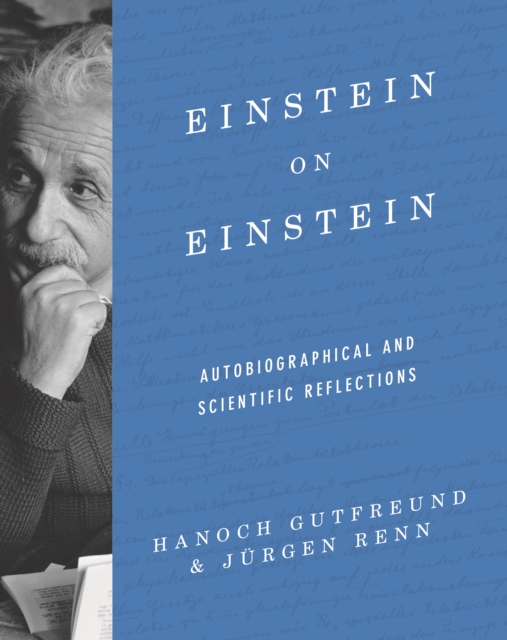
New perspectives on the iconic physicist's scientific and philosophical formationAt the end of World War II, Albert Einstein was invited to write his intellectual autobiography for the Library of Living Philosophers.
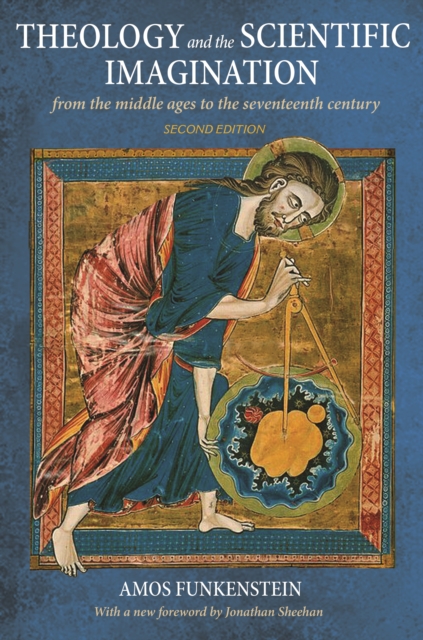
Theology and the Scientific Imagination is a pioneering work of intellectual history that transformed our understanding of the relationship between Christian theology and the development of science.
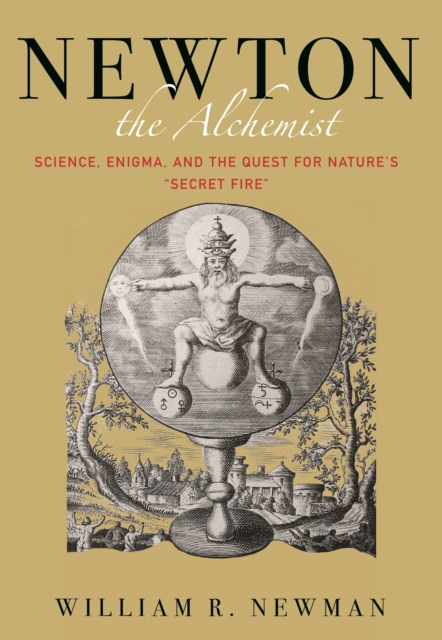
A book that finally demystifies Newton's experiments in alchemyWhen Isaac Newton's alchemical papers surfaced at a Sotheby's auction in 1936, the quantity and seeming incoherence of the manuscripts were shocking.
Over the past 20 years, the role of phenotypic plasticity in Darwinian evolution has become a hotly debated topic among biologists and philosophers of science.
Stephen Jay Gould (1941-2002) was a leading critic of human behavioral genetics, human sociobiology, evolutionary psychology, and the modern evolutionary synthesis.
Questo libro ha lo scopo di fornire un’ampia riflessione sui principi generali della fisica e gli elementi fondanti della conoscenza scientifica nella loro unitarietà.
Temporal Logic: From Ancient Ideas to Artificial Intelligence deals with the history of temporal logic as well as the crucial systematic questions within the field.
From the Nobel Prizewinning physicist, a personal meditation on the quest for objective reality in natural scienceA century ago, thoughtful people questioned how reality could agree with physical theories that kept changing, from a mechanical model of the ether to electric and magnetic fields, and from homogeneous matter to electrons and atoms.
THE TIMES SCIENCE BOOK OF THE YEARNEW YORKER BEST BOOK OF THE YEARFINALIST FOR THE LOS ANGELES TIMES BOOK PRIZE FOR SCIENCE AND TECHNOLOGYA revelatory and vibrant story of measurement which will make you look at the world around you anew.
Why an awareness of Earth's temporal rhythms is critical to our planetary survivalFew of us have any conception of the enormous timescales in our planet's long history, and this narrow perspective underlies many of the environmental problems we are creating for ourselves.
An exhilarating chronicle of the most revolutionary advancements in recent-and future-technologyWhich new technologies are bound to have the biggest impact on our lives in the years ahead?
Rush Rhees, a close friend of Wittgenstein and a major interpreter of his work, shows how Wittgenstein's On Certainty concerns logic, language, and reality topics that occupied Wittgenstein since early in his career.
In this important study, Michael Luntley offers a compelling reading of Wittgenstein s account of meaning and intentionality, based upon a unifying theme in the early and later philosophies.
A COMPANION TO THE PHILOSOPHY OF BIOLOGY Sarkar is to be congratulated for assembling this talented team of philosophers, who are themselves to be congratulated for writing these interesting essays on so many fascinating areas in philosophy of biology.
Originally published in 1987 when Artificial Intelligence (AI) was one of the most hotly debated subjects of the moment; there was widespread feeling that it was a field whose 'time had come', that intelligent machines lay 'just around the corner'.
Originally published in 1987 when Artificial Intelligence (AI) was one of the most hotly debated subjects of the moment; there was widespread feeling that it was a field whose 'time had come', that intelligent machines lay 'just around the corner'.
Conceptual Foundations of Quantum Mechanics provides a detailed view of the conceptual foundations and problems of quantum physics, and a clear and comprehensive account of the fundamental physical implications of the quantum formalism.
The first full-length defense of social scientific laws to appear in the last twenty years, this book upholds the prospect of the nomological explanation of human behavior against those who maintain that this approach is impossible, impractical, or irrelevant.
This book focuses on the most important questions of philosophy of physics, offering a sufficiently concise and clear treatment of the issues to lead the interested reader through the sometimes labyrinthian paths taken by the central debates.
In The Many Faces of Science, Leslie Stevenson and Henry Byerly masterfully, and painlessly, provide the information and the philosophical reflections students need to gain an understanding of the institution of modern science and its increasing impact on our lives and cultures.
Perhaps because of it implications for our understanding of human nature, recent philosophy of biology has seen what might be the most dramatic work in the philosophies of the ?
Conceptual Foundations of Quantum Mechanics provides a detailed view of the conceptual foundations and problems of quantum physics, and a clear and comprehensive account of the fundamental physical implications of the quantum formalism.
The first full-length defense of social scientific laws to appear in the last twenty years, this book upholds the prospect of the nomological explanation of human behavior against those who maintain that this approach is impossible, impractical, or irrelevant.
This book focuses on the most important questions of philosophy of physics, offering a sufficiently concise and clear treatment of the issues to lead the interested reader through the sometimes labyrinthian paths taken by the central debates.