The problem of quantum gravity is often viewed as the most pressing unresolved problem of modern physics: our theories of spacetime and matter, described respectively by general relativity (Einstein's theory of gravitation and spacetime) and quantum mechanics (our best theory of matter and the other forces of nature) resist unification.
Psychological terms are widely used to describe the biological world: plants, insects, bacteria colonies, even single cells are described as making decisions, anticipating rewards, and communicating with language.
Galileo Unbound traces the journey that brought us from Galileo's law of free fall to today's geneticists measuring evolutionary drift, entangled quantum particles moving among many worlds, and our lives as trajectories traversing a health space with thousands of dimensions.
A certain kind of talk is ubiquitous among both philosophers and so-called "e;ordinary people"e;: talk of one phenomenon generating or giving rise to another, or talk of one phenomenon being based in or constructed from another.
The Oxford Handbook of Descartes and Cartesianism comprises fifty specially written chapters on Rene Descartes (1596-1650) and Cartesianism, the dominant paradigm for philosophy and science in the seventeenth century, written by an international group of leading scholars of early modern philosophy.
Ryan Wasserman presents a wide-ranging exploration of puzzles raised by the possibility of time travel, including the grandfather paradox, the bootstrapping paradox, and the twin paradox of special relativity.
The Dark Side of Technology is intended as a powerful wake-up call to the potential dangers that could, in the near future, destroy our current advanced civilizations.
Model theory is used in every theoretical branch of analytic philosophy: in philosophy of mathematics, in philosophy of science, in philosophy of language, in philosophical logic, and in metaphysics.
The Dark Side of Technology is intended as a powerful wake-up call to the potential dangers that could, in the near future, destroy our current advanced civilizations.
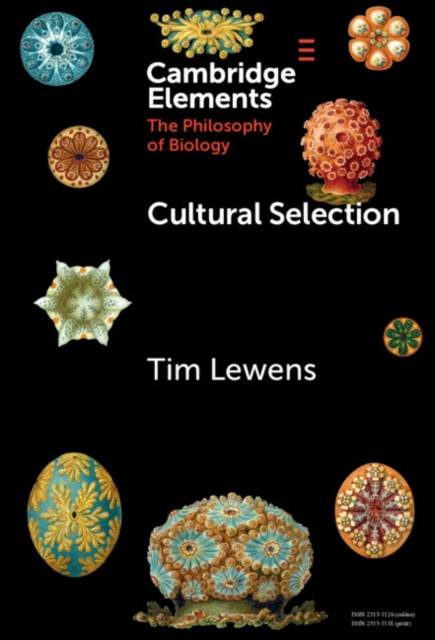
Tim Lewens aims to understand what it means to take an evolutionary approach to cultural change, and why it is that this approach is often treated with suspicion.
A History of Mathematics: From Mesopotamia to Modernity covers the evolution of mathematics through time and across the major Eastern and Western civilizations.
Peter Byrne tells the story of Hugh Everett III (1930-1982), whose "e;many worlds"e; theory of multiple universes has had a profound impact on physics and philosophy.
Quantum Information Theory and the Foundations of Quantum Mechanics is a conceptual analysis of one the most prominent and exciting new areas of physics, providing the first full-length philosophical treatment of quantum information theory and the questions it raises for our understanding of the quantum world.
In recent years philosophers of science have urged that many scientific theories are extremely useful and successful despite being internally inconsistent.
Chance and Temporal Asymmetry presents a collection of cutting-edge research papers in the metaphysics of science, tackling the perplexing philosophical problems raised by recent progress in the physics and metaphysics of chance and time.