The applications of Artificial Intelligence lie all around us; in our homes, schools and offices, in our cinemas, in art galleries and - not least - on the Internet.
The applications of Artificial Intelligence lie all around us; in our homes, schools and offices, in our cinemas, in art galleries and - not least - on the Internet.
The applications of Artificial Intelligence lie all around us; in our homes, schools and offices, in our cinemas, in art galleries and - not least - on the Internet.
The applications of Artificial Intelligence lie all around us; in our homes, schools and offices, in our cinemas, in art galleries and - not least - on the Internet.
Tim Lewens aims to understand what it means to take an evolutionary approach to cultural change, and why it is that this approach is often treated with suspicion.
Social epistemology has been flourishing in recent years, expanding and making connections with political philosophy, virtue epistemology, philosophy of science, and feminist philosophy.
Social epistemology has been flourishing in recent years, expanding and making connections with political philosophy, virtue epistemology, philosophy of science, and feminist philosophy.
According to Grothendieck, the notion of topos is "e;the bed or deep river where come to be married geometry and algebra, topology and arithmetic, mathematical logic and category theory, the world of the continuous and that of discontinuous or discrete structures"e;.
According to Grothendieck, the notion of topos is "e;the bed or deep river where come to be married geometry and algebra, topology and arithmetic, mathematical logic and category theory, the world of the continuous and that of discontinuous or discrete structures"e;.
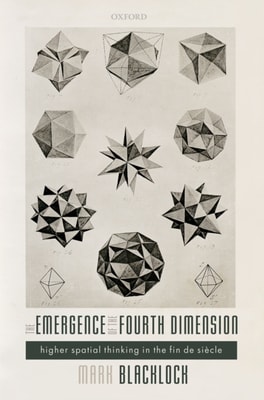
The Emergence of the Fourth Dimension describes the development and proliferation of the idea of higher dimensional space in the late nineteenth- and early twentieth-centuries.
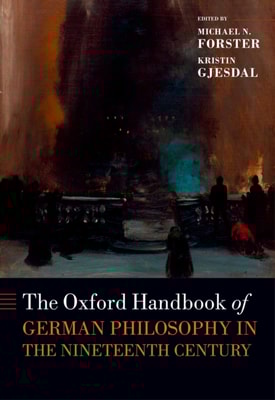
The Oxford Handbook of German Philosophy in the Nineteenth Century is the first collective critical study of this important period in intellectual history.
The Oxford Handbook of German Philosophy in the Nineteenth Century is the first collective critical study of this important period in intellectual history.
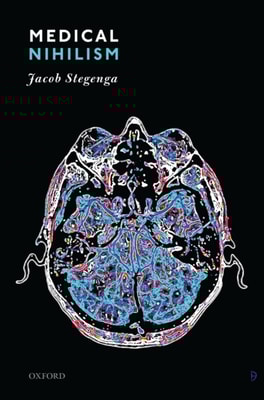
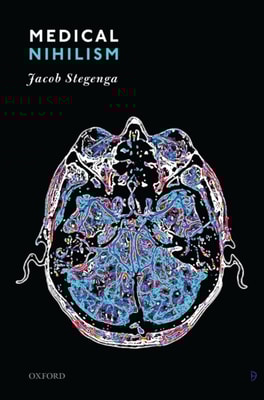
This book argues that if we consider the ubiquity of small effect sizes in medicine, the extent of misleading evidence in medical research, the thin theoretical basis of many interventions, and the malleability of empirical methods, and if we employ our best inductive framework, then our confidence in medical interventions ought to be low.
This book argues that if we consider the ubiquity of small effect sizes in medicine, the extent of misleading evidence in medical research, the thin theoretical basis of many interventions, and the malleability of empirical methods, and if we employ our best inductive framework, then our confidence in medical interventions ought to be low.
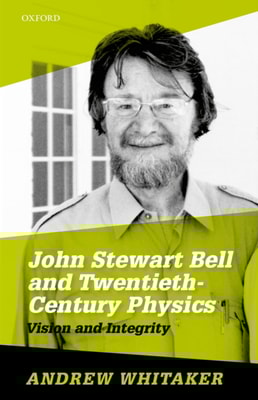
John Stewart Bell (1928-1990) was one of the most important figures in twentieth-century physics, famous for his work on the fundamental aspects of the century's most important theory, quantum mechanics.
John Stewart Bell (1928-1990) was one of the most important figures in twentieth-century physics, famous for his work on the fundamental aspects of the century's most important theory, quantum mechanics.
Chance and Temporal Asymmetry presents a collection of cutting-edge research papers in the metaphysics of science, tackling the perplexing philosophical problems raised by recent progress in the physics and metaphysics of chance and time.
Richard Pettigrew offers an extended investigation into a particular way of justifying the rational principles that govern our credences (or degrees of belief).
Since Hilary Putnam offered multiple realization as an empirical hypothesis in the 1960s, philosophical consensus has turned against the idea that mental processes could be identified with brain processes, and multiple realization has become the keystone of the 'antireductive consensus' across philosophy of science broadly.
Frequently, alleged irreconcilable conflicts between science and religion are instead misdescribed battles concerning negotiable philosophical assumptions--conflicts between metaphysics and metaphysics.
Most philosophers have taken the importance of Kant's Critique of Judgement to lie primarily in its contributions to aesthetics and to the philosophy of biology.
Most philosophers have taken the importance of Kant's Critique of Judgement to lie primarily in its contributions to aesthetics and to the philosophy of biology.
This book is offers a broad, comparative survey of a booming field within the history of science: the history, generation, use, and function of images in scientific practice.