Volume III of a tetralogy devoted to Divine Agency and Divine Action articulates a comprehensive vision of systematic theology focused on divine action from creation to eschatology.
When you light a match it is the striking of it which causes the lighting; the presence of oxygen in the room is a background condition to the lighting.
When you light a match it is the striking of it which causes the lighting; the presence of oxygen in the room is a background condition to the lighting.
Andrew Steane reconfigures the public understanding of science, by drawing on a deep knowledge of physics and by bringing in mainstream philosophy of science.
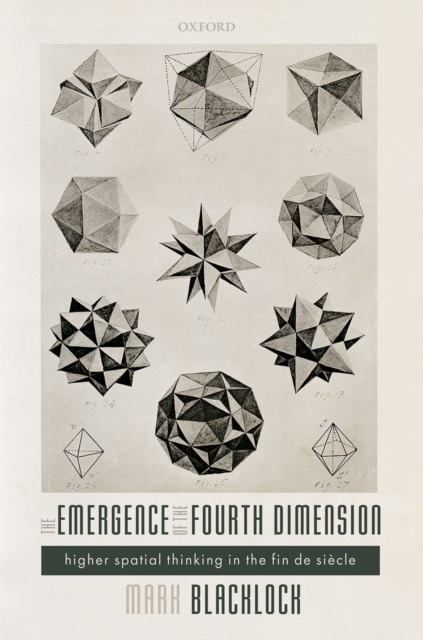
The Emergence of the Fourth Dimension describes the development and proliferation of the idea of higher dimensional space in the late nineteenth- and early twentieth-centuries.
Both the special sciences and ordinary experience suggest that there are metaphysically emergent entities and features: macroscopic goings-on (including mountains, trees, humans, and sculptures, and their characteristic properties) which depend on, yet are distinct from and distinctively efficacious with respect to, lower-level physical configurations and features.
Humility, Pride, and Christian Virtue Theory proposes an account of humility that relies on the most radical Christian sayings about humility, especially those found in Augustine and the early monastic tradition.
Humility, Pride, and Christian Virtue Theory proposes an account of humility that relies on the most radical Christian sayings about humility, especially those found in Augustine and the early monastic tradition.
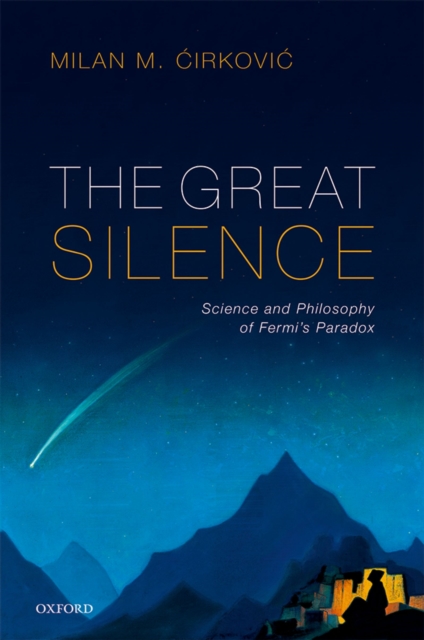
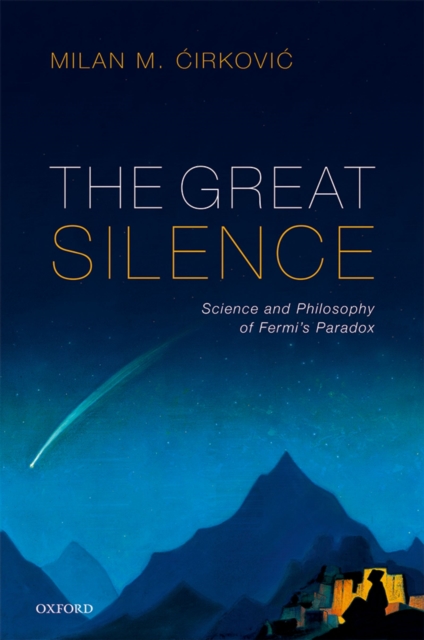
The Great Silence explores the multifaceted problem named after the great Italian physicist Enrico Fermi and his legendary 1950 lunchtime question "e;Where is everybody?
The Great Silence explores the multifaceted problem named after the great Italian physicist Enrico Fermi and his legendary 1950 lunchtime question "e;Where is everybody?
Our understanding of human rationality has changed significantly since the beginning of the century, with growing emphasis being placed on multiple rationalities, each adapted to the specific tasks of communities of practice.
Our understanding of human rationality has changed significantly since the beginning of the century, with growing emphasis being placed on multiple rationalities, each adapted to the specific tasks of communities of practice.
Very Short Introductions: Brilliant, Sharp, Inspiring Philosophy of physics is concerned with the deepest theories of modern physics - notably quantum theory, our theories of space, time and symmetry, and thermal physics - and their strange, even bizarre conceptual implications.
Very Short Introductions: Brilliant, Sharp, Inspiring Philosophy of physics is concerned with the deepest theories of modern physics - notably quantum theory, our theories of space, time and symmetry, and thermal physics - and their strange, even bizarre conceptual implications.
Samir Okasha approaches evolutionary biology from a philosophical perspective in Agents and Goals in Evolution, analysing a mode of thinking in biology called agential thinking.
Samir Okasha approaches evolutionary biology from a philosophical perspective in Agents and Goals in Evolution, analysing a mode of thinking in biology called agential thinking.
The problem of quantum gravity is often viewed as the most pressing unresolved problem of modern physics: our theories of spacetime and matter, described respectively by general relativity (Einstein's theory of gravitation and spacetime) and quantum mechanics (our best theory of matter and the other forces of nature) resist unification.
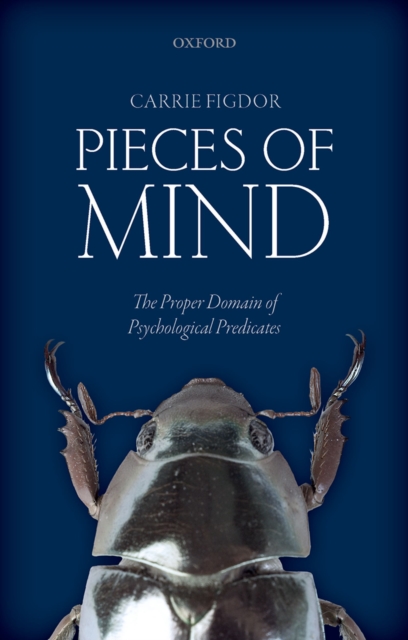
Psychological terms are widely used to describe the biological world: plants, insects, bacteria colonies, even single cells are described as making decisions, anticipating rewards, and communicating with language.
Psychological terms are widely used to describe the biological world: plants, insects, bacteria colonies, even single cells are described as making decisions, anticipating rewards, and communicating with language.
Galileo Unbound traces the journey that brought us from Galileo's law of free fall to today's geneticists measuring evolutionary drift, entangled quantum particles moving among many worlds, and our lives as trajectories traversing a health space with thousands of dimensions.