This book examines the ethical responsibilities of engineers and scientists in light of new advances in science with a distinct reflection on quantum mechanics.
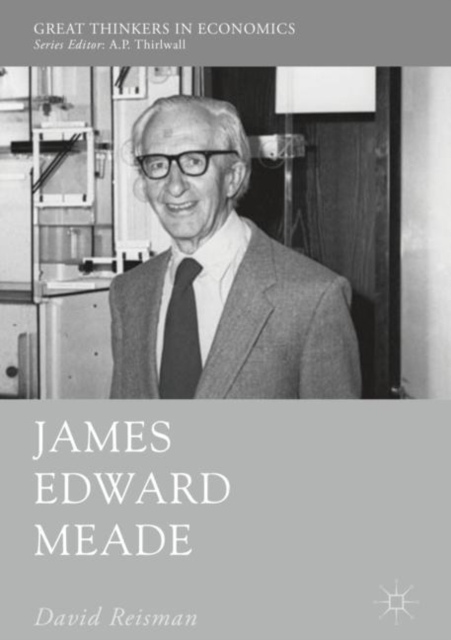
This book examines the nature of economic objects that form the subject matter of economics, and studies how they resemble or differ from the objects studied by the natural sciences.
This textbook presents the basics of philosophy that are necessary for the student and researcher in science in order to better understand scientific work.
This book gathers case studies presented at the International Conference on Responsible Research and Innovation in Science, Innovation and Society (RRI-SIS2017).
This book provides methods and practical cases and experiences with the aim of stimulating Responsible Research and Innovation (RRI) through the direct engagement of researchers, Civil Society Organisations (CSOs), citizens, industry stakeholders, policy and decision makers, research funders and communicators.
This book presents contributions from an internal symposium organized to celebrate the 80th anniversary of the Specola Vaticana, or Vatican Observatory, in the Papal Palace of Castel Gandolfo.
In terms of China's current situation, the prevention and control of land degradation and the development of innovative sustainable land management activities lie within the purview of public works.
This book explores the rich and deep interplay between mathematics and physics one century after David Hilbert's works from 1891 to 1933, published by Springer in six volumes.
The Anthropocene has become a field of studies in which the influence of human activity on the Earth System and nature is both the main threat and the potential solution.
In this exciting new collection, leading and emerging Lacanian scholars seek to understand what psychoanalysis brings to debates about the environment and the climate crisis.
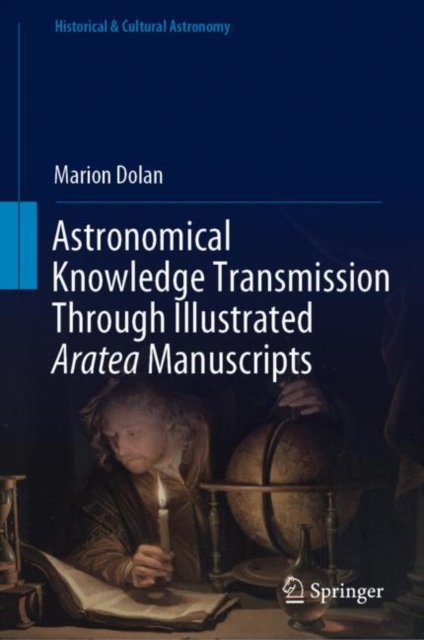
This carefully researched monograph is a historical investigation of the illustrated Aratea astronomical manuscript and its many interpretations over the centuries.
This monograph addresses the question of the increasing irrelevance of philosophy, which has seen scientists as well as philosophers concluding that philosophy is dead and has dissolved into the sciences.
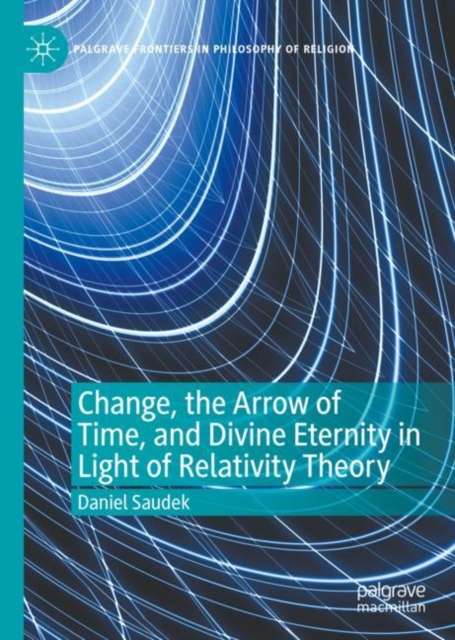
This book has two aims; first, to provide a new account of time's arrow in light of relativity theory; second, to explain how God, being eternal, relates to our world, marked as it is by change and time.
This work celebrates the investigative power of phenomenology to explore the phenomenological sense of space and time in conjunction with the phenomenology of intentionality, the invisible, the sacred, and the mystical.
Technology, perhaps the most salient feature of our time, affects everything from jobs to international law yet ranks among the most unpredictable facets of human life.
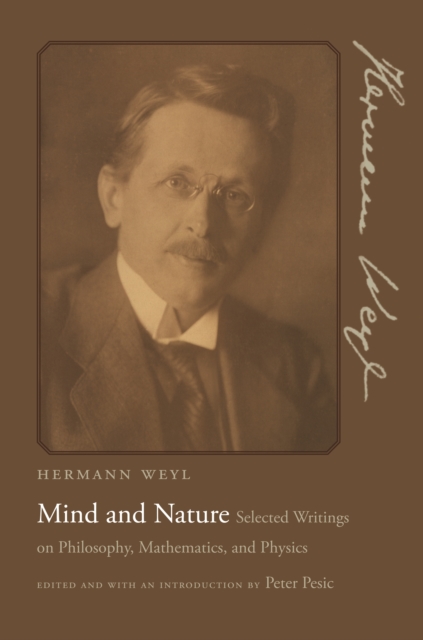
Hermann Weyl (1885-1955) was one of the twentieth century's most important mathematicians, as well as a seminal figure in the development of quantum physics and general relativity.
The case for a thoughtful secularism from some of today's most distinguished scientists, philosophers, and writersCan secularism offer us moral, aesthetic, and spiritual satisfaction?
This book highlights the key phases and central findings of Alzheimer's Disease research since the introduction of the label 'Alzheimer's Disease' in 1910.
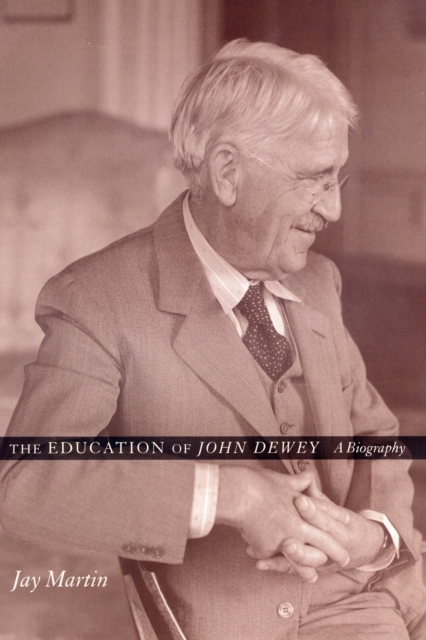
During John Dewey's lifetime (1859-1952), one public opinion poll after another revealed that he was esteemed to be one of the ten most important thinkers in American history.
The science fiction genre maintains a remarkable hold on the imagination and enthusiasm of the filmgoing public, captivating large audiences worldwide and garnering ever-larger profits.
This work is a large, powerfully illustrated interdisciplinary natural sciences volume, the first of its kind to examine the critically important nature of ecological paradox, through an abundance of lenses: the biological sciences, taxonomy, archaeology, geopolitical history, comparative ethics, literature, philosophy, the history of science, human geography, population ecology, epistemology, anthropology, demographics, and futurism.
This book is a historical analysis of the quantum mechanical revolution and the emergence of a new discipline from the perspective, not of a professor, but of a recent or actual Ph.
This is a second edition of a textbook that provides the first comprehensive, easy-to-read, and up-to-date account of the fascinating discipline of archaeoastronomy, in which the relationship between ancient constructions and the sky is studied in order to gain a better understanding of the ideas of the architects of the past and of their religious and symbolic worlds.
A major synthesis of homology, written by a top researcher in the fieldHomology-a similar trait shared by different species and derived from common ancestry, such as a seal's fin and a bird's wing-is one of the most fundamental yet challenging concepts in evolutionary biology.
This book attempts to advance Donald Griffin's vision of the "e;final, crowning chapter of the Darwinian revolution"e; by developing a philosophy for the science of animal consciousness.
Diderot, tanrisal, dinsel inancin yerine akli geciren adamdir, onun savasimi buydu ve butun kor inanclari silip supuren bu akil, gorunen dunyayi, dogayi, felsefenin, sanatin, sag torenin temel ilkesi durumuna getirdi.