In A Scientist Speaks Out - A Personal Perspective on Science, Society, and Change, Nobel Laureate (Chemistry, 1951) Glenn T Seaborg shares some of his thoughts and reflections on his broad interests, from the formulation of national science policy to the promise of youth.
"e;I re-experience once again the stimulating atmosphere of each of the ISQMs: There were theoretical discussions in diverse frontier areas of physics as well as descriptions of beautiful new (or planned) experiments and technologies.
Written by one of the top most statisticians with experience in diverse fields of applications of statistics, the book deals with the philosophical and methodological aspects of information technology, collection and analysis of data to provide insight into a problem, whether it is scientific research, policy making by government or decision making in our daily lives.
At the 6th International Zermatt Symposium, Prof Antonino Zichichi of the World Federation of Scientists presented a lecture to a diverse audience of scientists, managers and engineers, among others, all of whom were interested to learn about the creative process which distinguishes mankind from other forms of life.
Complexity has become a central topic in certain sectors of theoretical physics and chemistry (for example, in connection with nonlinearity and deterministic chaos).
Quantum field theory (QFT) provides the framework for many fundamental theories in modern physics, and over the last few years there has been growing interest in its historical and philosophical foundations.
In this book, after discussing the fundamental problems of current science and other philosophic concepts, beginning with controversies between Heraclitus and Parmenides, Ilya Prigogine launches into a message of great hope: the future has not been determined.
With the poems written by winner of the Posner Poetry Award from the Council of Wisconsin Writers in 2005, this coffee-table book will delight and inform general readers curious about ideas of chaos, fractals, and nonlinear complex systems.
This book is a rebuttal of the common belief that grave environmental consequences are associated with the issues of global warming and nuclear hazards.
This unique book offers an original way of thinking about two of the most significant problems confronting modern theoretical physics: the unification of the forces of nature and the evolution of the universe.
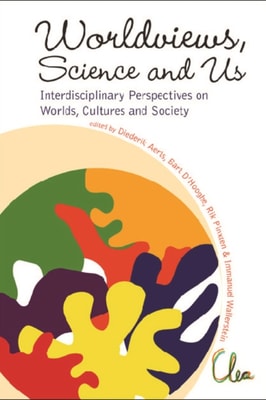
This volume is part of the "e;Worldviews, Science and Us"e; series of proceedings and contains several contributions on the subject of worlds, cultures and society.
This book provides realistic answers to hotly debated scientific topics: Science is about quantitative aspects of natural realities (physical, chemical, biological) but it is the result of human intellectual inquiry and therefore not "e;per se"e; materialistic.
'The originality of this book is that it reverses the tables on all current schools of philosophy, where philosophy and metaphysics are separated and isolated from the sciences.
This book deeply analyzes the theoretical roots of the development of global artificial intelligence ethics and AI governance, the ethical issues in AI application scenarios, and the discussion of artificial intelligence governance issues from a global perspective.
This book presents a collection of old and new essays exploring the author's unique contributions to the sociology of science, mathematics, logic, robotics, brain, and god.
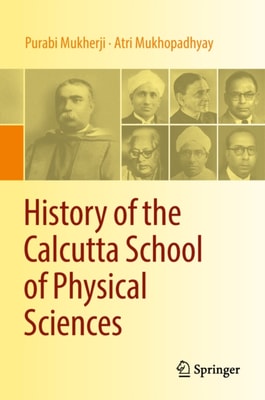
This book highlights the role of Sir Asutosh Mookerjee, founder of the Calcutta school of physics and the Calcutta Mathematical Society, and his talented scholars - Sir C.
In this timely and expansive book, Wakefield-Rann investigates how emerging disease ecologies are undermining definitions of health and immunity that have persisted since the 19th century, and had a formative influence over the design of not only homes, but entire cities.
This book is an historical narrative of academic appointments, significant personal and collaborative research endeavours, and important editorial and institutional engagements.
The book presents thirty great Chinese inventions, both ancient and modern, which are original, distinct, have made outstanding contributions and had extensive influence in China and around the globe.
In terms of China's current situation, the prevention and control of land degradation and the development of innovative sustainable land management activities lie within the purview of public works.
This book highlights the role of Sir Asutosh Mookerjee, founder of the Calcutta school of physics and the Calcutta Mathematical Society, and his talented scholars - Sir C.