This book is composed of the most interesting problems from a quarter century of regional mathematics competitions for students aged 11-14 in the province of Styria, Austria.
'This book could not be more timely - published after a year that saw the costliest slew of weather disasters in history along with one of the deadliest pandemic, the emergence and spread of which is linked to climate change .
We live in a world of numbers and mathematics, and so we need to work with numbers and some math in almost everything we do, to control our happiness and the direction of our lives.
The two volumes of Engaging Young Students in Mathematics through Competitions present a wide scope of aspects relating to mathematics competitions and their meaning in the world of mathematical research, teaching and entertainment.
This fascinating title has been carefully organised to meet the long-felt needs of increasingly large number of those who deals with different aspects of Entomology.
This book contains the most interesting problems from the first 24 years of the 'Mathematical Duel', an annual international mathematics competition between the students of four schools: the Gymnazium Mikulase Kopernika in Bilovec, Czech Republic, the Akademicki Zespol Szkol Ogolnoksztalcacych in Chorzow, Poland, the Bundesrealgymnasium Kepler in Graz, Austria and the Gymnazium Jakuba Skody in Prerov, Czech Republic.
From Black Holes and Big Bangs to the Higgs boson and the infinitesimal building blocks of all matter, modern science has been spectacularly successful, with one glaring exception - intelligence.
'Michael Days insightful aphilosophical biography of J Robert Oppenheimer stands out from other works on the so-called afather of the atomic bomb by its focus on the post-war period and by the depth of its philosophical engagement with his humanistic thought on science and culture.
Written by a former Olympiad student, Wang Jinhui, and a Physics Olympiad national trainer, Bernard Ricardo, Competitive Physics delves into the art of solving challenging physics puzzles.
'Ranging from original photographs to pictures from university archives, the insightful curation of images in this book further enhances the reading experience .
Ambition, genius, thought, imagination, love, hate, greed and, above all, consciousness ourselves as alive and as part of our world - all this is somehow enabled by the brain.
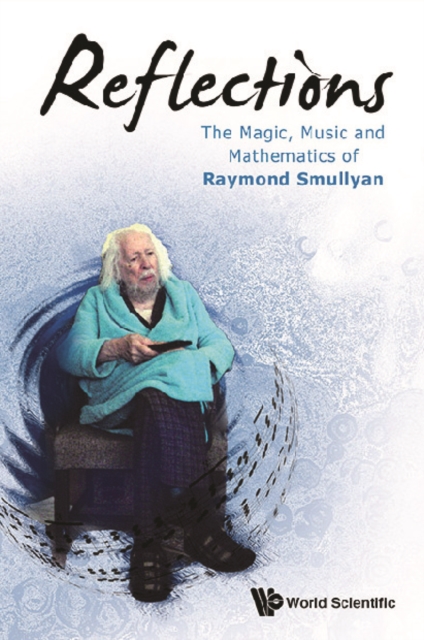
This is an exciting if not rambling account of events of Raymond Smullyan's four lives - as a mathematical logician, musician, magician, and author - together with thoughts that come to his mind as he recalls them.
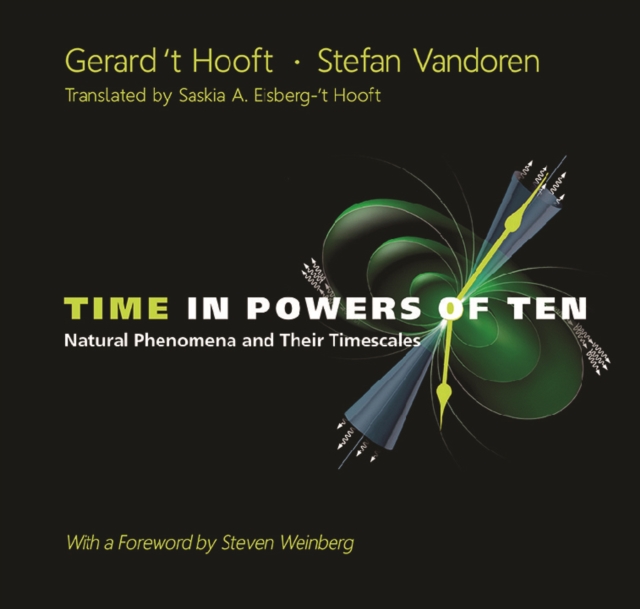
With a Foreword by Steven WeinbergIn this richly illustrated book, Nobel Laureate Gerard 't Hooft and Theoretical Physicist Stefan Vandoren describe the enormous diversity of natural phenomena that take place at different time scales.
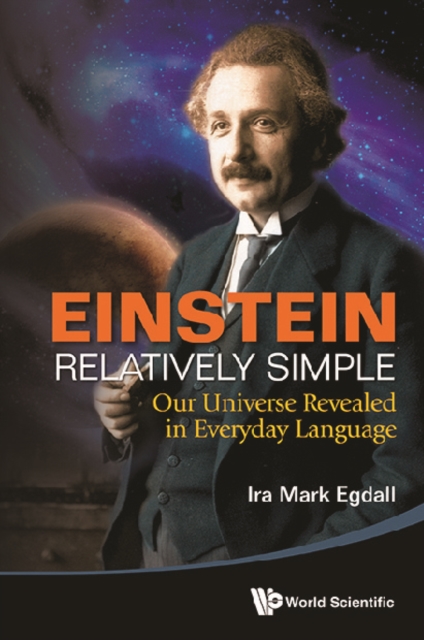
'Outstanding Academic Title for 2014' by CHOICEEinstein Relatively Simple brings together for the first time an exceptionally clear explanation of both special and general relativity.
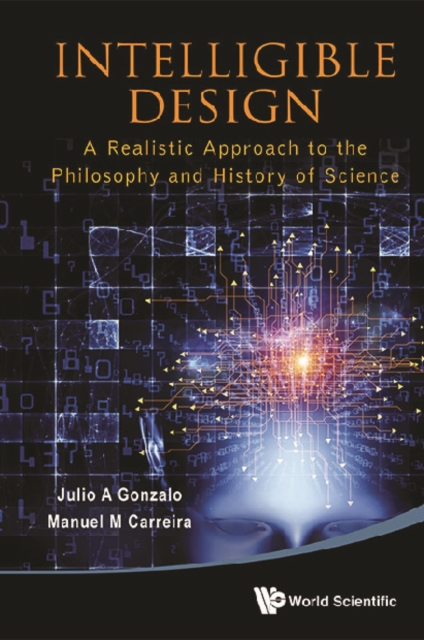
This book provides realistic answers to hotly debated scientific topics: Science is about quantitative aspects of natural realities (physical, chemical, biological) but it is the result of human intellectual inquiry and therefore not "e;per se"e; materialistic.
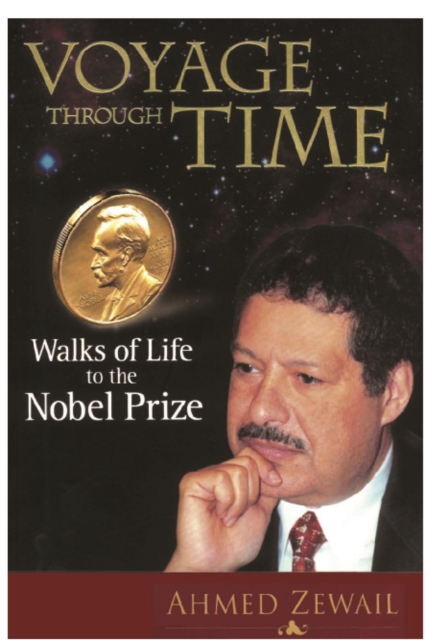
From a beginning in an Egyptian delta town and the port of Alexandria to the scenic vistas of sunny southern California, Ahmed Zewail takes us on a voyage through time - his own life and the split-second world of the femtosecond.
John Holland is one of the few scientists, who all by themselves and by their pursuits, helped change the course of science and the wealth of human knowledge.
This informative and entertaining book provides a broad look at the fascinating history of CERN, and the physicists working in different areas at CERN who were active in the discovery of the Higgs Boson.
This book recalls, for nonscientific readers, the history of quantum mechanics, the main points of its interpretation, and Einstein's objections to it, together with the responses engendered by his arguments.
Ever since Singapore became independent in 1965, its leaders have invested tremendous efforts and resources to develop its economy in order to create jobs for its people and to support national development.
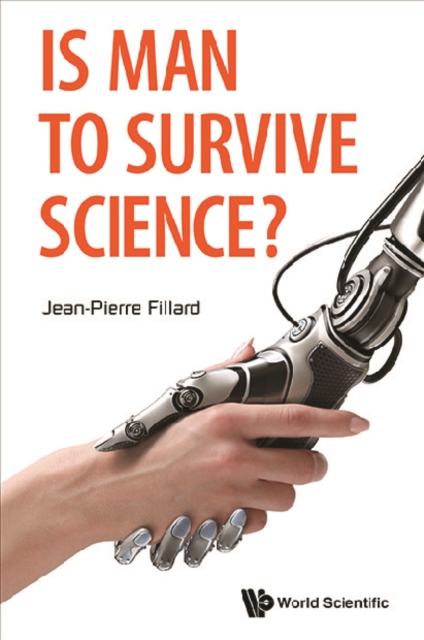
In the early 21st century, the advances of science, followed by technology, have been very impressive and opened up hither to unthought-of prospects in every domain.
Het handboek 'grondbeginselen Koudetechniek' biedt zowel nieuwkomers in de industrie als ervaren mensen een overzicht van alle relevante onderwerpen binnen de koeltechniek.
LONGLISTED FOR THE BSHS BRITISH SOCIETY FOR THE HISTORY OF SCIENCE HUGHES PRIZE 2025There are more than 100 billion brain cells in our heads, and every single one represents a fragment of thought and feeling.
This book uses primary documents as a lens through which to examine historical and present-day efforts to protect endangered species in the United States and around the world.