The Panel on Statistical Methods for Testing and Evaluating Defense Systems had a broad mandateto examine the use of statistics in conjunction with defense testing.
To derive statistics about crime to estimate its levels and trends, assess its costs to and impacts on society, and inform law enforcement approaches to prevent it a conceptual framework for defining and thinking about crime is virtually a prerequisite.
Questions about the reproducibility of scientific research have been raised in numerous settings and have gained visibility through several high-profile journal and popular press articles.
The National Institute of Standards and Technology (NIST)recognizing that information and insights gained through continual examination of practices for organizational assessment are useful for decision makers at organizations across the deferral, industrial, academic, and national laboratory sectors-recently requested that the National Research Council (NRC) organize a panel to review best practices in assessment of research and development (RD) organizations.
The Agricultural Resource Management Survey (ARMS) is the federal government's primary source of information on the financial condition, production practices, and resource use on farms, as well as the economic well-being of America's farm households.
People's bonds, associations and networks - as well as the civil, political, and institutional characteristics of the society in which they live - can be powerful drivers affecting the quality of life among a community's, a city's, or a nation's inhabitants and their ability to achieve both individual and societal goals.
The National Children's Study (NCS) is planned to be the largest long-term study of environmental and genetic effects on children's health ever conducted in the United States.
Since the early days of the nation, the federal government has collected information on the revenues, expenditures, and other features of state and local jurisdictions and their operations.
Two surveys of the National Science Foundation's Division of Science Resources Statistics (SRS) provide some of the most significant data available to understand research and development spending and policy in the United States.
Two surveys of the National Science Foundation's Division of Science Resources Statistics (SRS) provide some of the most significant data available to understand research and development spending and policy in the United States.
To derive statistics about crime to estimate its levels and trends, assess its costs to and impacts on society, and inform law enforcement approaches to prevent it a conceptual framework for defining and thinking about crime is virtually a prerequisite.
Drawing on the findings of sector-specific workshops, e-mail surveys, research literature, expert testimony, and committee and panel members' expertise, this National Academy of Engineering study assesses the qualitative impact of academic research on five industriesnetwork systems and communications; medical devices and equipment; aerospace; transportation, distribution, and logistics services; and financial services.
Since 1968 the Elementary and Secondary School Civil Rights Compliance Report (known as the ES survey) has been used to gather information about possible disparities in access to learning opportunities and violations of students' civil rights.
In the early 1990s, the Census Bureau proposed a program of continuous measurement as a possible alternative to the gathering of detailed social, economic, and housing data from a sample of the U.
In 2012, the Defense Intelligence Agency (DIA) approached the National Research Council's TIGER standing committee and asked it to develop a list of workshop topics to explore the impact of emerging science and technology.
Following several years of testing and evaluation, the American Community Survey (ACS) was launched in 2005 as a replacement for the census "e;long form,"e; used to collect detailed social, economic, and housing data from a sample of the U.
Publicly available statistics from government agencies that are credible, relevant, accurate, and timely are essential for policy makers, individuals, households, businesses, academic institutions, and other organizations to make informed decisions.
The census coverage measurement programs have historically addressed three primary objectives: (1) to inform users about the quality of the census counts; (2) to help identify sources of error to improve census taking, and (3) to provide alternative counts based on information from the coverage measurement program.
National Center for Science and Engineering Statistics (NCSES) of the National Science Foundation is responsible for national reporting of the research and development (RD) activities that occur in all sectors of the United States economy.
The financial reform plans currently under discussion in the United States recognize the need for monitoring and regulating systemic risk in the financial sector.
The Office of the Under Secretary of Defense (Personnel Readiness), referred to throughout this report as PR, is responsible for the total force management of all Department of Defense (DoD) components including the recruitment, readiness, and retention of personnel.
The National Science Foundation (NSF) has long collected information on the number and characteristics of individuals with education or employment in science and engineering and related fields in the United States.
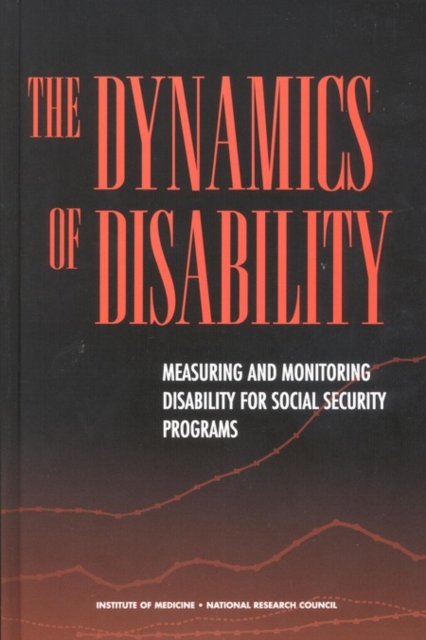
The Society Security disability program faces urgent challenges: more people receiving benefits than ever before, the prospect of even more claimants as baby boomers age, changing attitudes culminating in the Americans With Disabilities Act.
Data mining of massive data sets is transforming the way we think about crisis response, marketing, entertainment, cybersecurity and national intelligence.
Developing New National Data on Social Mobility summarizes a workshop convened in June 2013 to consider options for a design for a new national survey on social mobility.
The patenting and licensing of human genetic material and proteins represents an extension of intellectual property (IP) rights to naturally occurring biological material and scientific information, much of it well upstream of drugs and other disease therapies.
Gender Differences at Critical Transitions in the Careers of Science, Engineering, and Mathematics Faculty presents new and surprising findings about career differences between female and male full-time, tenure-track, and tenured faculty in science, engineering, and mathematics at the nation's top research universities.
The National Science Foundation (NSF) has long collected information on the number and characteristics of individuals with education or employment in science and engineering and related fields in the United States.
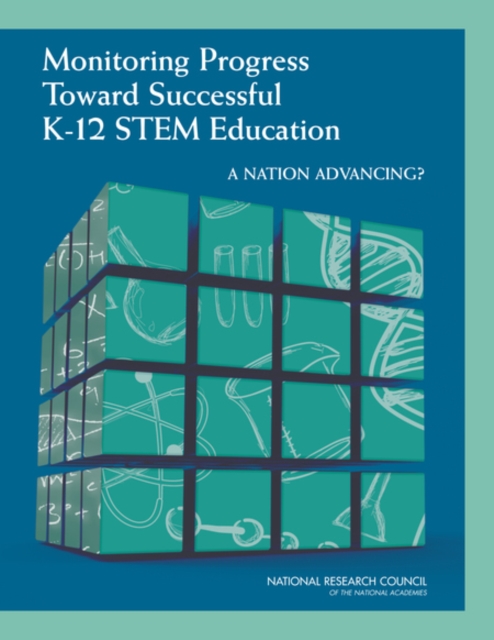
Following a 2011 report by the National Research Council (NRC) on successful K-12 education in science, technology, engineering, and mathematics (STEM), Congress asked the National Science Foundation to identify methods for tracking progress toward the report's recommendations.
The Society Security disability program faces urgent challenges: more people receiving benefits than ever before, the prospect of even more claimants as baby boomers age, changing attitudes culminating in the Americans With Disabilities Act.