With the 1989 release of Everybody Counts by the Mathematical Sciences Education Board (MSEB) of the National Research Council and the Curriculum and Evaluation Standards for School Mathematics by the National Council of Teachers of Mathematics (NCTM), the "e;standards movement"e; in K-12 education was launched.
Part of an in-depth study of how information technology research and development could more effectively support advances in the use of information technology (IT) in government, Summary of a Workshop on Information Technology Research for Federal Statistics explores IT research opportunities of relevance to the collection, analysis, and dissemination of federal statistics.
Improving Access to and Confidentiality of Research Data summarizes a workshop convened by the Committee on National Statistics (CNSTAT) to promote discussion about methods for advancing the often conflicting goals of exploiting the research potential of microdata and maintaining acceptable levels of confidentiality.
For over 100 years, the evolution of modern survey methodologyusing the theory of representative sampling to make interferences from a part of the population to the wholehas been paralleled by a drive toward automation, harnessing technology and computerization to make parts of the survey process easier, faster, and better.
This volume assembles papers commissioned by the National Research Council's Board on Science, Technology, and Economic Policy (STEP) to inform judgments about the significant institutional and policy changes in the patent system made over the past two decades.
The past decade has demonstrated the utility of SESTAT, but the SESTAT design shows some deficiencies with respect to response rates, coverage of populations of interest, and its ability to support some useful analyses.
The State Children's Health Insurance Program (SCHIP) was established by Congress to provide health insurance to uninsured children whose family income was too high for Medicaid coverage but too low to allow the family to obtain private health insurance coverage.
On April 26-28, 2001, the Board on Mathematical Sciences and Their Applications (BMSA) and the Board on Life Sciences of the National Research Council cosponsored a workshop on the dynamical modeling of complex biomedical systems.
In 2014, the National Agricultural Statistics Service (NASS) engaged the National Academies of Sciences, Engineering, and Medicine to convene a planning committee to organize a public workshop for an expert open discussion of their then-current livestock models.
On January 30-31, 2019 the Board on Mathematical Sciences and Analytics, in collaboration with the Board on Energy and Environmental Systems and the Computer Science and Telecommunications Board, convened a workshop in Washington, D.
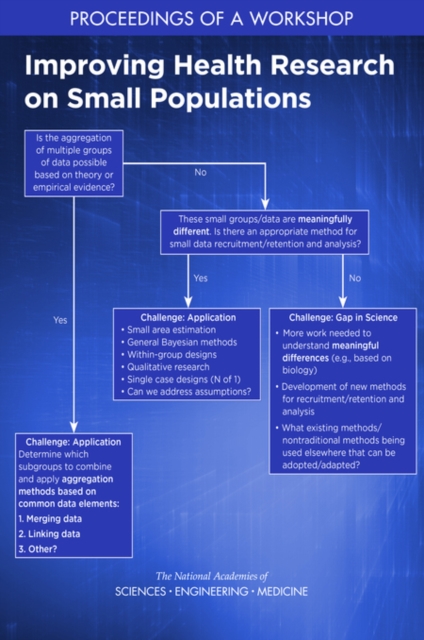
The increasing diversity of population of the United States presents many challenges to conducting health research that is representative and informative.
The National Science Foundation's National Center for Science and Engineering Statistics (NCSES), one of the nation's principal statistical agencies, is charged to collect, acquire, analyze, report, and disseminate statistical data related to the science and engineering enterprise in the United States and other nations that is relevant and useful to practitioners, researchers, policymakers, and to the public.
Science, technology, engineering and mathematics (STEM) professionals generate a stream of scientific discoveries and technological innovations that fuel job creation and national economic growth.
The Intelligence Community Studies Board of the National Academies of Sciences, Engineering, and Medicine convened a workshop on August 9-10, 2017 to examine challenges in machine generation of analytic products from multi-source data.
The environment for obtaining information and providing statistical data for policy makers and the public has changed significantly in the past decade, raising questions about the fundamental survey paradigm that underlies federal statistics.
The workplace is where 156 million working adults in the United States spend many waking hours, and it has a profound influence on health and well-being.
In October 2016, the National Academies of Sciences, Engineering, and Medicine convened a 1-day public workshop on Principles and Practices for Federal Program Evaluation.
Additive manufacturing (AM) methods have great potential for promoting transformative research in many fields across the vast spectrum of engineering and materials science.
Because of the role of innovation as a driver of economic productivity and growth and as a mechanism for improving people's well-being in other ways, understanding the nature,determinants, and impacts of innovation has become increasingly important to policy makers.
Although people in the United States have historically been reasonably supportive of federal censuses and surveys, they are increasingly unavailable for or not willing to respond to interview requests from federalas well as privatesources.
In February 2016, the National Academies of Sciences, Engineering, and Medicine held a workshop to explore options for expanding the Substance Abuse and Mental Health Services Administration's (SAMHSA) behavioral health data collections to include measures of recovery from substance use and mental disorder.
If the United States is to sustain its economic prosperity, quality of life, and global competitiveness, it must continue to have an abundance of secure, reliable, and affordable energy resources.
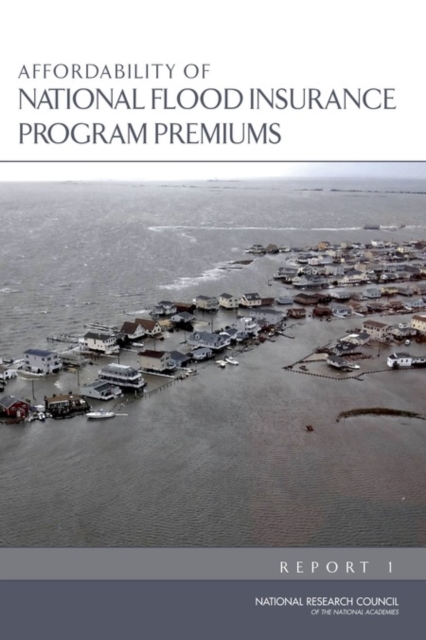
When Congress authorized the National Flood Insurance Program (NFIP) in 1968, it intended for the program to encourage community initiatives in flood risk management, charge insurance premiums consistent with actuarial pricing principles, and encourage the purchase of flood insurance by owners of flood prone properties, in part, by offering affordable premiums.
In 1982 the Census Bureau requested the Committee on National Statistics to establish a panel to suggest research and experiments, to recommend improved methods, and to guide the Census Bureau on technical problems in appraising contending methods with regard to the conduct of the decennial census.
Floods take a heavy toll on society, costing lives, damaging buildings and property, disrupting livelihoods, and sometimes necessitating federal disaster relief, which has risen to record levels in recent years.
The National Flood Insurance Program (NFIP) is housed within the Federal Emergency Management Agency (FEMA) and offers insurance policies that are marketed and sold through private insurers, but with the risks borne by the U.
The American Community Survey (ACS) was conceptualized as a replacement to the census long form, which collected detailed population and housing data from a sample of the U.
As the availability of high-throughput data-collection technologies, such as information-sensing mobile devices, remote sensing, internet log records, and wireless sensor networks has grown, science, engineering, and business have rapidly transitioned from striving to develop information from scant data to a situation in which the challenge is now that the amount of information exceeds a human's ability to examine, let alone absorb, it.
The United States Department of Agriculture's (USDA's) Economic Research Service's (ERS) Food Availability Data System includes three distinct but related data series on food and nutrient availability for consumption.
The National Children's Study (NCS) was authorized by the Children's Health Act of 2000 and is being implemented by a dedicated Program Office in the Eunice Kennedy Shriver National Institute of Child Health and Human Development (NICHD).
Recent serious and sometimes fatal accidents in chemical research laboratories at United States universities have driven government agencies, professional societies, industries, and universities themselves to examine the culture of safety in research laboratories.
The Bureau of Justice Statistics' (BJS) National Crime Victimization Survey (NCVS) measures the rates at which Americans are victims of crimes, including rape and sexual assault, but there is concern that rape and sexual assault are undercounted on this survey.
The mathematical sciences are part of nearly all aspects of everyday lifethe discipline has underpinned such beneficial modern capabilities as Internet search, medical imaging, computer animation, numerical weather predictions, and all types of digital communications.
National Patterns of RD Resources is an annual report issued by the National Center for Science and Engineering Statistics (NCSES) of the National Science Foundation, which provides a national view of current 'patterns' in funding of RD activities in government, industry, academia, federally funded research and development centers, and non-profits.