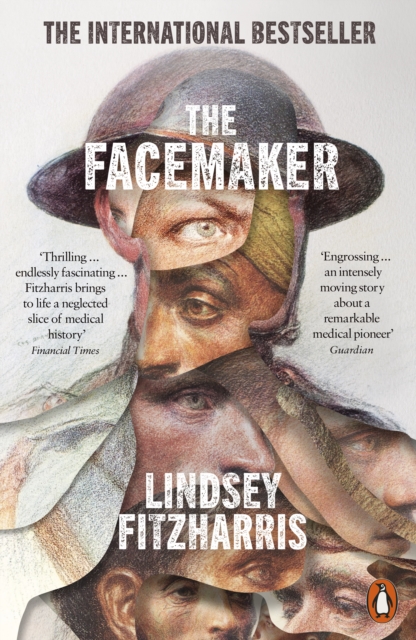
THE INTERNATIONAL BESTSELLERBest Books of the Year, GuardianThe poignant story of the visionary surgeon who rebuilt the faces of the First World War's injured heroes, and in the process ushered in the modern era of plastic surgeryFrom the moment the first machine gun rang out over the Western Front, one thing was clear: mankind's military technology had wildly surpassed its medical capabilities.
THE INTERNATIONAL BESTSELLER'A scientific memoir as gripping as any HBO drama series' Kate Kellaway, ObserverA dazzling scientific detective story from the ecologist who first discovered the hidden language of trees No one has done more to transform our understanding of trees than the world-renowned scientist Suzanne Simard.
Chosen as a Book of the Year by The Times, Daily Telegraph, TLS, BBC History Magazine and Tablet'Compulsive, brilliantly clear and superbly well-written, it's a charismatic evocation of another world' Ian Mortimer, author of The Time Traveller's Guide to Medieval EnglandThe Middle Ages were a time of wonder.
The Fourth Industrial Revolution is changing everything - from the way we relate to each other, to the work we do, the way our economies work, and what it means to be human.
The world expert in multisensory perception on the remarkable ways we can use our senses to lead richer lives 'Talks total sense, lots of fun facts, right up there with the best of the best' Chris Evans'Packed with studies on pain, attention, memory, mood' The Times How can the furniture in your home affect your wellbeing?
Learn how to switch off and find calm - from the New York Times bestselling author of A World Without Email 'Digital Minimalism is the Marie Kondo of technology' Evening Standard***** Do you find yourself endlessly scrolling through social media or the news while your anxiety rises?
Applying his controversial theory of evolution to the origins of the human species, Charles Darwin's The Descent of Man was the culmination of his life's work.
FROM THE BBC REITH LECTURER 2021'The most important book I have read in quite some time' Daniel Kahneman; 'A must-read' Max Tegmark; 'The book we've all been waiting for' Sam HarrisHumans dream of super-intelligent machines.
'A terrific book - essential reading for everyone seeking to make sense of Artificial Intelligence' Professor Sir Adrian Smith, Director and Chief Executive of the Alan Turing InstituteIn this myth-busting guide to AI past and present, one of the world's leading researchers shows why our fears for the future are misplaced.
NOMINATED FOR THE FT & McKINSEY BUSINESS BOOK OF THE YEAR AWARDS 2020'A path-breaking, thought-provoking and in-depth study of how new technology will transform the world of work' Gordon Brown 'Compelling.
From one of our leading thinkers, a dazzling philosophical journey through virtual worldsIn the coming decades, the technology that enables virtual and augmented reality will improve beyond recognition.
A passionate defence of humanity and a work of radical optimism from the international bestselling author of PostcapitalismHow do we preserve what makes us human in an age of uncertainty?
A young theoretical physicist's guide to how the radical new science of counterfactuals can reveal the full scope of our universeThere is a vast class of properties that science has so far almost entirely neglected.
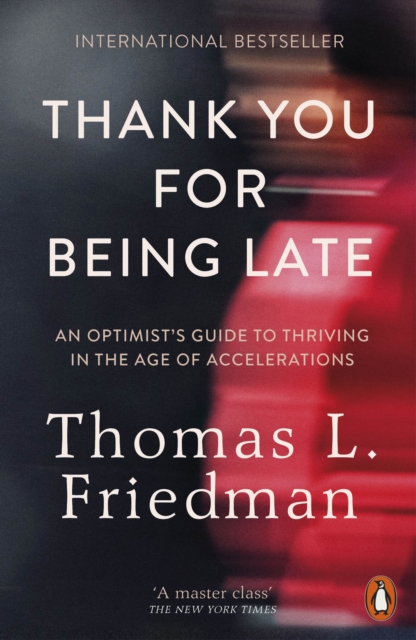
The new international bestseller from the Pulitzer Prize winner and author of The World is Flat - this is an essential and entertaining field guide to thriving in the twenty-first century.
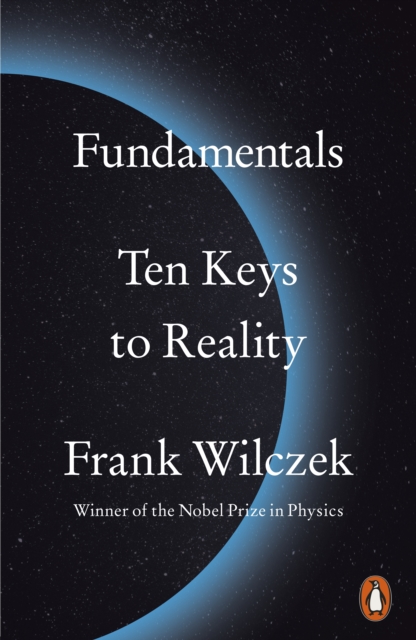
One of our great contemporary scientists reveals the ten profound insights that illuminate what everyone should know about the physical worldIn Fundamentals, Nobel laureate Frank Wilczek offers the reader a simple yet profound exploration of reality based on the deep revelations of modern science.
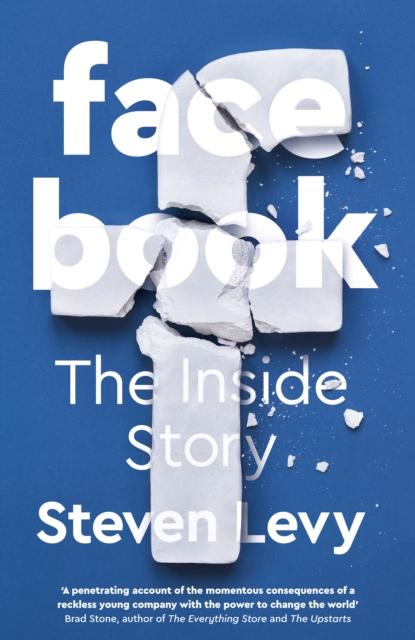
'A penetrating account of the momentous consequences of a reckless young company with the power to change the world' Brad Stone, author of The Everything Store and The UpstartsHow much power and influence does Facebook have over our lives?
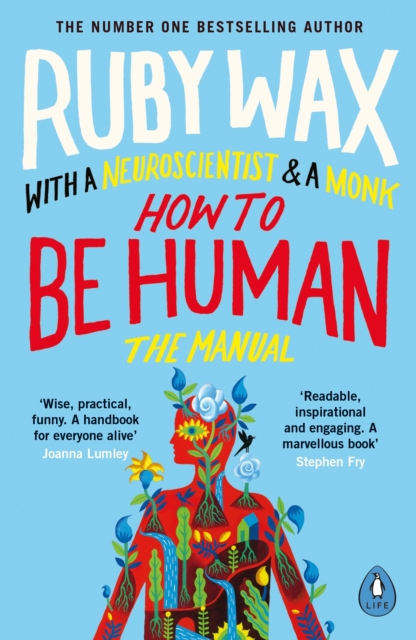
*FROM THE NUMBER ONE BESTSELLING AUTHOR OF FRAZZLED*A three way encounter between a Monk, a neuroscientist and Ruby Wax sounds like the set up for a joke.
In the first two books in his wildly popular The Theoretical Minimum series, world-class physicist Leonard Susskind provided a brilliant first course in classical and quantum mechanics, offering readers not an oversimplified introduction, but the real thing - everything you need to start doing physics, and nothing more.
One of the world's most respected psychiatrists provides a much-needed new evolutionary framework for making sense of mental illnessWith his classic book Why We Get Sick, Randolph Nesse established the field of evolutionary medicine.
AN UPDATED EDITION OF THE PHENOMENAL INTERNATIONAL BESTSELLER - 3 MILLION COPIES SOLD WORLDWIDE AS HEARD ON STEVEN BARTLETT'S 'DIARY OF A CEO'Who would have thought something as simple as changing the way we breathe could be so revolutionary for our health, from snoring to allergies to immunity?
'Spectacular and terrifyingly true' Owen Jones'Explosive' John McDonnell, New Statesman, Books of the Year'Thought-provoking and funny' The TimesFT BUSINESS BOOK OF THE YEAR 2018, THE TIMES BOOK OF THE YEAR 2018, NEW STATESMAN BOOK OF THE YEAR 2018 and CITY AM BOOK OF THE YEAR 2018Be honest: if your job didn't exist, would anybody miss it?
'A clear and engaging explanation of one of the hottest fields in science' Steven Pinker'A hugely important book' Matt Ridley, The TimesOne of the world's top behavioural geneticists argues that we need a radical rethink about what makes us who we areThe blueprint for our individuality lies in the 1% of DNA that differs between people.
'This brilliantly subversive and witty book lays bare the techniques of manipulation and disinformation that keep the rich and powerful rich and powerful.
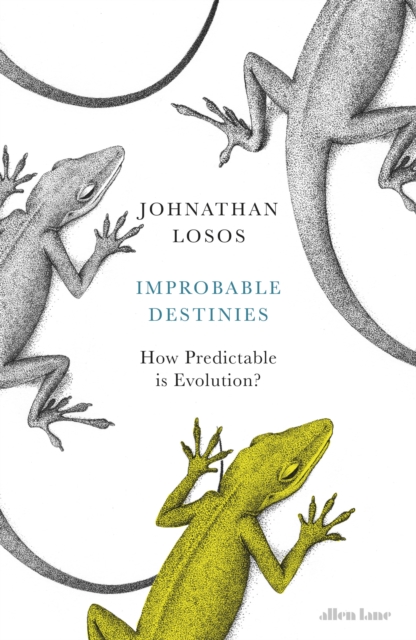
A dazzling tour of evolution in action that sheds light on one of the greatest debates in scienceThe natural world is full of fascinating instances of convergence: phenomena like eyes and wings and tree-climbing lizards that have evolved independently, multiple times.
A spell-binding quest for the one algorithm capable of deriving all knowledge from data, including a cure for cancerSociety is changing, one learning algorithm at a time, from search engines to online dating, personalized medicine to predicting the stock market.
In 59 Seconds, psychologist Professor Richard Wiseman presents a fresh approach to change that helps people achieve their aims and ambitions in minutes, not months.