In the winter of 1950, Margaret Sanger, then seventy-one, and who had campaigned for women's right to control their own fertility for five decades, arrived at a Park Avenue apartment building.
'The world's most famous and outspoken gynaecologist' (The Guardian) fights myths and fearmongering with real science, inclusive facts, and shame-free advice on the topic that impacts more than 1.
The definitive history of the modern climate change era, from an award-winning writer who has been at the centre of the fight for more than thirty yearsIn 1979, President Jimmy Carter was presented with the findings of scientists who had been investigating whether human activities might change the climate in harmful ways.
THE INSPIRATION FOR THE MAJOR NEW NETFLIX SERIES, HOW TO CHANGE YOUR MIND'It's a trip - engrossing, eye-opening, mind altering' New Statesman 'Fascinating.
'A majestic story' David Bodanis, Financial Times From the international bestselling author of Physics of the Impossible and Physics of the FutureThis is the story of a quest: to find a Theory of Everything.
The international bestseller that gives you the facts about climate changeWhen students David Nelles and Christian Serrer struggled to find a book that explained the nuts and bolts of climate change in a way that was comprehensive, concise and enjoyable to read, they decided to write it themselves.
'A joy of a book - enriching, illuminating, eclectic and far from a conventional science read' Richard Webb, New Scientist Books of the Year'Carlo Rovelli's imaginative rigour, his lively humour and his beautiful writing are inspiring' Erica WagnerOne of the most inspiring thinkers of our age, the bestselling author of Seven Brief Lessons on Physics transforms the way we think about the world with his reflections on science, history and humanityIn this collection of writings, the logbook of an intelligence always on the move, Carlo Rovelli follows his curiosity and invites us on a voyage through science, history, philosophy and politics.
'Pontzer's findings have huge implications for our attitudes to exercise, diet and public health' Mark Webster, Sunday Times A myth-busting tour of the body's hidden foundations from a pioneering evolutionary biologist 'Public health strategies stubbornly cling to the simplistic armchair engineer's view of metabolism, hurting efforts to combat obesity, diabetes, heart disease, cancer, and the other diseases that are most likely to kill us' Herman Pontzer's ground-breaking research has revealed how, contrary to received wisdom, exercise does not increase our metabolism.
'Required reading for anyone remotely curious about how they came to be remotely curious' Observer'Enthralling' Spectator What is human consciousness and how is it possible?
From the author of Emergence and The Ghost Map, Steven Johnson's Mind Wide Open: Why You Are What You Think takes us on a journey to the frontiers of brain science and reveals exactly how we're hardwired to think and feel.
An enlightening and practical guide to the most powerful tools of reasoning ever developed, by one of the world's most renowned psychologists Many scientific and philosophical ideas are so powerful that they can be applied to our lives to help us think smarter and more effectively about our behaviour and the world around us.
Recording memories, mind reading, videotaping our dreams, mind control, avatars, and telekinesis - no longer are these feats of the mind solely the province of overheated science fiction.
A FINANCIAL TIMES BOOK OF THE YEAR 2020How did we end up in a world where humans coexist with technologies we can no longer fully control or understand?
The Compatibility Gene is a scientific adventure story set in a new field of genetic discovery - that of the crucial genes that define our relationships, our health and our individuality.
An awe-inspiring, unforgettable journey of scientific exploration from Brian Cox and Jeff Forshaw, the top ten bestselling authors of The Quantum Universe.
For many years, scientists thought that the human brain simply decayed over time and its dying cells led to memory slips, fuzzy logic, negative thinking, and even depression.
The Quantum Universe brings together two authors on a brilliantly ambitious mission to show that everyone can understand the deepest questions of science.
High Price by Carl Hart is a groundbreaking work on neuroscience and addictionAs a youth, Carl Hart didn't see the value of school, studying just enough to keep him on the basketball team.
In The Journey of Man, renowned geneticist and anthropologist Spencer Wells traced human evolution back to our earliest ancestors, creating a remarkable and readable map of our distant past.
Acclaimed as the most influential work on evolution written in the last hundred years, The Blind Watchmaker offers an inspiring and accessible introduction to one of the most important scientific discoveries of all time.
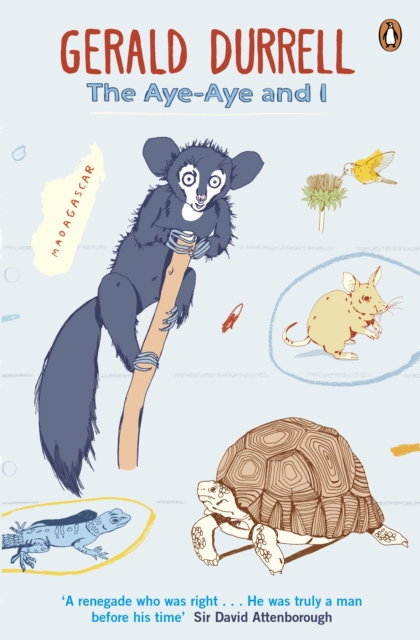
'In the gloom it came along the branches towards me, its round, hypnotic eyes blazing, its spoon-like ears turning to and fro independently like radar dishes .
* * * Winner of the Royal Society Winton Prize for Science Books * * * FROM THE TEA-CUP TO THE JET ENGINE, STUFF MATTERS IS A UNIQUE, INSPIRING EXPLORATION OF HUMAN CREATIVITY.
An extraordinary and challenging synthesis of ideas uniting Quantum Theory, and the theories of Computation, Knowledge and Evolution, Deutsch's extraordinary book explores the deep connections between these strands which reveal the fabric of realityin which human actions and ideas play essential roles.
Our Necessary Shadow is the first attempt in a generation to explain the whole subject of psychiatry, from the UK's leading expert, Tom BurnsA lot is written about psychiatry and the things it deals with, but very little that describes psychiatry itself.