From the caveman selecting the right stick to the Babylonian priest who predicted an eclipse and claimed credit for it, the weaponization of knowledge is as old as human civilization.
Launching a new series, Monographs in Behavior and Ecology, this work is an intensive study of five species of New World monkeys--all omnivores with a diet of fruit and small prey.
Welcome to Death Incorporated — the only organization with a 100% membership rate, a 0% resignation policy, and a perfect delivery record since the beginning of recorded time.
While most introductions to statistical mechanics are either too mathematical or too physical, Colin Thompson's book combines mathematical rigor with familiar physical materials.
This book, explores the conceptual foundations of Einstein's theory of relativity: the fascinating, yet tangled, web of philosophical, mathematical, and physical ideas that is the source of the theory's enduring philosophical interest.
The book is a balanced analysis of the strengths and weaknesses of Taylorism, including the naivete that led its proponents to ignore the emotional side of the complex roles and patterns that govern the world of work.
Historical Studies in the Physical Sciences is a continuing series of volumes comprising articles that elucidate the intellectual and social history of the physical sciences from the eighteenth century to the present.
Representing the present rich state of historical work on Darwin and Darwinism, this volume of essays places the great theorist in the context of Victorian science.
While the chemical aspects of igneous petrology have dominated research for many years, the physical processes associated with the generation, transport, and crystallization of magma have been somewhat neglected.
As Chief of the Bureau of Engineering, as Director of the Naval Research Laboratory, as industrial troubleshooter for Forrestal, Admiral Bowen frequently was forced to fight the "e;mossbacks"e; who stubbornly resisted new inventions and techniques.
Professor Wever studies the structure of the ear and its functioning as a receptor of sounds in all amphibian species (139) for which living representatives could be obtained.
This book offers a readable narrative of the science and technology of early radio combined with sociological and economic analysis of how radio changed our lives.
The study of bioluminescence-visible light emitted by living organisms-is truly in progress, as these 35 papers contributed by 49 of the leading scientists active in this field attest.
This is a comprehensive study of one of the most startling examples of dollar diplomacy--the effort of the United States and the United Kingdom to monopolize the free world's supply of uranium and thorium during and immediately following World War II.
As this study traces the history of the dramatic intra-scientific conflict over nuclear weapons which has developed since World War II, it analyzes the politically relevant ideas, attitudes, and behavior of those scientists who have been influential in the formulation of American policy toward nuclear weapons.
In the informal language of letters to public officials, Efraim Racker argues in favor of basic research as the most effective path to the treatment of disease.
When the National Science Foundation funds research about the earth's crust and the Department of Energy supports studies on the disposal of nuclear wastes, what do they expect for their money?
Robin Dunbar uses economic models to explore the social behavior of the gelada baboon (Theropithecus gelada), a unique species, whose social system is one of the most complex among the primates.
Hans Christian orsted (1777-1851) was one of the leading scientists of the nineteenth century, having played a crucial role in founding electromagnetism.
Synthesizing the theoretical and experimental advances in pion-nucleon interactions over approximately the last twelve years, the authors offer here a timely account of the hadronic interactions of pions and nucleons and of the structure of nucleons.
In this interdisciplinary study of eighteenth-century England, Patricia Fara explores how natural philosophers constructed magnetism as a science, appropriating the skills and knowledge of experienced navigators.
Thomas Hankins and Robert Silverman investigate an array of instruments from the seventeenth through the nineteenth century that seem at first to be marginal to science--magnetic clocks that were said to operate by the movements of sunflower seeds, magic lanterns, ocular harpsichords (machines that played different colored lights in harmonious mixtures), Aeolian harps (a form of wind chime), and other instruments of "e;natural magic"e; designed to produce wondrous effects.
In The Private Science of Louis Pasteur, Gerald Geison has written a controversial biography that finally penetrates the secrecy that has surrounded much of this legendary scientist's laboratory work.
This volume not only offers an intellectual biography of one of the most important biologists and social thinkers of the twentieth century but also illuminates the development of evolutionary studies in Russia and in the West.
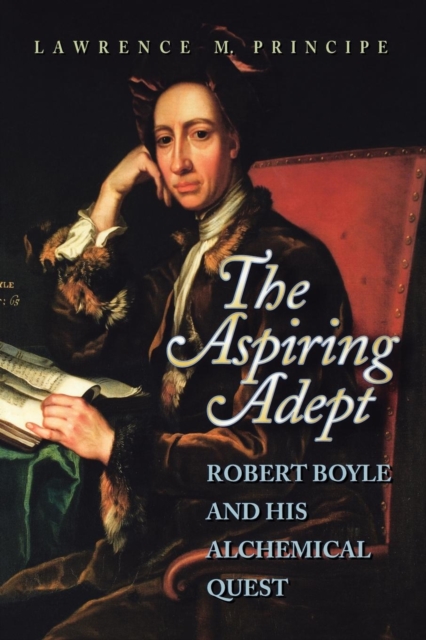
The Aspiring Adept presents a provocative new view of Robert Boyle (1627-1691), one of the leading figures of the Scientific Revolution, by revealing for the first time his avid and lifelong pursuit of alchemy.
The principle of the conservation of energy was among the most important developments of nineteenth-century physics, and Robert Mayer, a physician from a small city in Germany, was one of its codiscoverers.
Making Mice blends scientific biography, institutional history, and cultural history to show how genetically standardized mice came to play a central role in contemporary American biomedical research.
Frank Close, a leading physicist and talented popular science writer, reveals the true story of the cold fusion controversy--a story ignored until now in spite of the glare of publicity surrounding Martin Fleischmann and Stanley Pons.
A wide-ranging account of American and French understandings of merit, talent, and intelligence over the past two centuriesHow have modern democracies squared their commitment to equality with their fear that disparities in talent and intelligence might be natural, persistent, and consequential?
This is the first complete English translation of Geminos's Introduction to the Phenomena--one of the most important and interesting astronomical works of its type to have survived from Greek antiquity.
Valued today for its development of the third law of planetary motion, Harmonice mundi (1619) was intended by Kepler to expand on ancient efforts to discern a Creator's plan for the planetary system--an arrangement thought to be based on harmonic relationships.
In this path-breaking work, Paul Thagard draws on the history and philosophy of science, cognitive psychology, and the field of artificial intelligence to develop a theory of conceptual change capable of accounting for all major scientific revolutions.