This book, part of the European Society of Intensive Care Medicine textbook series, provides detailed up-to-date information on the physical, cognitive, and psychological impairments that are frequently present following a stay in an intensive care unit and examines in depth the available preventive and therapeutic strategies, including adapted rehabilitation programs.
While it has aided far many more than it has harmed, radiation is forever etched in the public's mind as an indiscriminate and particularly pernicious killer.
Reanimation 3eme edition - l'acces a l'integralite du Traite complet de plus de 4000 pages au format electronique (eBook -Pour IOS, Android, Mac et PC-) : toutes les connaissances en Reanimation en quelques clics !
Redige par l'Association americaine des techniciens medicaux d'urgence (NAEMT) en collaboration avec le College americain des chirurgiens, PHTLS est une ressource d'informations sur les techniques de prise en charge des patients traumatises en pratique prehospitaliere.
Violence Against Women examines a wide range of relationships that may be affected by intimate partner violence and takes a culturally sensitive, international approach to issues underpinning family violence, dating violence, and the injuries children suffer when their caregivers perpetrate violence.
798 pages, 466 images, with 44 contributorsVolume three of Chadwick’s Child Maltreatment provides an overview of topics ranging from the risks of the Internet, family abduction, the legal and forensic aspects of child maltreatment cases, and the roles of physicians, nurses, social workers, and multidisciplinary teams.
456 pages, 350 images, with 36 contributorsVolume two in the fourth edition of Chadwick’s Child Maltreatment series provides an overview of the signs and effects of sexual abuse and psychological maltreatment toward children.
600 pages, 1177 images, with 32 contributorsThe first volume in the fourth edition of Chadwick’s Child Maltreatment provides an overview of the signs and effects of physical abuse and neglect toward children.
512 pages, 238 images, with 24 contributorsSexual assault remains one of the most problematic and controversial issues in law, medicine, and in society at large.
775 pages, 1735 images, 21 contributorsSexual Assault Victimization Across the Life Span: A Color Atlas contains more than 1700 photographs taken in forensic examinations conducted by teams of medical practitioners and investigative personnel.
660 pages, 95 images, 53 contributorsSexual Assault Victimization Across the Life Span: A Clinical Guide offers a broad array of information for sexual assault intervention, from the fundamentals of physical evaluation and investigation to in-depth guides to the unique challenges presented by cases of sexual assault.
440 pages, 603 images, with 31 contributorsMedical Response to Child Sexual Abuse: A Resource for Professionals Working with Children and Families features a completely pediatric focus as a part of the Sexual Assault line and adds an illustrative multimedia component.
The Must-Have Guide for Navigating the ICUThe House Officer's Guide to ICU Care is an eminently practical handbook for junior house officers, medical students, PAs, and nurses that offers nuts-and-bolts guidelines for optimal management of medical and surgical patients in the ICU setting.
Prehospital Management of Acute STEMI: Practical Approaches and International Strategies for Early Intervention, the second volume in the Cardiovascular Team Approach Series, discusses the importance of coordinated prehospital care of STEMI with a practical focus on early detection and early intervention.
Pocket-sized and portable, the Manual of Traumatic Brain Injury Management provides relevant clinical information in a succinct, readily accessible format.
A compelling true story of one woman's battle with the aftermath of childhood trauma, which gives a gripping account of the often controversial and misunderstood condition of dissociative identity disorder (DID), formerly known as multiple personality disorder (MPD).
Acute Medicine 2e is a current and concise guide to hospital emergency medicine for registrars, junior doctors and medical students working on the wards.
A care bundle is a group of specific, non-prescriptive, evidence-based components that, when performed collectively and reliably, have been established to improve patient outcomes.
Lack of exposure and patient management during undergraduate and early postgraduate training often means both students and junior doctors can have difficulty managing acute medical and surgical situations.
Designed for candidates preparing for the MCEM Part A exam, Get Through MCEM Part A: MCQs provides invaluable revision for this new exam, success in which is obligatory for entry into higher specialist training in Emergency Medicine.
The only book dedicated to the College of Emergency Medicine's Membership examination, this book contains numerous questions and answers, together with data sets and clinical examples to help prepare candidates taking part B of this and other higher examinations in emergency medicine.
Concise Paediatrics, Second Edition is essential reading for all postgraduates training in paediatrics, particularly when preparing for the MRCPCH exam, and for general practice trainees preparing for the DCH exam.
The Second Edition of A-Z of Neurological Practice builds on the previous edition with revised and updated information in a high density but easily accessible format to provide a quick and ready reference for busy clinicians of all degrees of experience.
The manual is suitable for training electrocardio- without digital recording and that are accompanied graphers and technicians and can be accompanied by other uniquely rich data.
This essential guide encompasses over 160 pivotal papers critical for doctors preparing for postgraduate exams in intensive care, interviews, or commencing an intensive care rotation.
The Clinical Handbook for Surgical Critical Care, Second Edition covers all aspects of acute and emergency care for the critically ill or injured patient who may be in the ICU and/or CCU.
A compelling true story of one woman's battle with the aftermath of childhood trauma, which gives a gripping account of the often controversial and misunderstood condition of dissociative identity disorder (DID), formerly known as multiple personality disorder (MPD).
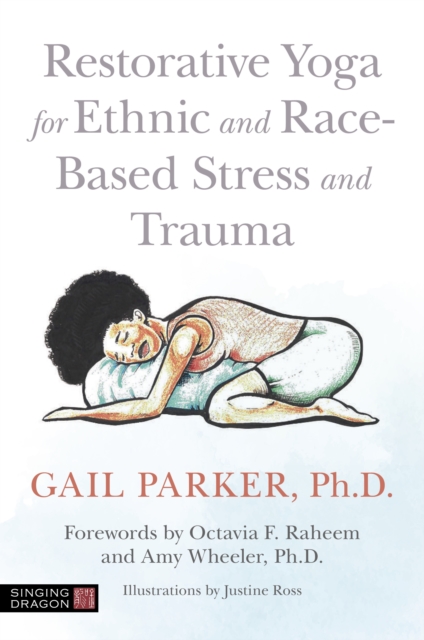
Presenting ways in which Restorative Yoga can contribute to healing emotional wounds, this book invites yoga teachers, therapists and practitioners to consider the psychological impact of ethnic and race-based stress and trauma.
Intensive care patients are the most critically ill in any hospital and they are a patient group that utilises a disproportionate amount of medical resources.
In Emotional Healing, world-renowned alternative-health expert Jan de Vries turns his attention to the myriad of mental and emotional conditions that he has seen increase amongst his patients in recent years.
This is the first critical monograph to explore and delineate the emergent field of witness literature across fiction, nonfiction, memoir, journalism and survivor testimony from the Global South.