Coronaviruses have emerged during the past ten years from being a group of viruses causing a variety of minor veterinary and human diseases to a major virus group of both clinical significance and molecular biological interest.
The material in this text was compiled to serve as a study guide for a REVIEW of microbiology and immunology suitable for preparing for Step 1 of the United States Medical Licensing Examination (USMLE).
Oklahoma Notes, Microbiology and Immunology, second edition, is a comprehensive update of the first edition and designed to serve as a study guide for a review of microbiology and immunology preparatory to Part I of the National Board of Medical Examiners (NBME) examination.
Parasitic Disease, second edition remains unique in itsemphasis on depictions of complete life cycles and itsskillful knitting of basic and clinical information.
Completely revised and updated, this comprehensive resource covers the epidemiology, pathogenesis, varied clinical manifestations, treatment and prevention of tuberculosis.
The material in this text was compiled to serve as a study guide for a review of microbiology and immunology suitable for preparing for Part I of the National Board of Medical Examiners (NBME) exam.
Although there are a number of comprehensive books in clinical micro- biology, there remains a need for a manual that can be used in the clinical laboratory to guide the daily performance of its work.
Neurovirology is an interdisciplinary field representing a melding of virology, clinical neuroscience, molecular pathogenesis, diagnostic virology, molecular biology, and immunology.
Neurovirology is an interdisciplinary field representing a melding of virology, clinical neuroscience, molecular pathogenesis, diagnostic virology, molecular biology, and immunology.
Advances in Microbial Ecology was established by the International Com- mittee on Microbial Ecology (ICOME) as a vehicle for the publication of critical reviews selected to reflect current trends in the ever-expanding field of microbial ecology.
The present volume contains the Proceedings of an EMBO Workshop organized in June 1983 by the Institute of Virology, Veterinary Faculty, State University of Utrecht, The Netherlands.
We are most gratified by the response to the initiation of this series of volumes presenting recent developments and new concepts in microbial ecology.
The substantial and impressive changes in microbial ecology can scarcely be chronicled in a meaningful fashion, and a review series such as Advances in Microbial Ecology can thus not do justice to the numerous studies that have been published in recent years.
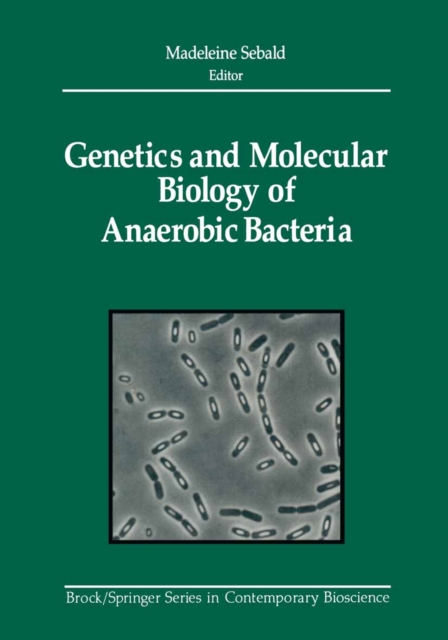
The field of bacterial genetics has been restricted for many years to Escherichia coli and a few other genera of aerobic or facultatively anaerobic bacteria such as Pseudomonas, Bacillus, and Salmonella.
Any branch of biology depends for its progress on the development of new concepts and to a lesser, but sometimes crucial, extent on the elimination of erroneous notions.
This book, Mechanisms in the Pathogenesis of Enteric Diseases 2, is an out- come of the Second International Rushmore Conference on Mechanisms in the Pathogenesis of Enteric Diseases, held September 3D-October 3, 1998 in Rapid City, South Dakota, USA.
In the course of history, humans have attempted to interrupt the physiological and psychological bond formed between a nursing mother and her child by substituting breastfeeding with artificial formulas.
The NATO Advanced Research Workshop entitled "e;The Photosynthetic Bacterial Reaction Center: Structure, Spectroscopy, and Dynamics"e; was held May 10-15, 1992, in the Maison d'H6tes of the Centre d'Etudes Nuc1eaires de Cadarache near Aix-en-Provence in the south of France.
Assembling the latest research by an international group of contributors, this volume covers the epidemiology, pathogenesis, clinical features, and control measures of this elusive microorganism.
In this volume, a distinguished international group of contributors present the latest molecular, organismal, and epidemiological research on arenaviruses.
This volume is based on the program of the Second International Conference on Drugs of Abuse, Immunity and AIDS, held in Clearwater Beach, FL in June 1992.
Viruses, being obligatory parasites of their host cells, rely on a vast supply of cellular components for their replication, regardless of whether infection leads to cell death or to the state of persistence.
THE ERA OF ANTIVIRALS Introduction Although there are more than one hundred medically useful antibiotics and fungicides, there are only seven compounds licensed for use as antiviral agents, in the USA.
This volume is based on the Proceedings of the International Conference on "e;Microbial Infections: Role of Biological Response Modifiers"e; held in Tampa, FL, May 29-31, 1991.
Providing both historical background and recent advances, this series reviews in-depth the biologic, molecular, immunologic, and patholic features of this facinating virus family.