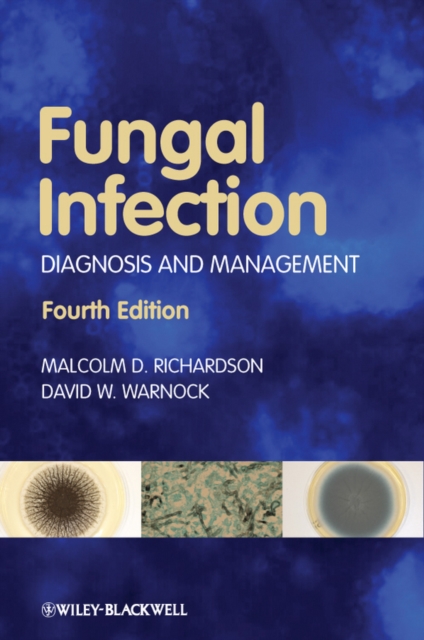
Fungal Infection: Diagnosis and Management, 4th Edition is a concise and up-to-date guide to the clinical manifestations, laboratory diagnosis and management of superficial, subcutaneous and systemic fungal infections.
This is a seminal text uniquely dedicated to oral hard tissue pathology, presenting the growth of clinical knowledge and advancement in the field in recent years.
1st Prize, 'New Authored Books' category, Royal Society of Medicine and Society of Authors Medical Book Awards 2008 Overall, I am impressed by the up-to date information content and structure provided in Bacteriology of Humans.
Biomarkers in Heart Disease is the first title in the AHA Clinical Series and is aimed at meeting the needs of clinicians, providing cardiologists, internists, emergency physicians, laboratorians, and other healthcare providers with a clear understanding of the role of biomarkers in contemporary cardiovascular medicine.
Single Best Answer (SBA) and Extended Matching Question (EMQ) examinations are increasingly popular means of testing medical students and those undertaking postgraduate qualifications in a number of subject areas.
Once students have learned the principles behind basic pathology and the mechanisms of disease, they must then consolidate their knowledge by putting those principles into clinical practice.
Manual of Total Mesorectal Excision is the authoritative manual for the trainee and qualified surgeon, covering every aspect of total mesorectal excision for rectal cancer.
Now in full colour, this new and revised edition of The Hospital Autopsy presents a clear and systematic approach to safe and effective modern autopsy practice for pathologists.
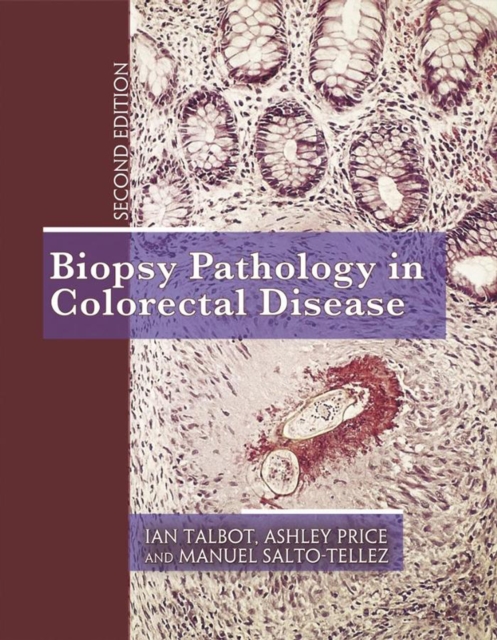
Biopsy Pathology in Colorectal Disease shows how the practising pathologist can extract the maximum of diagnostic value from biopsies of the colon, rectum and anus.
Diagnostic Pathology of Ovarian Tumors offers a focus on the pathology of ovarian neoplasia with detailed clinically relevant information for practicing pathologists not found in other more general volumes of gynecologic pathology.
Pseudomonas comprises three volumes covering the biology of pseudomonads in a wide context, including the niches they inhabit, the taxonomic relations among members of this group, the molecular biology of gene expression in different niches and under different environmental conditions, the analysis of virulence traits in plants, animals and human pathogens as well as the determinants that make some strains useful for biotechnological applications and promotion of plant growth.
Pseudomonas comprises three volumes covering the biology of pseudomonads in a wide context, including the niches they inhabit, the taxonomic relations among members of this group, the molecular biology of gene expression in different niches and under different environmental conditions, the analysis of virulence traits in plants, animals and human pathogens as well as the determinants that make some strains useful for biotechnological applications and promotion of plant growth.
Pseudomonas comprises three volumes covering the biology of pseudomonads in a wide context, including the niches they inhabit, the taxonomic relations among members of this group, the molecular biology of gene expression in different niches and under different environmental conditions, the analysis of virulence traits in plants, animals and human pathogens as well as the determinants that make some strains useful for biotechnological applications and promotion of plant growth.
An excerpt from "e;Pathology of Melanocytic Nevi and Malignant Melanoma, Second Edition"e;, Pathology of Malignant Melanoma provides a highly practical approach to the histopathological diagnosis of melanoma of the skin.
In the past half century, filamentous fungi have grown in commercial importance not only in the food industry but also as sources of pharmaceutical agents for the treatment of infectious and metabolic diseases and of specialty proteins and enzymes used to process foods, fortify detergents, and perform biotransformations.
Epidermal Cell Tumors: The Basics will serve as an effective and efficient handbook for the student of dermatopathology, and as a practical bench reference for the practicing diagnostician who desires rapid access to criteria that are useful in differentiating histologically similar entities.
Hot Topics in Infection and Immunity in Children brings together leading experts in the field to provide a current and authoritative view concerning the hottest topics of concern to clinicians caring for children with infections and research scientists working in the areas of infectious disease, immunology, microbiology and public health.
While a pattern approach to diagnosis is taught and practiced with almost every other tissue or organ in the body, the lymph node remains a mystery to most residents starting out in pathology and those pathologists with limited experience in the area.
Cellular and Molecular Pathology of the Liver is extensive, complex and ranges from the understanding the basic molecular mechanisms that dictate everything from liver homeostasis to liver disease.
As a handbook for practicing pathologists, this book will be an indispensable aid to diagnosis and avoiding dangers in one of the most challenging situations that pathologists encounter.
In the 8 years since the publication of the first edition of Essentials of Anatomic Pathology, great strides have been made in our understanding of diseases and neoplastic processes.
Atlas of Thyroid Lesions provides a broad overview of the variety of lesions in the thyroid gland and their different characteristics and features, in the unique combination of ultrasound, cytologic and histologic appearance.
Inflammatory Dermatoses: The Basics will serve as an effective and efficient handbook for the student of dermatopathology, and as a practical bench reference for the practicing diagnostician who desires rapid access to criteria that are useful in differentiating histologically similar entities.
The advancement of science is ever more contingent upon the interaction of experts vast amount of scientific information being gathered every day that exceeds the ability of any one scientist to acquire.
The past two decades have seen an ever-accelerating growth in knowledge about molecular pathology of human diseases, which received a large boost with the sequencing of the human genome in 2003.
Microbial endocrinology represents a newly emerging interdisciplinary field that is formed by the intersection of the fields of neurobiology and microbiology.
The past two decades have seen an ever accelerating growth in knowledge about molecular pathology of human diseases, which received a large boost with the sequencing of the human genome in 2003.
A Practical Guide to Frozen Section Technique offers an easy to learn approach to frozen section technique in the form of a highly illustrated handbook intended for onsite use in the laboratory.
This volume acquaints the non-neuropathologist with the advantages of clinical-radiologic-pathologic correlation in neuropathology specimens, particularly in the intra-operative consultation.
Endocrine Pathology: Differential Diagnosis and Molecular Advances, Second Edition provides detailed coverage of endocrine pathology with extensive discussion of the differential diagnosis as well as presentation of molecular pathobiology of the major endocrine organs.
Focusing on practical, patient related issues, this volume provides the basic concepts of Evidence Based Medicine (EBM) as they relate to Pathology and Laboratory Medicine and presents various practical applications.