Cytology is a unique subspecialty in anatomic pathology, and plays a critical role in the diagnosis of a variety of benign and malignant lesions by using minimally invasive procedures, such as fine needle aspiration, brushing, washing and lavage.
Human Papillomavirus: Proving and Using a Viral Cause for Cancer presents a steady and massive accumulation of evidence about the role of HPV and prevention of HPV-induced cancer, along with the role and personal commitment of many scientists of different backgrounds in establishing global relevance.
Alternatives to Suicide: Beyond Risk and Toward a Life Worth Living demonstrates how fostering resilience and a desire for life can broaden and advance an understanding of suicide.
Modern Techniques for Food Authentication, Second Edition presents a comprehensive review of the novel techniques available to authenticate food products, including various spectroscopic technologies, methods based on isotopic analysis and chromatography, and other techniques based on DNA, enzymatic analysis and electrophoresis.
Food Safety and Quality Systems in Developing Countries: Volume III: Technical and Market Considerations is a practical resource for companies seeking to supply food products from developing countries to developed country markets or to transnational business located in developing countries.
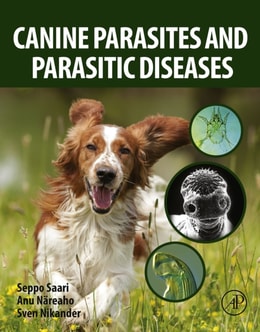
Canine Parasites and Parasitic Diseases offers a concise summary, including the distribution, epidemiology, lifecycle, morphology, clinical manifestations, diagnosis, prophylaxis and therapeutic measures on the most important parasites affecting dogs.
Advances in Food Authenticity Testing covers a topic that is of great importance to both the food industry whose responsibility it is to provide clear and accurate labeling of their products and maintain food safety and the government agencies and organizations that are tasked with the verification of claims of food authenticity.
Parasiticide Discovery: In Vitro and In Vivo Tests with Relevant Parasite Rearing and Host Infection/Infestation Methods, Volume One presents valuable screening methods that have led to the discovery of the majority of parasiticides commercialized in the animal health industry.
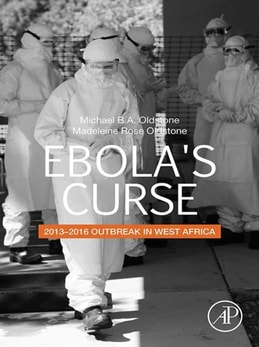
Ebola's Curse: 2013-2016 Outbreak in West Africa is about hemorrhagic fever viruses, especially Ebola, its initial origin in central Africa 1976, its unprecedented appearance in West Africa in 2013.
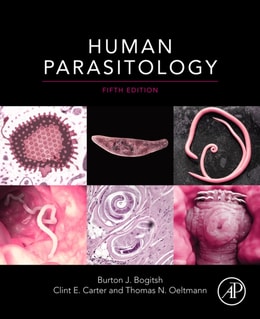
Human Parasitology, Fifth Edition emphasizes a medical perspective that also incorporates functional morphology, physiology, biochemistry and immunology to enhance appreciation of the diverse implications of parasitism.
Saliva Protection and Transmissible Diseases provides a review of saliva protection, raising debate on micro-organisms potentially transmissible in saliva, and also considering the evidence on diseases that may be transmitted by kissing.
The finding that working memory training can increase fluid intelligence triggered a great number of cognitive training studies, the results of which have been fiercely debated among experts.
Incorpora el contenido de los capítulos de Inmunología Clínica: principios y práctica que pueden aportar, de forma concisa, las tecnologías básicas de la inmunología clínica, sin el contenido poco relevante para los médicos que se dedican principalmente a la atención del paciente.
Paxinos and Ashwell's Atlas of the Developing Rat Nervous System, Fourth Edition, builds on the many excellent features of previous editions that have made this book the most cited atlas of the developing rat brain.
This popular and groundbreaking book was the first of its kind to focus on providing mental health nurses with the core knowledge of the physical health issues that they need for their work.
Echinococcus and Echinococcosis, Part B, Volume 96 presents a complete synthesis on what is known about the parasitic cestode echinococcus and the disease it causes, echinococcosis (Hydatid Disease), demonstrating that, in addition to its medical, veterinary, and economic significance, it is also an intriguing biological phenomenon.
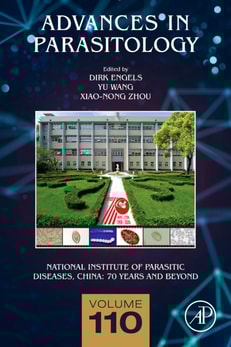
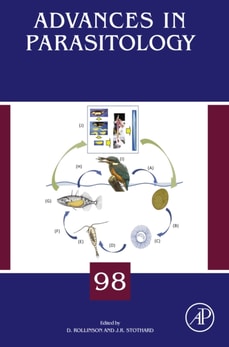
Advances in Parasitology, Volume 98, first published in 1963, contains comprehensive and up-to-date reviews on all areas of interest in contemporary parasitology.
Consumers demand quality milk with a reasonable shelf-life, a requirement that can be met more successfully by the milk industry through use of improved processes and technologies.
Echinococcus and Echinococcosis Part A and B present a complete synthesis on what is known about the parasitic cestode echinococcus and the disease it causes, echinococcosis (Hydatid Disease), also demonstrating that in addition to its medical, veterinary, and economic significance, it is an intriguing biological phenomenon.
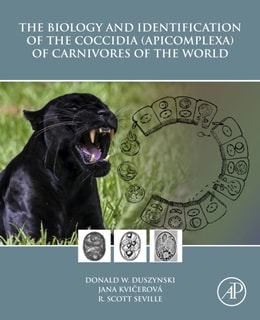
The fundamental concept of The Biology and Identification of the Coccidia (Apicomplexa) of Carnivores of the World is to provide an up-to-date reference guide to the identification, taxonomy, and known biology of apicomplexan intestinal and tissue parasites of carnivores including, but not limited to, geographic distribution, prevalence, sporulation, prepatent and patent periods, site(s) of infection in the definitive and (if known) intermediate hosts, endogenous development, cross-transmission, pathology, phylogeny, and (if known) their treatments.
Skin Diseases of Cattle in the Tropics: A Guide to Diagnosis and Treatment is a clinical and practical guide to help animal scientists, field veterinarians, veterinary students, and technicians make appropriate and differential diagnoses.
Irradiation for Quality Improvement, Microbial Safety and Phytosanitation of Fresh Produce presents the last six and a half decades of scientific information on the topic.
Validating Preventive Food Safety and Quality Controls: An Organizational Approach to System Design and Implementation is a how-to-guide for food industry personnel providing essential preventative control system guidance to help design and implement scientifically verifiable food safety controls in food processes.
Harnessing the Power of Viruses explores the application of scientific knowledge about viruses and their lives to solve practical challenges and further advance molecular sciences, medicine and agriculture.
Hazard Analysis and Risk Based Preventive Controls: Building a (Better) Food Safety Plan is directed to those food safety professionals charged with ensuring or assisting with FSMA's preventative controls (PC) implementation and compliance in their routine job duties.
Haemonchus Contortus and Haemonchosis - Past, Present and Future Trends, the latest in the Advances in Parasitology series first published in 1963, contains comprehensive and up-to-date reviews on all areas of interest in contemporary parasitology.
Immunology, Volume 1: Immunotoxicology, Immunopathology, and Immunotherapy discusses the investment of time, effort and finance that go into making progress in preventing and/or curing serious diseases by using standard treatments (chemotherapy, radiotherapy, surgery, and hormone therapy).
Addictive Substances and Neurological Disease: Alcohol, Tobacco, Caffeine, and Drugs of Abuse in Everyday Lifestyles is a complete guide to the manifold effects of addictive substances on the brain, providing readers with the latest developing research on how these substances are implicated in neurological development and dysfunction.
Microbiology and Molecular Diagnosis in Pathology: A Comprehensive Review for Board Preparation, Certification and Clinical Practice reviews all aspects of microbiology and molecular diagnostics essential to successfully passing the American Board of Pathology exam.
Pathology of Wildlife and Zoo Animals is a comprehensive resource that covers the pathology of wildlife and zoo species, including a wide scope of animals, disease types and geographic regions.
Nutrition and Lifestyle in Neurological Autoimmune Diseases: Multiple Sclerosis discusses important discoveries relating to the types of, and efficacy of, nutritional and lifestyle responses to symptoms and reoccurrence of MS.
Food Preservation, Volume Six, the latest in the Nanotechnology in the Agri-Food Industry series, discusses how nanotechnology can improve and control the growth of pathogenic and spoilage compounds to improve food safety and quality.
The Norovirus: Features, Detection and Prevention of Foodborne Disease is a unique and valuable reference for both researchers in industry and students who need to understand how this specific pathogen behaves in order to improve control of food as a transmission of this infectious biological agent.
Fossil Parasites, the latest edition in the Advances in Parasitology series established in 1963, contains comprehensive and up-to-date reviews on all areas of interest in contemporary parasitology, including medical studies of parasites of major influence, such as plasmodium falciparum and trypanosomes.
Adenosine Receptors in Neurodegenerative Diseases covers the role of adenosine receptors in brain function, also focusing on related methodologies and perspectives in therapeutics.
Critical Care Neurology, Part II: Neurology of Critical Illness focuses on the care specialists and general neurologists that consult in the ICU and their work with patients in acute, life-threatening situations who are dealing with neurologic or neurosurgical crises emanating from either a preexisting neurologic syndrome or from a new neurologic complication appearing as a result of another medical or surgical critical illness.
Brain Metastases from Primary Tumors Volume Three: Epidemiology, Biology, and Therapy of Melanoma and Other Cancers provides a comprehensive overview of the metastasis of cancer, the main cause of approximately 90% of cancer associated deaths, yet the mechanisms governing this clinically important process remain poorly understood.
Food Fraud provides an overview of the current state on the topic to help readers understand which products are being impacted, how pervasive food fraud is, and what laws are in effect across the developed world.
Insect-Plant Interactions, the latest edition in the Advances in Botanical Research series, which publishes in-depth and up-to-date reviews on a wide range of topics in the plant sciences, features several reviews by recognized experts on all aspects of plant genetics, biochemistry, cell biology, molecular biology, physiology, and ecology.
Viruses: From Understanding to Investigation provides students with a map for lifetime learning by presenting the definition and unique characteristics of viruses, including major topics, such as the virus lifecycle, structure, taxonomy, evolution, history, host-virus interactions and methods to study viruses.