Focusing on improving the diagnosis, prognosis, and management of human disease, this book takes on the issues of research design, measurement, and evaluation which are critical to clinical epidemiology.
This edited book contains chapters that describe bespoke three-dimensional (3D) printing aimed at democratizing anatomy education by providing open-source scans for download and printing as 3D models.
Many doctors do not receive training early in their careers on the broad range of non-clinical aspects of their work, and confront day-to-day issues for which initial medical education has failed to prepare them.
Praise for the first edition:"e;Given the author's years of experience as a statistician and as a founder of the first DMC in pharmaceutical industry trials, I highly recommend this book-not only for experts because of its cogent and organized presentation, but more importantly for young investigators who are seeking information about the logistical and philosophical aspects of a DMC.
Statistical Approaches in Oncology Clinical Development : Current Paradigm and Methodological Advancement presents an overview of statistical considerations in oncology clinical trials, both early and late phase of development.
Mathematical and Statistical Skills in the Biopharmaceutical Industry: A Pragmatic Approach describes a philosophy of efficient problem solving showcased using examples pertinent to the biostatistics function in clinical drug development.
Review of the First Edition"e;The goal of this book, as stated by the authors, is to fill the knowledge gap that exists between developed statistical methods and the applications of these methods.
In recent years, many pharmaceutical companies and clinical research organizations have been focusing on the development of traditional Chinese (herbal) medicines (TCMs) as alternatives to treating critical or life-threatening diseases and as pathways to personalized medicine.
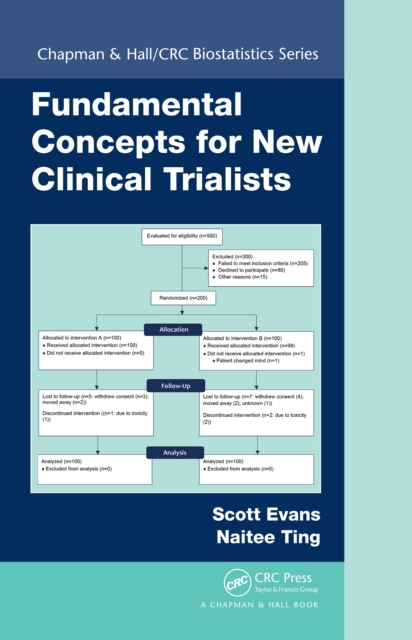
Fundamental Concepts for New Clinical Trialists describes the core scientific concepts of designing, data monitoring, analyzing, and reporting clinical trials as well as the practical aspects of trials not typically discussed in statistical methodology textbooks.
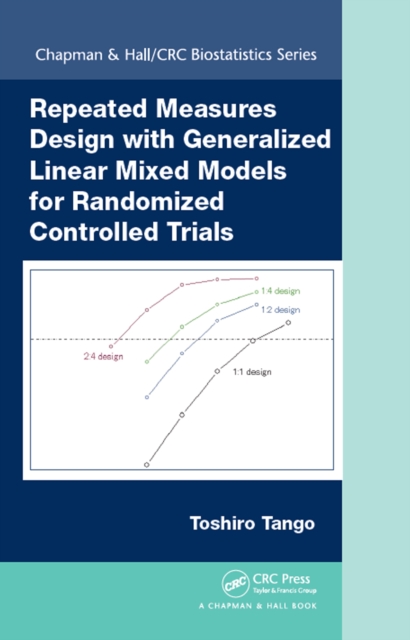
Repeated Measures Design with Generalized Linear Mixed Models for Randomized Controlled Trials is the first book focused on the application of generalized linear mixed models and its related models in the statistical design and analysis of repeated measures from randomized controlled trials.
Handbook of Methods for Designing, Monitoring, and Analyzing Dose-Finding Trials gives a thorough presentation of state-of-the-art methods for early phase clinical trials.
Clinical Trial Optimization Using R explores a unified and broadly applicable framework for optimizing decision making and strategy selection in clinical development, through a series of examples and case studies.
This book provides practical knowledge to clinicians and biomedical researchers using biological and biochemical specimen/samples in order to understand health and disease processes at cellular, clinical, and population levels.
Statistical Testing Strategies in the Health Sciences provides a compendium of statistical approaches for decision making, ranging from graphical methods and classical procedures through computationally intensive bootstrap strategies to advanced empirical likelihood techniques.
Power Analysis of Trials with Multilevel Data is a valuable reference for anyone who wants to perform power calculations on trials with hierarchical data.
Cluster Randomised Trials, Second Edition discusses the design, conduct, and analysis of trials that randomise groups of individuals to different treatments.
All the Essentials to Start Using Adaptive Designs in No TimeCompared to traditional clinical trial designs, adaptive designs often lead to increased success rates in drug development at reduced costs and time.
Cancer Clinical Trials: Current and Controversial Issues in Design and Analysis provides statisticians with an understanding of the critical challenges currently encountered in oncology trials.
Reliably optimizing a new treatment in humans is a critical first step in clinical evaluation since choosing a suboptimal dose or schedule may lead to failure in later trials.
This text for advanced undergraduate and graduate students covers the fundamental relationships between the structure and properties of materials and biological tissues.
Involved in nearly every therapeutic area, particularly cancer, biomarkers have experienced tremendous advances since the first edition of this book, both in the discovery of biomarkers and in their applications.
This book addresses electron spin-qubit based quantum computing and quantum information processing with a strong focus on the background and applications to EPR/ESR technique and spectroscopy.
This book discusses the molecular, biological, pathological, and clinical aspects of melanoma, with special emphasis in the new concepts of melanoma genetics.
This text provides a comprehensive, state-of-the-art review of the application of image analysis focusing on the techniques which can be used in every biology and medical laboratory to automate procedures of cell analysis and to create statistics very useful for a comprehension of cell growth dynamics and the effects of drugs on them.
This book comprehensively covers the classification, histopathology, pathogenesis, and molecular diagnosis of vascular tumors and malformations, correlating these with current approaches to clinical management.