Besides offering a critical analysis of the WHO definition and a review of both ancient and contemporary conceptions of health, the cooperative effort of physicians and philosophers presented in this book works through the challenges which any definition of health faces, if it is to be both truly personalist, and at the same time operational.
The contributions to this volume grew out of papers presented at an international conference Individual, Community & Society: Bioethics in the Third Millennium, held in Hong Kong, Special Administrative Region of the People's Republic of China, between 25-28 May 1999.
Bioethics: Asian Perspectives: A Quest for Moral Diversity: - is the first volume on bioethics all contributors of which are exclusively non-western scholars; - unfolds a rich and colourful picture; - addresses thorny bioethical issues from comprehensive Asian perspectives and different from the western paradigm of bioethics; - covers many topics including the intellectual foundation of Asian bioethics, bioethics and Asian culture, life and death, euthanasia and end-of-life care in Asia; - shows in its discussions moral diversity in Asia; - sheds light on the debate about universal ethics, global ethics and moral diversity.
lt is with great pleasure that I write this preface for Or Li's book, wh ich addresses the venerable and vexing issues surrounding the problem of whether death can be a harm to the person who dies.
In this book, developed by a group of collaborating scholars in bioethics from different European countries, an overview is given of the most salient themes in present-day bioethics.
Questions concerning the notion of quality of life, its definition, and its ap- plications for purposes of assessment and measurement in social and medical contexts, have been widely discussed in Scandinavia during the last ten years.
Despite reservoirs of moral discourse about duties in religious communities, professional caregiving traditions, and philosophical perspectives, the dominant moral language in contemporary biomedical ethics is that of `rights'.
Religious beliefs and attitudes have long been recognized as playing an important role in sexual functioning, but the relationship between religion and sexual behavior has rarely been studied in a comprehensive way.
GENERAL INTRODUCTION This study of the concept of health is an attempt to combine central ideas in modern philosophy of medicine with certain results from analytical action theory.
It may be unnecessary to some to publish a text on sexuality in 1986 since the popular press speaks of the sexual revolution as if it were over and was possibly a mistake.
That concern about human genetics is at the top of many lists of issues requiring intense discussion from scientific, political, social, and ethical points of view is today no surprise.
The germs of the ideas in this book became implanted in me during my experience as a resident in clinical pathology at Boston University Medical Center.
As the field of bioethics has matured, increasing attention is being paid to how bioethical issues are treated in different moral and religious traditions and in different parts of the world.
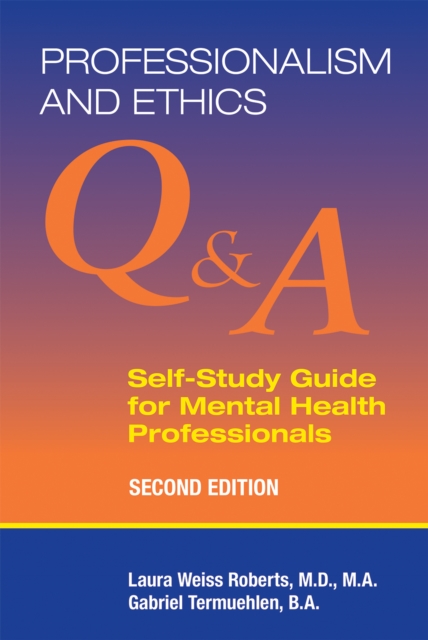
Like its pioneering predecessor, this new edition of Professionalism and Ethics: Q & A Self-Study Guide for Mental Health Professionals offers an interactive, case-oriented approach to mental health ethics.
As noted in Volume 1, the Yearbook series alternates between a biennial volume tracing recent theological discussions on topics in bioethics and a biennial volume tracing recent regional discussions in bioethics.
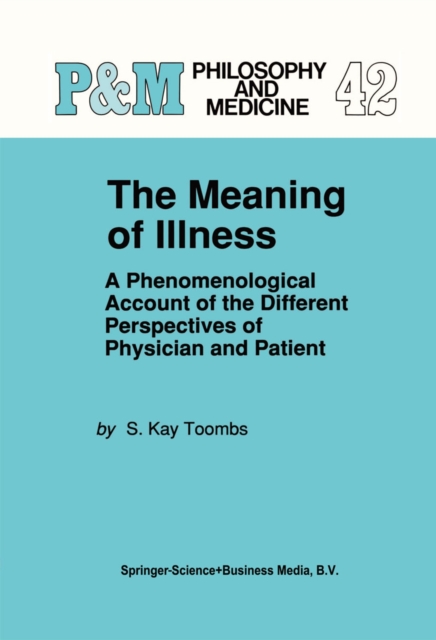
A PHENOMENOLOGICAL APPROACH My interest in exploring the nature of the patient's and the physician's understanding of illness has grown out of my own experience as a multiple sclerosis patient.
As the field of bioethics has matured, increasing attention is being paid to how bioethical issues are treated in different moral and religious traditions and in different regions of the world.