In bioethics, discussions of justice have tended to focus on questions of fairness in access to health care: is there a right to medical treatment, and how should priorities be set when medical resources are scarce.
In this pioneering work, Abdulaziz Sachedina - a scholar with life-long academic training in Islamic law - relates classic Muslim religious values to the new ethical challenges that arise from medical research and practice.
Since the early 2000s, the field of Responsible Conduct of Research has become widely recognized as essential to scientific education, investigation, and training.
Since the early 2000s, the field of Responsible Conduct of Research has become widely recognized as essential to scientific education, investigation, and training.
The social practice of forming, shaping, expressing, contesting, and maintaining personal identities makes human interaction, and therefore society, possible.
Contemporary debates over issues as wide-ranging as the protection of wildernesses and endangered species, the spread of genetically modified organisms, the emergence of synthetic biology, and the advance of human enhancement, all of which seem to spin into deeper and more baffling questions with every change in the news cycle, often circle back to the same fundamental question: should there be limits to the human alteration of the natural world?
Contemporary debates over issues as wide-ranging as the protection of wildernesses and endangered species, the spread of genetically modified organisms, the emergence of synthetic biology, and the advance of human enhancement, all of which seem to spin into deeper and more baffling questions with every change in the news cycle, often circle back to the same fundamental question: should there be limits to the human alteration of the natural world?
The Globalization of Health Care is the first book to offer a comprehensive legal and ethical analysis of the most interesting and broadest reaching development in health care of the last twenty years: its globalization.
Hospice is the premiere end of life program in the United States, but its requirement that patients forgo disease-directed therapies and that they have a prognosis of 6 months or less means that it serves less than half of dying patients and often for very short periods of time.
This compact and innovative book tackles one of the central issues in drug policy: the lack of a coherent conceptual structure for thinking about drugs.
A wide variety of ambitions and measures to slow, stop, and reverse phenomena associated with aging have been part of human culture since early civilization.
The landscape of the religion and health literature is littered with a plethora of models so large and so unwieldy that they are impossible to estimate empirically.
The landscape of the religion and health literature is littered with a plethora of models so large and so unwieldy that they are impossible to estimate empirically.
Since its first publication in 1996, Ethics and Epidemiology has been an invaluable resource for practicing public health professionals and MPH students around the world.
Since its first publication in 1996, Ethics and Epidemiology has been an invaluable resource for practicing public health professionals and MPH students around the world.
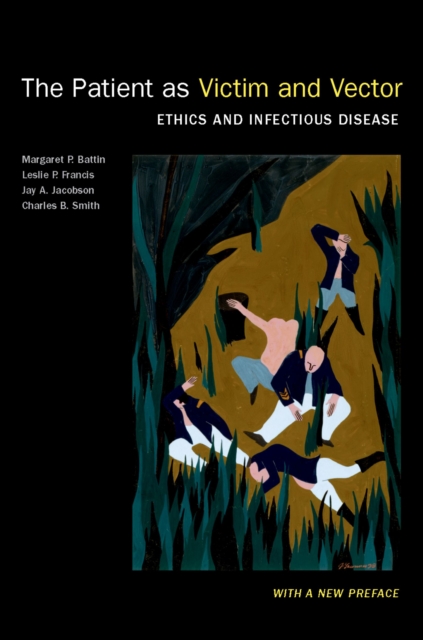
This book-first published a decade before the COVID-19 pandemic erupted-is the first authored volume on ethical issues in infectious disease, "e;monumental"e; for its competence and comprehensiveness.
Mormonism, Medicine, and Bioethics provides the first comprehensive treatment of principles and positions on questions of bioethics encountered by members, professionals, and ecclesiastical leaders of The Church of Jesus Christ of Latter-day Saints (LDS or Mormon).
Mormonism, Medicine, and Bioethics provides the first comprehensive treatment of principles and positions on questions of bioethics encountered by members, professionals, and ecclesiastical leaders of The Church of Jesus Christ of Latter-day Saints (LDS or Mormon).
The foundations of research ethics are riven with fault lines emanating from a fear that if research is too closely connected to weighty social purposes an imperative to advance the common good through research will justify abrogating the rights and welfare of study participants.
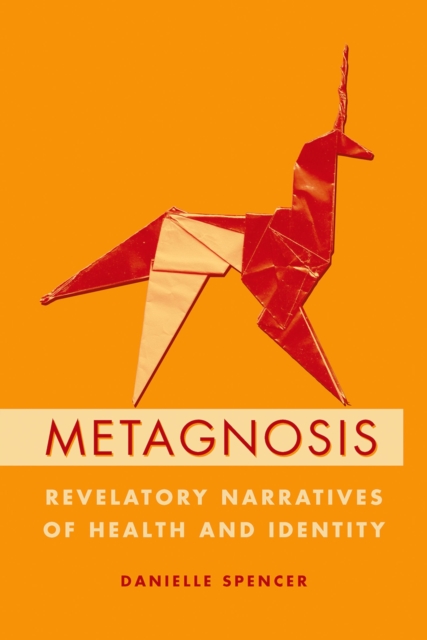
Bridging memoir with key concepts in narratology, philosophy and history of medicine, and disability studies, this book identifies and names the phenomenon of metagnosis: the experience of learning in adulthood of a longstanding condition.