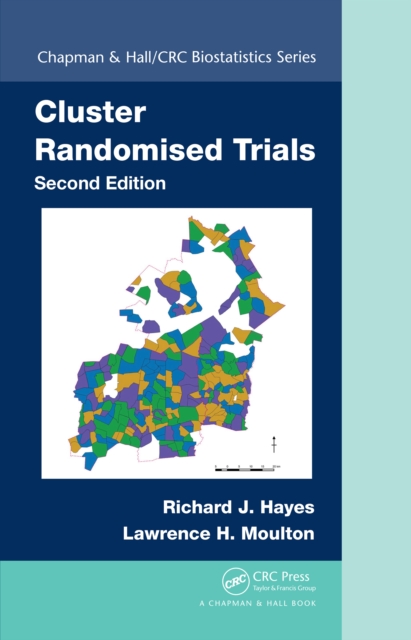
Cluster Randomised Trials, Second Edition discusses the design, conduct, and analysis of trials that randomise groups of individuals to different treatments.
Statistical Testing Strategies in the Health Sciences provides a compendium of statistical approaches for decision making, ranging from graphical methods and classical procedures through computationally intensive bootstrap strategies to advanced empirical likelihood techniques.
Containing papers carefully compiled for both their historical importance and contemporary relevance, Family Medicine: The Classic Papers brings together a team of experts, led by global family medicine leaders Michael Kidd, Iona Heath and Amanda Howe, who explain the importance of each selected paper and how it contributes to international health care, current practice and research.
The upheavals of the NHS reforms have caused a great deal of stress and uncertainty in primary care, and professional development and support for general practitioners needs to take account of this.
Illuminating the Diversity of Cancer and Palliative Care Education examines a myriad of original approaches, techniques, methods, educational strategies and imaginative innovations within this vital field of medicine.
In this extraordinary book, Iona Heath draws on her experience as a general practitioner to select and comment on a collection of passages concerning death and dying, and to consider the essential nature of general practice.
This work includes Forewords by Benyamin Maoz and John Salinsky, Professor Emeritus of Psychiatry, Faculty for Health Sciences, Ben Gurion University of the Negev, Israel; General Practitioner, Course Organiser and Author, London.
'Successful medical leaders are usually, but not always, experienced and credible clinicians with good people skills, who look beyond the boundaries of their own specialty or institution, who are positive and perseverant and who are prepared to take reasonable risks to achieve their goals.
Quality communication contributes to smoother running practices, better care and services, greater efficiencies, fewer unhealthy conflicts, more satisfied staff and patients, and an improved ability to meet the challenges of an evolving and increasingly complex health care environment - With packed curricula in most health care training institutions, and hectic schedules in practices and administrative offices, time for teaching vital communication and interpersonal skills is often at a premium.
This book explores and offers solutions to critical issues in graduate medical education, including how students are taught and evaluated and how their educational programs are funded.
The first edition of The Arts in Medical Education outlined the principles and methods for using arts resources in teaching aspects of the medical curriculum.
This book compares the methods of surveillance prevention and control of communicable diseases in countries selected for their different situations and approaches.
Patient and public involvement in health and social care has become a key element of government policy, and the need to listen and act on the views of patients and the public is an increasingly integral part of the planning and delivery of healthcare.
This volume provides both the scientific and medical background to manipulation, as well as sound practical advice on how to carry out manipulative techniques.
People from different cultural backgrounds prefer adhering to their own religious beliefs which could restrict treatment options leading to the detriment of health, especially if it involves the health of a disabled child.
This comprehensive resource book, the key text for the Gold Standards Framework (GSF) Programme, supports and enables all primary health professionals, and all those involved in palliative care, to make improvements in care provided for their patients, as recommended in the NICE guidance on Supportive and Palliative Care.
Series Editors: Moira Stewart, Judith Belle Brown and Thomas R Freeman The application of the patient-centered clinical method has received international recognition.
This extraordinary and practical book examines neuro linguistic programming (NLP) - the knowledge and skills to detect and affect thinking patterns - and applies it to each phase of the medical consultation.
The fundholding concept is now an established component of the NHS and is responsible for the growing influence of general practice in the delivery of health care.
This book is intended for all those who not only have to give bad news but who are also keen to give as much help and support as possible to partners and families - both immediately and during remission relapse terminal illness dying or grieving.
This work includes forewords by Sir Liam Donaldson and Peter Wheeler, Chief Medical Officer, Department of Health; Dean, College of Fine Arts, University of Sharjah, United Arab Emirates.
With packed curricula in most health care training institutions, and hectic schedules in practices and administrative offices, time for teaching vital communication and interpersonal skills is often at a premium.
The phrase 'medical humanities' has a currency that is wider than any agreement as to what it means, though those engaged in the field usually know what they are attempting.