Exposure Science: Basic Principles and Applications provides a concise overview of the field of exposure science, from its origins in sanitation and occupational health, to its exciting involvement with emerging scientific concepts.
Bioinformatics for Beginners: Genes, Genomes, Molecular Evolution, Databases and Analytical Tools provides a coherent and friendly treatment of bioinformatics for any student or scientist within biology who has not routinely performed bioinformatic analysis.
Beginning with a survey of fundamental concepts associated with data integration, knowledge representation, and hypothesis generation from heterogeneous data sets, Methods in Biomedical Informatics provides a practical survey of methodologies used in biological, clinical, and public health contexts.
This title critically reviews old and new literature, help to create greater awareness of the disease in the US and helps in the evaluation of certain epidemiological and public health issues.
This book provides detailed and updated knowledge about medically important 'Big Four' venomous snakes of India (Indian spectacled cobra, Indian common krait, Indian Russell's viper, and Indian saw-scaled viper).
This book provides a comprehensive introduction to computational epidemiology, highlighting its major methodological paradigms throughout the development of the field while emphasizing the needs for a new paradigm shift in order to most effectively address the increasingly complex real-world challenges in disease control and prevention.
Epidemiology and Demography in Public Health provides practical guidance on planning and implementing surveillance and investigation of disease and disease outbreaks.
New health systems exist today thanks to the changing nature of diseases as a result of the integration of new technologies and new approaches in care giving and the management of healthcare systems.
The disability-adjusted life year (DALY) is a generic measure of health effect that can be used in cost-effectiveness analysis as an alternative to the quality-adjusted life year (QALY).
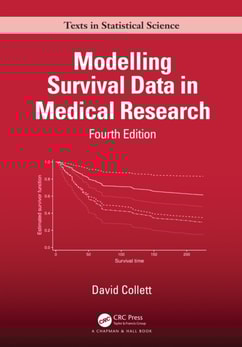
Modelling Survival Data in Medical Research, Fourth Edition, describes the analysis of survival data, illustrated using a wide range of examples from biomedical research.
Updated and much expanded, the Second Edition of Parasitic Protozoa is designed to be useful to physicians, veterinarians, and research scientists concerned with diseases caused by protozoa in man, and in domestic and wild animals including fish, mollusks and insects, as well as the more commonly considered vertebrate animals.
Computation intelligence (CI) paradigms, including artificial neural networks, fuzzy systems, evolutionary computing techniques, and intelligent agents, form the basis of making clinical decisions.
Computation intelligence (CI) paradigms, including artificial neural networks, fuzzy systems, evolutionary computing techniques, and intelligent agents, form the basis of making clinical decisions.
Molecular Tools and Infectious Disease Epidemiology examines the opportunities and methodologic challenges in the application of modern molecular genetic and biologic techniques to infectious disease epidemiology.
Progress in Molecular Biology and Translational Science provides a forum for discussion of new discoveries, approaches, and ideas in molecular biology and translational science.
The discovery that nitrogen monoxide or nitric oxide (NO)is a biologically produced free radical has revolutionized our thinking about physiological and pathological processes.
Towards a Digital Health Ecology : NHS Digital Adoption through the COVID-19 Looking Glass is about technology adoption in the UK's National Health Service (NHS) as told from the inflection point of a disaster.
This is the first comprehensive book that provides accessible, international knowledge for practitioners, students and academics about social work in health emergencies and spans fields of practice across world regions with particular reference to the COVID-19 pandemic.
Towards a Digital Health Ecology : NHS Digital Adoption through the COVID-19 Looking Glass is about technology adoption in the UK's National Health Service (NHS) as told from the inflection point of a disaster.
This is the first comprehensive book that provides accessible, international knowledge for practitioners, students and academics about social work in health emergencies and spans fields of practice across world regions with particular reference to the COVID-19 pandemic.
Over the last thirty years or so, there have been tremendous advancements in the area of geospatial health; however, somehow, two aspects have not received as much attention as they should have received.
This volume, representing a compilation of authoritative reviews on a multitude of uses of statistics in epidemiology and medical statistics written by internationally renowned experts, is addressed to statisticians working in biomedical and epidemiological fields who use statistical and quantitative methods in their work.
Highly praised for its broad, practical coverage, the second edition of this popular text incorporated the major statistical models and issues relevant to epidemiological studies.
This volume, the first of its kind ever, is designed to provide both laypersons and professionals with a detailed description of the occurrence of each common form of cancer in the ethnically, socially, and environmentally complex milieu of a modern urban complex.
Concern about the impact of air pollution has led governments and local authorities across the world to regulate, among other things, the burning of fossil fuels, industrial effluence, cigarette smoke, and aerosols.
The book acts as a guide, taking the reader into the smart system domain and providing theoretical and practical knowledge along with case studies in smart healthcare.
Este libro reúne los resultados de investigaciones de profesionales de diversas áreas para abarcar un tema en común desde diferentes perspectivas: la investigación, la innovación y el conocimiento científico.