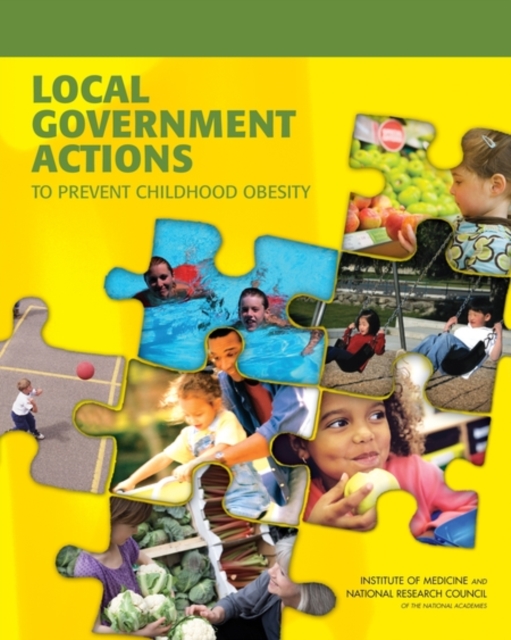
Obesity poses one of the greatest public health challenges of the 21st century, creating serious health, economic, and social consequences for individuals and society.
The federal government requires that most packaged foods carry a standardized labelthe Nutrition Facts panelthat provides nutrition information intended to help consumers make healthful choices.
The fragmented information that consumers receive about the nutritional value and health risks associated with fish and shellfish can result in confusion or misperceptions about these food sources.
Health literacy is the degree to which individuals can obtain, process, and understand the basic health information and services they need to make appropriate health decisions.
In the last 25 years, a major shift has occurred in the field of violence prevention, from the assumption that violence is inevitable to the realization that violence is preventable.
Drawing on the work of the Roundtable on Evidence-Based Medicine, the 2007 IOM Annual Meeting assessed some of the rapidly occurring changes in health care related to new diagnostic and treatment tools, emerging genetic insights, the developments in information technology, and healthcare costs, and discussed the need for a stronger focus on evidence to ensure that the promise of scientific discovery and technological innovation is efficiently captured to provide the right care for the right patient at the right time.
During the 1950s, with the Cold War looming, military planners sought to know more about how to keep fighting forces fit and capable in the harsh Alaskan environment.
The conditions and characteristics of correctional facilities - overcrowded with rapid population turnover, often in old and poorly ventilated structures, a spatially concentrated pattern of releases and admissions in low-income communities of color, and a health care system that is siloed from community public health - accelerates transmission of the novel coronavirus (SARS-CoV-2) responsible for COVID-19.
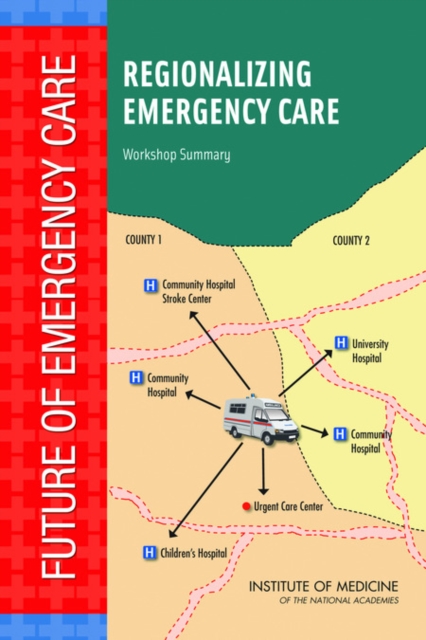
During medical emergencies, hospital staff and emergency medical services (EMS) providers, can face barriers in delivering the fastest and best possible care.
The World Health Organization defines the social determinants of health as "e;the conditions in which people are born, grow, work, live, and age, and the wider set of forces and systems shaping the conditions of daily life.
Risk assessments are often used by the federal government to estimate the risk the public may face from such things as exposure to a chemical or the potential failure of an engineered structure, and they underlie many regulatory decisions.
The influenza pandemic caused by the 2009 H1N1 virus underscores the immediate and critical need to prepare for a public health emergency in which thousands, tens of thousands, or even hundreds of thousands of people suddenly seek and require medical care in communities across the United States.
In recent public workshops and working group meetings, the Forum on Microbial Threats of the Institute of Medicine (IOM) has examined a variety of infectious disease outbreaks with pandemic potential, including those caused by influenza (IOM, 2005) and severe acute respiratory syndrome (SARS) (IOM, 2004).
The National Academies of Sciences, Engineering, and Medicine in collaboration with the InterAcademy Partnership and the European Academies Science Advisory Committee held a workshop in November 2019 to bring together researchers and public health officials from different countries and across several relevant disciplines to explore what is known, and what critical knowledge gaps remain, regarding existing and possible future risks of harmful infectious agents emerging from thawing permafrost and melting ice in the Arctic region.
The Institute of Medicine (IOM) Committee on Quality Measures for the Healthy People Leading Health Indicators was charged by the Office of the Assistant Secretary for Health to identify measures of quality for the 12 Leading Health Indicator (LHI) topics and 26 Leading Health Indicators in Healthy People 2020 (HP2020), the current version of the Department of Health and Human Services (HHS) 10-year agenda for improving the nation's health.
Health literacy, cultural competence, and language access services are distinct but inextricably linked concepts for delivering equitable care to all members of the increasingly diverse population of the United States.
In October 2004 the Research Center for Gastroenterology and Liver Diseases of Shaheed Beheshti University hosted in Tehran an Iranian-American workshop on Food Safety and Surveillance Systems for Foodborne Diseases.
In its landmark report, Health Literacy: A Prescription to End Confusion, the Institute of Medicine noted that there are 90 million adults in the United States with limited health literacy who cannot fully benefit from what the health and health care systems have to offer.
During a wide-reaching catastrophic public health emergency or disaster, existing surge capacity plans may not be sufficient to enable health care providers to continue to adhere to normal treatment procedures and follow usual standards of care.
As biomedical and behavioral research progresses into new areas, the number of scientists active in various fields rises and falls, and the health needs of the U.
As information technology becomes an integral part of health care, it is important to collect and analyze data in a way that makes the information understandable and useful.
Nanoscale science and technology, often referred to as "e;nanoscience"e; or "e;nanotechnology,"e; are science and engineering enabled by our relatively new ability to manipulate and characterize matter at the level of single atoms and small groups of atoms.
Driven by community-based organizations and supported by a growing body of literature, the environmental justice movement contends that poor and minority populations are burdened with more than their share of toxic waste, pesticide runoff, and other hazardous byproducts of our modern economic life.