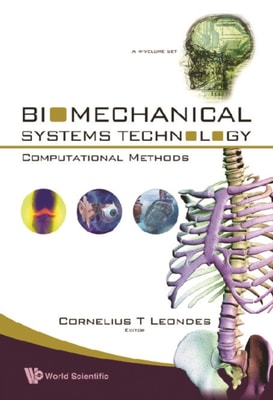
Because of rapid developments in computer technology and computational techniques, advances in a wide spectrum of technologies, coupled with cross-disciplinary pursuits between technology and its application to human body processes, the field of biomechanics continues to evolve.
Because of rapid developments in computer technology and computational techniques, advances in a wide spectrum of technologies, coupled with cross-disciplinary pursuits between technology and its application to human body processes, the field of biomechanics continues to evolve.
Because of rapid developments in computer technology and computational techniques, advances in a wide spectrum of technologies, coupled with cross-disciplinary pursuits between technology and its application to human body processes, the field of biomechanics continues to evolve.
Because of rapid developments in computer technology and computational techniques, advances in a wide spectrum of technologies, coupled with cross-disciplinary pursuits between technology and its application to human body processes, the field of biomechanics continues to evolve.
A project on "e;Biomechanics at Micro- and Nanoscale Levels"e;, the title of this book, was approved by the Ministry of Education, Culture, Sports, Science and Technology of Japan in 2003; and this four-year project is now being carried out by fourteen prominent Japanese researchers.
A project on "e;Biomechanics at Micro- and Nanoscale Levels"e;, the title of this book, was approved by the Ministry of Education, Culture, Sports, Science and Technology of Japan in 2003.
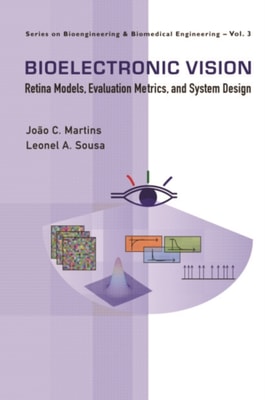
This book provides a sound mathematical and technical perspective in functional and structural retina models, presents evaluation metrics to assess those models, and provides insights about the models hardware implementation.
This volume of proceedings consists of the papers presented during the 8th International Workshop on Mathematical Methods in Scattering Theory and Biomedical Engineering, held in Lefkada, Greece, on 27-29 September 2007.
This unique volume contains selected papers presented at the 6th International Conference on Photonics and Imaging in Biology and Medicine (PIBM 2007), held on November 4-6, 2007 at Wuhan National Laboratory for Optoelectronics, Huazhong University of Science and Technology, Wuhan, P R China.
The book represents a paradigm shift from the traditional static model of investigation of oxidative biology to the dynamic model of vascular oxidative stress.
This book is written for undergraduate and graduate students in biomedical engineering wanting to learn how to pursue a career in building up their entrepreneur ventures.
Conjugation of synthetic materials with cell-responsive biologically-active molecules, in addition to providing structural support and release of biomolecules in the regenerating region, can provide the signaling factors required to initiate the cascade of cell migration, adhesion, differentiation, maturation, growth factor modulation, maintenance of matrix integrity, and tissue morphogenesis.
This volume of proceedings consists of the papers presented during the 9th International Workshop on Mathematical Methods in Scattering Theory and Biomedical Engineering, held in Patras, Greece, on 9-11 October 2009.
Bioadhesion is often defined as the state in which two materials, at least one of which is biological in nature, are held together for extended periods of time by interfacial forces.
This book presents an overview of the current state of research in the field of nanotechnologies and biotechnologies for energy, environment, electronics, and health, as emerging from leading laboratories worldwide.
The accessibility of the skin in vivo has resulted in the development of non-invasive methods in the past 40 years that offer accurate measurements of skin properties and structures from microscopic to macroscopic levels.
Robotic surgery has already created a paradigm shift in medical surgical procedures and will continue to expand to all surgical and microsurgical interventions.
Scaffolds for tissue engineering are devices that exploit specific and complex physical and biological functions, in vitro or in vivo, and communicate through biochemical and physical signals with cells and, when implanted, with the body environment.
A peek into the literature on the environmental health implications of the rapidly developing nanotechnology industry shows that the potential problem of exposure to airborne nanoparticles has not been adequately addressed.
Analytical chemists in the pharmaceutical industry are always looking for more-efficient techniques to meet the analytical challenges of today's pharmaceutical industry.
Advances in semi-automated high-throughput image data collection routines, coupled with a decline in storage costs and an increase in high-performance computing solutions have led to an exponential surge in data collected by biomedical scientists and medical practitioners.
The book offers readers an understanding of the development of neural crest cells, which is crucial as many birth defects and tumours are of neural crest origin.
This book presents a road map for applying the stages in conceptualization, evaluation, and testing of biomedical devices in a systematic order of approach, leading to solutions for medical problems within a well-deserved safety limit.
Successful biofunctional surface engineering will determine the future of medical devices such as orthopedic implants, stents, catheters, vaccine scaffolds, wound dressings, and extracorporeal circulation devices.
Nanomedicine-the application of nanotechnology to health sciences-has the potential to address many important medical problems by exploiting the advanced physicochemical characteristics of nanostructured materials and devices.
Nucleic acid (NA) therapeutics has been extensively studied both in the academia and in the pharmaceutical industry and is still considered the promise for new therapeutic modalities, especially in personalized medicine.
This is a compilation of tributes to a gentleman who has impacted the field of biomedical engineering and musculoskeletal science for four decades through his research, his guidance and mentorships, his friendships, and his love for the field, family, and friends.
The field of microfluidics has in the last decade permeated many disciplines, from physics to biology and chemistry, and from bioengineering to medical research.
Based on an interdisciplinary approach that directly bridges orthopedic concepts to surface science, this book details cutting-edge research in bioceramics science, physical chemistry, biomedical optics, and nanomechanics.
This book explores engineered nanomaterials (ENM) pulmonary effects and familiarizes readers with unique aspects of nanomaterial application and research.
This book explains, using the example of endovascular intervention, the development of in vitro simulators for biomedical applications based on the scientific context in the robotics area and the explanation of the medical procedure to be simulated.
The self-organization of bionanostructures into well-defined functional machineries found in nature has been a priceless source of ideas for researchers.
Polysaccharides and their related compounds are attracting much attention due to their potential as new functional materials in many research fields such as medicine, pharmaceutics, foods, and cosmetics.
This book describes how methodologies in biochemistry, molecular and cellular biology, electromagnetic bioeffects, and nanotechnology were brought together to construct a nanostructure that is a composite of nucleic acid, carbon nanotube, paramagnetic metallic nanoparticles, and aromatic polymer that is responsive to nonionizing electromagnetic radiation, RFR to microwaves.