Molecular networks provide descriptions of the organization of various biological processes, including cellular signaling, metabolism, and genetic regulation.
This text was designed for the physicians, nurses, technical personnel, and staff members of medical facilities using lasers for surgical, therapeutic, and diagnostic purposes.
Biologic System Evaluation with Ultrasound is a reference book for engineers in the field of ultrasonics and is intended to inform those unfamiliar with current methods of ultrasonic analysis.
Noninvasive Diagnostic Techniques in Ophthalmology explores the special noninvasive tools developed to function as diagnostic indicators and to further our understanding of ocular function.
This book is written for those who would like to advance their knowledge beyond an introductory level of biomaterials or materials science and engineering.
The development of contemporary molecular biology with its growing tendency toward in-depth study of the mechanisms of biological processes, structure, function, and identification of biopolymers requires application of accurate physicochemical methods.
The diversity of the chapters presented in this volume illustrates not only the many applications of lasers, but also the fact that, in many cases, these are not new uses of lasers, but rather improvements of laser techniques already widely accepted in both research and clinical situations.
The contemplation of truth and beauty is the proper object for which we were created, which calls forth the most intense desires of the soul, and of which it never tires -Hazlitt In his Nobel lecture Purcell commented that when he saw snow in New England after the discovery of NMR, it appeared like "e;heaps of protons quietly precessing in earth's magnetic field.
Advances in the field of signal processing, nonlinear dynamics, statistics, and optimization theory, combined with marked improvement in instrumenta- tion and development of computers systems, have made it possible to apply the power of mathematics to the task of understanding the human brain.
In the quest to understand and model the healthy or sick human body, re- searchers and medical doctors are utilizing more and more quantitative tools and techniques.
The advent in the 1960s of the unique and exciting new form of energy called laser brought to medicine a marvelous tool that could accomplish new treatments of previously untreatable disorders as well as improved treat- ment of mundane problems.
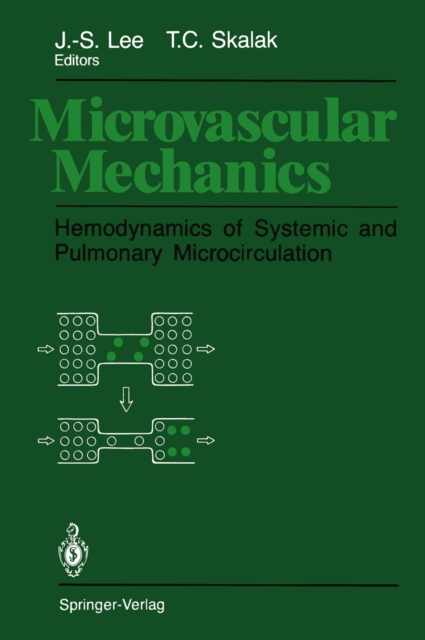
This proceedings volume brings together the invited papers from the Respiratory Biomechanics Symposium of the First World Congress of Biomechanics held in La Jolla, California from August 3D-September 4, 1990.
Historical folklore indicates that Asklepios (circa 900 BC), the fir~t western doctor of ancient Greece, treated many patients with rheumatic diseases of 1 joints ,2.
In recent years there has been a growth in interest in studying the heart from the perspective of the physical sciences: mechanics, fluid flow, electromechanics.
This book has been written in response to the many physicians and scien- tists working on the development of biological approaches to providing therapies for many orthopaedic disorders as well as to improving the healing of many tissues of the musculoskeletal system.
The objective of this book is to provide the researcher and clinician with the recent developments in the analysis and assessment of cardiovascular func- tion.
Biomedical Engineering Program between Rutgers University and the University of Medicine and Dentistry of New Jersey entitled "e;Biopolymers"e; and "e;Patho- biology"e; during the past 15 years.
Microbiorobotics is a new engineering discipline that inherently involves a multidisciplinary approach (mechanical engineering, cellular biology, mathematical modeling, control systems, synthetic biology, etc).
Microbiorobotics is a new engineering discipline that inherently involves a multidisciplinary approach (mechanical engineering, cellular biology, mathematical modeling, control systems, synthetic biology, etc).
Artificial organs may be considered as small-scale process plants, in which heat, mass and momentum transfer operations and, possibly, chemical transformations are carried out.
Presenting a state-of-the-art overview of theoretical and computational models that link characteristic biomechanical phenomena, this book provides guidelines and examples for creating multiscale models in representative systems and organisms.
Biomechanics of the Gastrointestinal Tract is an up-to-date book for researchers on the study of the mechanical properties and the motor system of the gastrointestinal tract.
This book provides the perspectives of many different stakeholders in the biopharmaceuticals field, who share knowledge, challenges, and solutions in an ever-shifting career landscape.
This comprehensive and engaging text, now in an expanded second edition, is meant for advanced undergraduate and graduate students and covers the fundamental relationships between the structure and properties of materials and biological tissues.
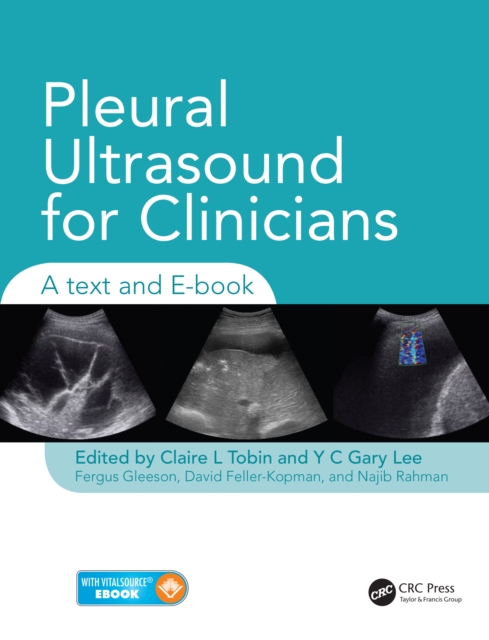
With a large volume of ultrasound images and teaching videos, Pleural Ultrasound for Clinicians: A Text and E-book is a print and interactive digital resource that provides practical guidance for all those undertaking pleural ultrasound investigations and procedures.
Advanced Mechatronics and MEMS Devicesdescribes state-of-the-art MEMS devices and introduces the latest technology in electrical and mechanical microsystems.
The book is designed for end users in the field of digital imaging, who wish to update their skills and understanding with the latest techniques in image analysis.
The volumes in this authoritative series present a multidisciplinary approach to modeling and simulation of flows in the cardiovascular and ventilatory systems, especially multiscale modeling and coupled simulations.
This book will cover the full scope of nanobiosensing, which combines the newest research results in the cross-disciplines of chemistry, biology, and materials science with biosensing and bioanalysis to develop novel detection principles, sensing mechanisms, and device engineering methods.
One of the greatest challenges for mechanists is to extend the success of computational mechanics to fields outside traditional engineering, in particular to biology, biomedical sciences, and medicine.
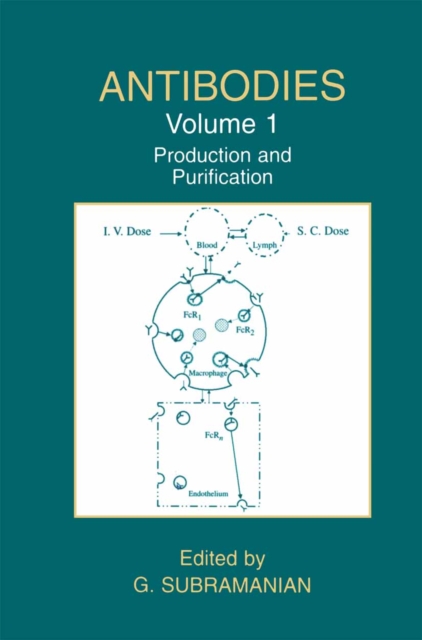
It is now over one hundred years since von Behring and Kitsato first concluded experiments that led to the use of passive immunisation, employing antibodies raised in animals against tetanus and diphtheria toxins.
If the antibody industry is to achieve its full potential in the next decade, the individual technical potentials must be exploited, the limitations must be addressed, and lessons learned must be applied both to current purification methods and to the new technologies that continue to emerge.
This book presents a collection of invited contributions, each reflecting an area of biomedicine in which simulation techniques have been successfully applied.
This book presents a survey of past and recent developments on human walking in virtual environments with an emphasis on human self-motion perception, the multisensory nature of experiences of walking, conceptual design approaches, current technologies, and applications.