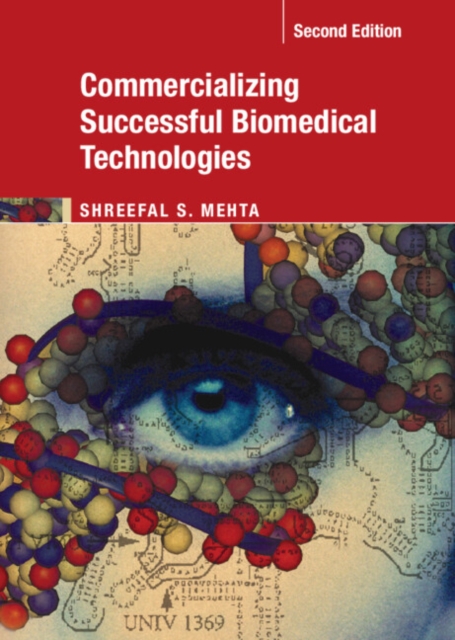
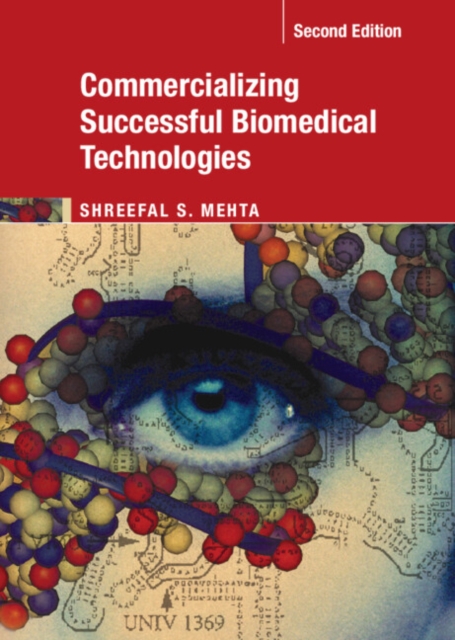
This book offers comprehensive, easy to understand guidance for medical device technology innovators on how to work through the United States FDA regulatory review process, while also providing insight on the various intellectual property concerns that many medical device innovators face.
This book is a compendium of the ICCMIA 2018 proceedings, which provides an ideal reference for all medical imaging researchers and professionals to explore innovative methods and analyses on imaging technologies for better prospective patient care.
This book presents the post-proceedings, including all revised versions of the accepted papers, of the 2017 European Alliance for Innovation (EAI) International Conference on Body Area Networks (BodyNets 2017).
This book covers the functionalisation of silicone surfaces with polysaccharides to improve their antimicrobial and antifouling properties, thus reducing the implant-related infections.
This book covers the latest research development in heart valve biomechanics and bioengineering, with an emphasis on novel experimentation, computational simulation, and applications in heart valve bioengineering.
This book shows the advantages of using different perspectives and scientific backgrounds for developing support technologies that are integrated into daily life.
This book discusses the development of various reliable scanning electrochemical microscopy (SECM) imaging techniques for studying the distribution of biomarkers and nanomaterials in thin and thick animal samples, plant antioxidant (AO) defense systems, as well as human melanoma.
This book presents not only the simultaneous combination of optical methods based on holographic principles for marker-free imaging, real-time trapping, identification and tracking of micro objects, but also the application of substantial low coherent light sources and non-diffractive beams.
This book contains the selected papers of the Sixth International Workshop on Medical and Service Robots (MESROB 2018), held in Cassino, Italy, in 2018.
Magnetoencephalography (MEG) is an invaluable functional brain imaging technique that provides direct, real-time monitoring of neuronal activity necessary for gaining insight into dynamic cortical networks.
Interest in brain connectivity inference has become ubiquitous and is now increasingly adopted in experimental investigations of clinical, behavioral, and experimental neurosciences.
This book offers comprehensive, easy to understand guidance for medical device technology innovators on how to work through the United States FDA regulatory review process, while also providing insight on the various intellectual property concerns that many medical device innovators face.
This book presents a thorough discussion of the physics, biology, chemistry and medicinal science behind a new and important area of materials science and engineering: polymer nanocomposites.
This book presents not only the simultaneous combination of optical methods based on holographic principles for marker-free imaging, real-time trapping, identification and tracking of micro objects, but also the application of substantial low coherent light sources and non-diffractive beams.
Advanced Electroencephalography Analytical Methods: Fundamentals, Acquisition, and Applications presents the theoretical basis and applications of electroencephalography (EEG) signals in neuroscience, involving signal analysis, processing, signal acquisition, representation, and applications of EEG signal analysis using non-linear approaches and machine learning.
Advances in Tissue Engineering is a unique volume and the first of its kind to bring together leading names in the field of tissue engineering and stem cell research.
High-throughput sequencing and functional genomics technologies have given us the human genome sequence as well as those of other experimentally, medically, and agriculturally important species, thus enabling large-scale genotyping and gene expression profiling of human populations.
High-throughput sequencing and functional genomics technologies have given us the human genome sequence as well as those of other experimentally, medically, and agriculturally important species, and have enabled large-scale genotyping and gene expression profiling of human populations.
Combining engineering and medicine research projects with biological applications, the contributions in this volume constitute the efforts of both distinguished scientists and young investigators in various fields of biomedical engineering at Tohoku University, one of Japan's leading scientific research universities.
This proceedings volume details both current and future research and development initiatives in nano-biomedical engineering, arguably the most important technology of the world in the 21st century.
Developments in tissue engineered and regenerative medicine products summarizes recent developments in tissue engineering and regenerative medicine with an emphasis on commercialization and product development.
Health Technologies and Informatics: Research and Developments provides a comprehensive overview of mobile health applications, biodata management and analytics, medical imaging, personalized and public health systems, and biosignal processing.
Magnetic composite particles offer much potential for use in a variety of applications, including manufacturing, environmental protection, microfluidics, microelectronics, and biomedicine.
Biomedical engineering is a rapidly growing interdisciplinary area that is providing solutions to biological and medical problems and improving the healthcare system.