The past two decades have seen rapid development of micro-/nanotechnologies with the integration of chemical engineering, biomedical engineering, chemistry, and life sciences to form bio-MEMS or lab-on-chip devices that help us perform cellular analysis in a complex micro-/nanoflluidic environment with minimum sample consumption and have potential biomedical applications.
The past two decades have seen rapid development of micro-/nanotechnologies with the integration of chemical engineering, biomedical engineering, chemistry, and life sciences to form bio-MEMS or lab-on-chip devices that help us perform cellular analysis in a complex micro-/nanoflluidic environment with minimum sample consumption and have potential biomedical applications.
Pulsed Electromagnetic Fields for Clinical Applications presents the historical development, the state of art, and the future of the application of pulsed electromagnetic fields (PEMFs) for the treatment of various medical problems, including initiating various healing processes from delayed fractures and pain relief to multiple sclerosis and Parkinson's disease.
Pulsed Electromagnetic Fields for Clinical Applications presents the historical development, the state of art, and the future of the application of pulsed electromagnetic fields (PEMFs) for the treatment of various medical problems, including initiating various healing processes from delayed fractures and pain relief to multiple sclerosis and Parkinson's disease.
This book will examine the relevant biological subjects involved in biomimetic microengineering as well as the design and implementation methods of such engineered microdevices.
This book will examine the relevant biological subjects involved in biomimetic microengineering as well as the design and implementation methods of such engineered microdevices.
First published in 2001: This handbook has been written to give those professionals working in the development and use of medical devices practical knowledge about biomedical technology, regulations, and their relationship to quality health care.
First published in 2001: This handbook has been written to give those professionals working in the development and use of medical devices practical knowledge about biomedical technology, regulations, and their relationship to quality health care.
Application of additive manufacturing and tissue engineering in the fields of science and technology enables the manufacturing of biocompatible, customized, reliable, and cost-effective parts, restoring the functionality of a failed human body part.
Application of additive manufacturing and tissue engineering in the fields of science and technology enables the manufacturing of biocompatible, customized, reliable, and cost-effective parts, restoring the functionality of a failed human body part.
Bone is a complex biological material that consists of both an inorganic and organic phase, which undergoes continuous dynamic biological processes within the body.
This book will help readers to understand the concepts of computational intelligence in automation industries, industrial IoT (IIOT), cognitive systems, data science, and Ecommerce real time applications.
This book will help readers to understand the concepts of computational intelligence in automation industries, industrial IoT (IIOT), cognitive systems, data science, and Ecommerce real time applications.
The volume provides a wealth of up-to-date information on developments and applications of deep learning in healthcare and medicine, providing deep insight and understanding of novel applications that address the tough questions of disease diagnosis, prevention, and immunization.
The volume provides a wealth of up-to-date information on developments and applications of deep learning in healthcare and medicine, providing deep insight and understanding of novel applications that address the tough questions of disease diagnosis, prevention, and immunization.
"e;COVID-19 and Omics Technologies"e; is a comprehensive, integrative assessment of recent information and knowledge collected on SARS-CoV-2 and COVID-19 during the pandemic based on omics technologies.
"e;COVID-19 and Omics Technologies"e; is a comprehensive, integrative assessment of recent information and knowledge collected on SARS-CoV-2 and COVID-19 during the pandemic based on omics technologies.
Smart Nanodevices for Point-of-Care Applications examines the latest trends on the capabilities of nanomaterials for point-of-care (PoC) diagnostics and explains how these materials can help to strengthen, miniaturize, and improve the quality of diagnostic devices.
Smart Nanodevices for Point-of-Care Applications examines the latest trends on the capabilities of nanomaterials for point-of-care (PoC) diagnostics and explains how these materials can help to strengthen, miniaturize, and improve the quality of diagnostic devices.
This book provides in-depth knowledge about cross rolling of biomedical alloys, cellulose, magnetic iron oxide nanoparticles, magnesium-based nanocomposites, titanium, titanium alloys, stainless steel, and improved biodegradable implants materials for biomechanical applications like joint replacements, bone plates, bone cement, artificial ligaments and tendons, dental implants for tooth fixation, and hip implants.
This book provides in-depth knowledge about cross rolling of biomedical alloys, cellulose, magnetic iron oxide nanoparticles, magnesium-based nanocomposites, titanium, titanium alloys, stainless steel, and improved biodegradable implants materials for biomechanical applications like joint replacements, bone plates, bone cement, artificial ligaments and tendons, dental implants for tooth fixation, and hip implants.
The book Nanopharmaceuticals in regenerative medicine is a collective and comprehensive volume of the latest innovations in nanoscience technology for practical use in clinical, biomedicine and diagnostic arena.
The book Nanopharmaceuticals in regenerative medicine is a collective and comprehensive volume of the latest innovations in nanoscience technology for practical use in clinical, biomedicine and diagnostic arena.
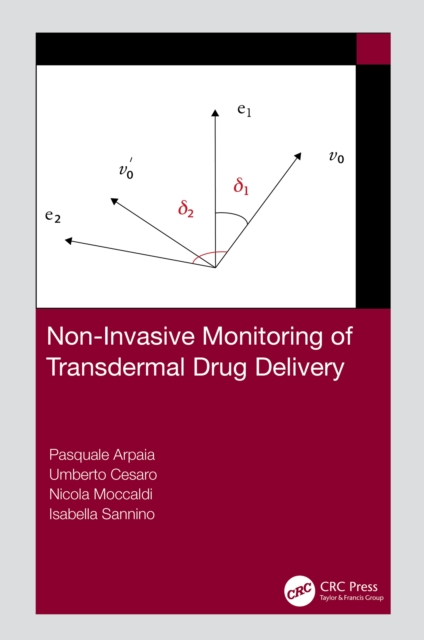
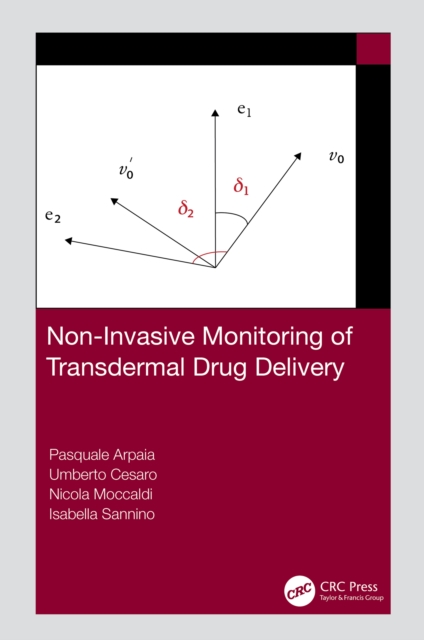
The book presents an innovative technology based on injection of a very weak current to trace the quantity of a drug carried immediately after the administration.
The book presents an innovative technology based on injection of a very weak current to trace the quantity of a drug carried immediately after the administration.
Written specifically for biomedical engineers, Biosignal and Medical Image Processing, Third Edition provides a complete set of signal and image processing tools, including diagnostic decision-making tools, and classification methods.