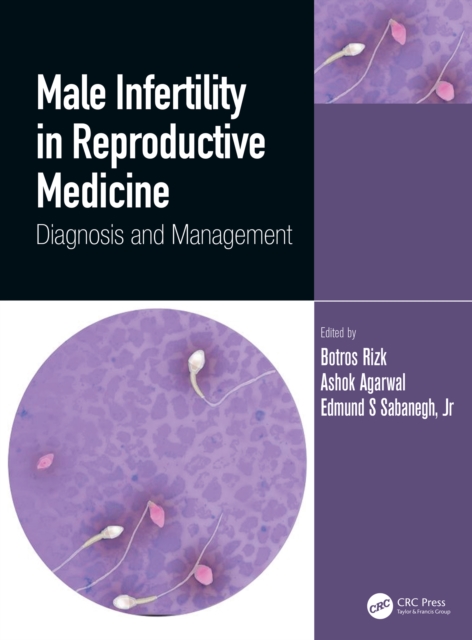
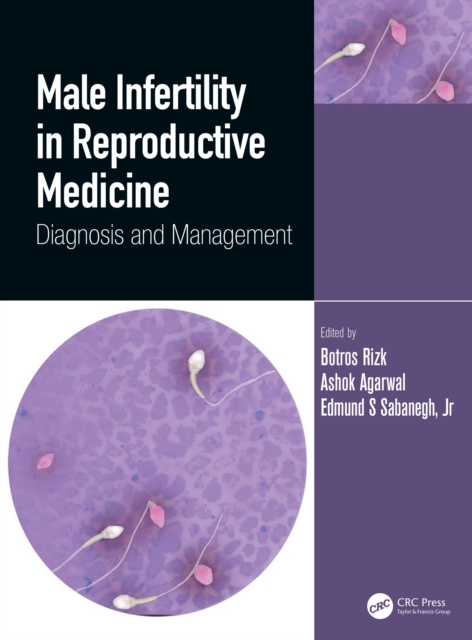
This useful illustrated text summarizes for an audience of clinicians in Reproductive Medicine the practical essentials of what they need to know about diagnosis and management of the infertile male patient, whether they need to instruct or liaise with a colleague or undertake the procedures themselves.
This useful illustrated text summarizes for an audience of clinicians in Reproductive Medicine the practical essentials of what they need to know about diagnosis and management of the infertile male patient, whether they need to instruct or liaise with a colleague or undertake the procedures themselves.
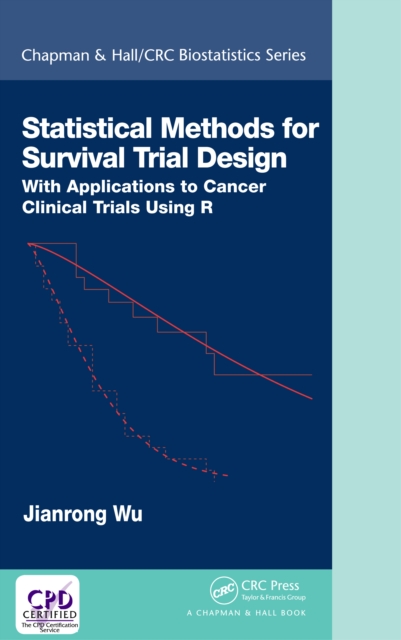
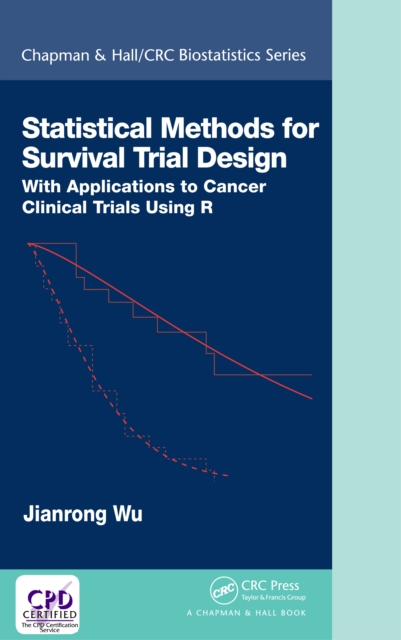
Statistical Methods for Survival Trial Design: With Applications to Cancer Clinical Trials Using R provides a thorough presentation of the principles of designing and monitoring cancer clinical trials in which time-to-event is the primary endpoint.
Statistical Methods for Survival Trial Design: With Applications to Cancer Clinical Trials Using R provides a thorough presentation of the principles of designing and monitoring cancer clinical trials in which time-to-event is the primary endpoint.
Published in 1999, this book discusses issues related to the current and possible future technological progress in genetic technology linked to in vitro fertilization, specifically preimplantation diagnosis and germline gene therapy, from a scientific and medical as well as from a social, juridical and ethical point of view.
Published in 1999, this book discusses issues related to the current and possible future technological progress in genetic technology linked to in vitro fertilization, specifically preimplantation diagnosis and germline gene therapy, from a scientific and medical as well as from a social, juridical and ethical point of view.
Preimplantation genetic testing (PGT) is now well established as a valuable treatment option for patients wishing to start or continue a family, for a range of indications from advanced maternal age to high risk of transmitting inherited disease.
Preimplantation genetic testing (PGT) is now well established as a valuable treatment option for patients wishing to start or continue a family, for a range of indications from advanced maternal age to high risk of transmitting inherited disease.
Advances in medical genetics during the past two decades have made possible the detection and prevention of many genetic disorders and developmental disabilities.
This collection of encyclopedic entries provides a broad-based appreciation of new reproductive technologies that includes accessible technological descriptions and their historical and social contexts.
Advances in medical genetics during the past two decades have made possible the detection and prevention of many genetic disorders and developmental disabilities.
This collection of encyclopedic entries provides a broad-based appreciation of new reproductive technologies that includes accessible technological descriptions and their historical and social contexts.
Pocket Guide to Gene Level Diagnostics in Clinical Practice is an abbreviated, pocket-size, quick-reference guide that provides a point-by-point synopsis of the vast wealth of information contained in CRC Handbook of Gene Level Diagnostics in Clinical Practice.
Ovarian carcinoma continues to be responsible for more deaths than all other gynecologic malignancies combined, due to a continued inability to achieve detection of early (rather than advanced) stage disease and the lack of effective tumor-specific therapeutics.
Advances in genetics are transforming estimates of an individual's risk of developing cancer and approaches to prevention and management of cancer in those who may have increased susceptibility.
Innate immunity is one the most evolutionally conserved systems, designed to protect the organism from viruses and bacterial infections, stress and many other types of attacks from the outside world.
Genomic imprinting refers to a recently discovered phenomenon in which the expression pattern of an allele depends on whether that allele was inherited from the mother or the father.
During the past decades, with the introduction of the recombinant DNA, hybridoma and transgenic technologies there has been an exponential evolution in understanding the pathogenesis, diagnosis and treatment of a large number of human diseases.
While aware of the works of various evolutionists in their dotage (Galton, Wallace, Weismann), initially Bateson is likely to have overlooked Hugo de Vries' Intracellular Pangenesis.
Eukaryotic Membranes and Cytoskeleton: Origins and Evolution discusses the evolutionary origin and diversification of eukaryotic endomembranes and cytoskeleton from a cell biological and comparative genomic perspective.
The Book of Genes & Genomes presents a concise overview of the advances in genetics and genomics and provides the unfamiliar reader with a succinct description of many of the applications and implications of this field.
Genetically-engineered mouse models for cancer research have become invaluable tools for studying cancer biology and evaluating novel therapeutic approaches.
As someone who has spent nearly half his life wondering about the relationship between Helicobacter and gastric cancer, I find this textbook on the subject exciting and timely.
There is now a pressing need to discuss the already described and newly emerging mechanisms to see how they can be put together in more or less cohesive structure and how they can help to improve immune response to tumors.
Information gathered from cell-free systems, cell cultures, animal models, and human studies, together will (1) provide important insights to our understanding of hormonal cancer causation, development, and prevention; (2) be the primary objective of these Symposia.
Each chapter will focus on the known molecular characteristics of specific childhood cancers, focusing on how the molecular 'drivers' can be exploited from a therapeutic standpoint with currently available targeted agents.
This volume draws attention to the seminal studies and important advances that have shaped systematic and biogeographic thinking and continue to influence its direction today.
Immunoinformatics uses mathematics, information science, computer engineering, genomics, proteomics, and immunological methods to bridge immunology and informatics.
Bringing together top-level contributions on all aspects of the subject, this book provides an overview of the recent advances in the genetics of respiratory control in health and disease.
The study of Hox genes is crucial not only in exploring the enigma of homeosis but also in understanding normal development at the fundamental molecular level.