Dieses Buch bietet einen Überblick über die Kryobiologie, einen Teilbereich der biomedizinischen Forschung, der sich seit vielen Jahren mit der Lebenserhaltung durch Kälte beschäftigt.
**Selected for 2026 Doody's Core Titles in Endocrinology/Metabolic Disease**Endocrine Hypertension: From Basic Science to Clinical Practice bridges the gap between scientists and practicing clinicians by providing a comprehensive overview on all forms of endocrine hypertension, covering epidemiological aspects, pathophysiology, clinical presentation, laboratory evaluation and practical management aspects of endocrine hypertension.
This book comprehensively reviews the history of nanotechnology, and describes the physiochemical properties of various nanoparticles and their biomedical applications.
This book provides the first comprehensive account of multilineage-differentiating stress-enduring (Muse) cells, a pluripotent and non-tumorigenic subpopulation of mesenchymal stem cells (MSCs) that have the ability to detect damage signals, migrate to damaged sites, and spontaneously differentiate into cells compatible with the affected tissue, thereby enabling repair of all tissue types.
This book is the first digital atlas of the degu brain with microscopic features simultaneously in Nissl sections and magnetic resonance imaging (MRI).
This book provides accurate, comprehensive, and convenient reference for usages of the "e;freely rotatable three dimensional combined Nissl-stained and MRI digital data of the marmoset brain"e;.
This volume comprises select proceedings of the International Conference on Humanizing Work and Work Environment organized by the Indian Society of Ergonomics.
This book provides a concise yet comprehensive review of the morphological, biochemical, electrical, mechanical, and metabolic properties of vascular smooth muscle, the regulation of vascular activities and the intracellular signaling involved.
This volume of the series Cardiac and Vascular Biology presents the most relevant aspects of vascular mechanobiology along with many more facets of this fascinating, timely and clinically highly relevant field.
The book brings together the current knowledge and future perspectives of the complex physiology and pathophysiology of gut-liver interactions in health and disease.
Vaccines against antigenically stable pathogens, or pathogens that only exist in a limited number of serotypes, have been very successful in the past and have drastically decreased the incidence and lethality of many diseases.
Skin physiology assessment is moving from a descriptive approach to a deeper understanding of biophysical and biochemical processes in the stratum corneum, such as epidermal barrier function and stratum corneum hydration.
In this excellent treatment of the internalism-externalism debate in contemporary epistemology, Richard Fumerton explores its implications for traditional skeptical concerns.
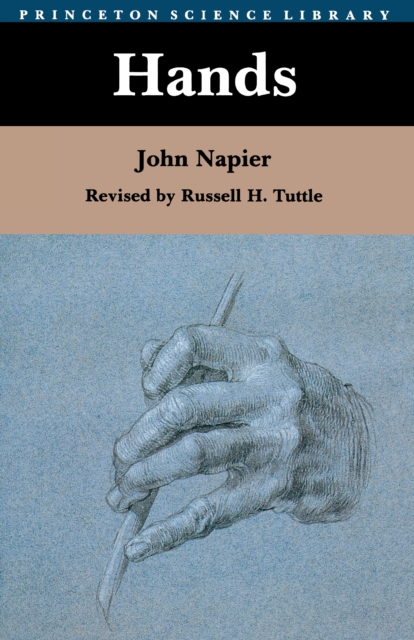
Intended for all readers--including magicians, detectives, musicians, orthopedic surgeons, and anthropologists--this book offers a thorough account of that most intriguing and most human of appendages: the hand.
*A new book in the Basic Concepts series*Explains the fundamental principles of neuroscience and helps students organize and condense the material they need to study*Level of the material progressively builds from simple to complex, enabling mastery of concepts*Content is presented in simple, jargon-free language*Critical need-to-know information is highlights in boxes*Numerous tables and charts help compare and contrast key information
Audience: First and Second year medical students; and Allied Health studentsCell Physiology is essential for medical students as it is the basis for understanding the more complex physiology topics they will eventually need to learnEmphasizes understanding key concepts rather than merely memorizing factsPacked with self-study questions, explicit diagrams, and clinical examplesCurrent and up-to-date basic and clinical science concepts all medical students are required to know
The second edition of Comparative Anatomy and Histology is aimed at the new rodent investigator as well as medical and veterinary pathologists who need to expand their knowledge base into comparative anatomy and histology.
Self-assessment Q&A in Clinical Laboratory Science, III, adds a variety of subject matter that addresses new concepts and emerging technology, particularly in the areas of kidney biomarkers, cancer biomarkers, molecular diagnostics, multiple myeloma, pharmacogenomics, novel cardiovascular biomarkers and biomarkers of neurologic diseases.
Offering a study of biological, biomedical and biocultural approaches, the second edition of Human Growth and Development is a valued resource for researchers, professors and graduate students across the interdisciplinary area of human development.
Handbook of Endourology contains five focused, review-oriented volumes that are ideal for students and clinicians looking for a comprehensive review rather than a whole course.
Percutaneous Surgery of the Upper Urinary Tract: Handbook of Endourology contains five focused, review-oriented volumes that are ideal for students and clinicians looking for a comprehensive review rather than a whole course.
Retrograde Ureteroscopy: Handbook of Endourology contains five focused, review-oriented volumes that are ideal for students and clinicians looking for a comprehensive review rather than a whole course.
Closed Loop Neuroscience addresses the technical aspects of closed loop neurophysiology, presenting the implementation of these approaches spanning several domains of neuroscience, from cellular and network neurophysiology, through sensory and motor systems, and then clinical therapeutic devices.
100 years of Human Chorionic Gonadotropin: Reviews and New Perspectives is a collection of articles written by some of the world's leading experts on the pregnancy hormone and cancer marker hCG.
Our increased understanding of health and disease coupled with major technologic advances has resulted in rapid and significant changes in the practice of medicine.
Clinical Neuroendocrinology, a volume in the Handbook of Clinical Neurology Series gives an overview of the current knowledge in the field of clinical neuroendocrinology.
The question of "e;what is thought"e; has intrigued society for ages, yet it is still a puzzle how the human brain can produce a myriad of thoughts and can store seemingly endless memories.
Diagnostic Molecular Pathology: A Guide to Applied Molecular Testing is organized around disease types (genetic disease, infectious disease, neoplastic disease, among others).