'[Simplicius'] moral interpretation of Epictetus is preserved in the library of nations, as a classic book, most excellently adapted to direct the will, to purify the heart, and to confirm the understanding, by a just confidence in the nature both of God and man.
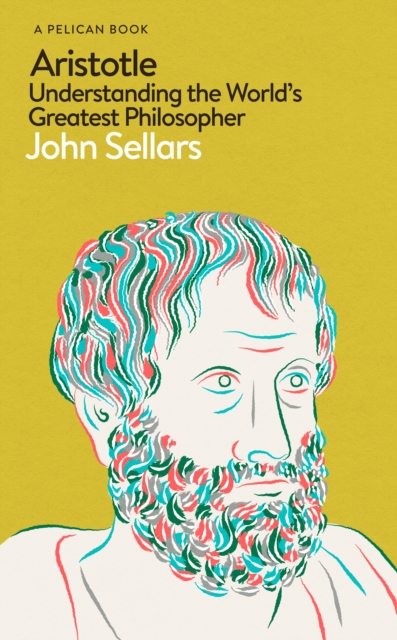
Aristotle described the scientific explanation of universal or general facts as deducing them through scientific demonstrations, that is, through syllogisms that met requirements of logical validity and explanatoriness which he first formulated.
50 years before Philoponus, two Christians from Gaza, seeking to influence Alexandrian Christians, defended the Christian belief in resurrection and the finite duration of the world, and attacked rival Neoplatonist views.
In this part of the Posterior Analytics, Aristotle elaborates his assessment of how universal truths of science can be scientifically explained as inevitable in demonstrative proofs.
The Triumph of the Necrophiles is the product of over forty years of research and is the most thorough, comprehensive, and penetrating critique of the mechanical worldview ever written.
Plato's Euthyrphro, Apology, and Crito portray Socrates' words and deeds during his trial for disbelieving in the Gods of Athens and corrupting the Athenian youth, and constitute a defense of the man Socrates and of his way of life, the philosophic life.
The Essential Greek and Roman Anthology:The Aeneid- Virgil Meditations- Marcus Aurelius Of The Nature of Things- Lucretius Platos Republic Alcestis- Euripides The Electra of Euripides Hippolytus/The Bacchae- Euripides The Iphigenia in Tauris- Euripedes The Trojan women of Euripides Agamemnon- Aeschylus The Choephori- Aeschylus Eumenides- Aeschylus The Persians- Aeschylus Prometheus Bound- Aeschylus The Seven Against Thebes- Aeschylus The Suppliants- Aeschylus The Oedipus Trilogy- Sophocles The Bucolics and Eclogues- Virgil The Satyricon, Complete- Petronius Arbiter The Georgics- Virgil The Metamorphoses of Ovid The Odyssey- Homer The Religion of Numa- Jesse Benedict Carter Hesiod, The Homeric Hymns, and Homerica- Homer and Hesiod Outlines of Greek and Roman Medicine- James Sands Elliott A Short History of Greek Philosophy- John Marshall The Common People of Ancient Rome- Frank Frost Abbott19 BC
This book is a detailed exploration of the Hispanic intellectual context and the different Aristotelian traditions that prevailed until the 16th century.
Ancient Greek Philosophy: From the Presocratics to the Hellenistic Philosophers presents a comprehensive introduction to the philosophers and philosophical traditions that developed in ancient Greece from 585 BC to 529 AD.
Why Plato Wrote argues that Plato was not only the world s first systematic political philosopher, but also the western world s first think-tank activist and message man.
Understanding Plato's Republic is an accessible introduction to the concepts of justice that inform Plato's Republic, elucidating the ancient philosopher's main argument that we would be better off leading just lives rather than unjust ones.
In Plato: All That Matters, Ieuan Williams argues that no one can study philosophy or politics without an awareness of Plato, whose work has reverberated through 2500 years of philosophy and history.
The books in this bite-sized new series contain no complicated techniques or tricky materials, making them ideal for the busy, the time-pressured or the merely curious.