Originally published in 1926, An Introduction to the History of Medicine is a compilation of reliable and essential contributions to the subject of the history of medicine.
Originally published in 1926, An Introduction to the History of Medicine is a compilation of reliable and essential contributions to the subject of the history of medicine.
Originally published in 1941, A History of Medicine provides a detailed and comprehensive guide to the advancement of medicine, from Ancient Egypt, and Ancient Babylonia, all the way up to the 20th century.
Originally published in 1941, A History of Medicine provides a detailed and comprehensive guide to the advancement of medicine, from Ancient Egypt, and Ancient Babylonia, all the way up to the 20th century.
This book is a contribution to the nascent discourse on global health and biomedical research ethics involving Muslim populations and Islamic contexts.
This book is a contribution to the nascent discourse on global health and biomedical research ethics involving Muslim populations and Islamic contexts.
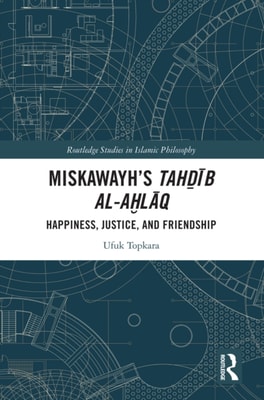
This book engages with the work of Miskawayh, a formative Islamic Philosopher in the 11th century, who is acknowledged as the founder of Islamic Moral Philosophy.
This book engages with the work of Miskawayh, a formative Islamic Philosopher in the 11th century, who is acknowledged as the founder of Islamic Moral Philosophy.
Late antique Corinth was on the frontline of the radical political, economic and religious transformations that swept across the Mediterranean world from the second to sixth centuries CE.
Reveals the secret teachings of the Khwajagan, the Masters of Wisdom of Turkish Sufism *; Provides biographies for the entire lineage of teachers in the Naqshbandi order, such as Yusuf Hamdani, the first recognized Khwajagan, and Baha' al-Din Naqshband, from whom the Naqshbandi order of Sufis took its name *; Shows that this spiritual path focuses on expanding awareness of the heart to reach God-consciousness *; An essential guide for understanding Itlak Yolu, the Sufi path of Absolute Liberation, and fana', Annihilation in God Almost one thousand years ago a new and powerful nexus of spiritual transmission emerged in Central Asia and lasted for five centuries, reaching its culmination in the work of the Khwajagan, or ';Masters of Wisdom.
An exploration of the profound Sufi practice of Itlak Yolu *; Examines the three main facets of this practice: zikr or breathing exercises, fasting, and mental suffering *; Shares new Sufi parables, the sayings of Sufi master Hasan Lutfi Shushud, and Rumi's philosophy on annihilation of the Self *; Reveals how once the Self is annihilated higher levels of perception are reached In this exploration of the profound spiritual practice of Itlak Yolu, the Sufi path of annihilation, Nevit Ergin examines the three main facets of this path: zikr or breathing exercises, fasting, and mental suffering.
An original study of the transformation of Safavid Persia from a majority Sunni country to a Twelver Shi'i realm"e;Mysticism"e; in Iran is an in-depth analysis of significant transformations in the religious landscape of Safavid Iran that led to the marginalization of Sufism and the eventual emergence of 'irfan as an alternative Shi'i model of spirituality.
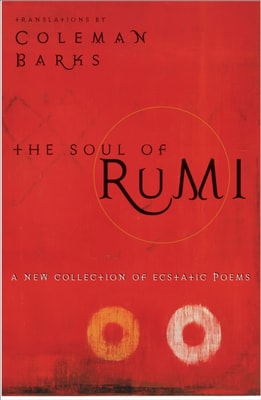
The first collection of poems translated into English from the forbidden volume of the Divan of Rumi*; Presents Rumi's most heretical and free-form poems*; Includes introductions and commentary that provide both 13th-century context and modern interpretationAfter his overwhelming and life-altering encounters with Shams of Tabriz, Rumi, the great thirteenth-century mystic, poet, and originator of the whirling dervishes, let go of many of the precepts of formal religion, insisting that only a complete personal dissolving into the larger energies of God could provide the satisfaction that the heart so desperately seeks.
The first English translation of the rubais of Rumi *; Presents 233 of the most evocative of Rumi's 1,700 rubais *; Shows that the mystical embrace is the way to directly experience the Divine Rumi is well known for the over 44,000 verses that appear in a 23-volume collection called the Divan-i Kebir.
The secret Rumi found in beholding the Divine in his sacred relationship with Shams-i-Tabriz *; Shows how, in 1244, Sufi poet and mystic Jalaluddin Rumi was first brought to a state of ecstatic union with the cosmos and all its creatures *; Reveals the radical spiritual practice Rumi formulated in his private retreat with the mendicant seeker Shams-i-Tabriz *; Uses the poetry and prose of Rumi to explain how to come face-to-face with the Divine One of the most extraordinary events in the history of Sufism occurred in 1244 when the Sufi poet and mystic Jalaluddin Rumi met a wandering seeker named Shams-i-Tabriz.
Poems and commentary that open the door for a new generation to experience the ecstatic and embodied spiritual truths contained in Rumi's poetry *; Reveals how the four practices of eating lightly, breathing deeply, moving freely, and gazing intently can invoke the divinity within us all *; Explains how these practices dissolve the self's need for identity so that we may experience a state of transcendent ecstasy and union with the divine *; Takes Rumi's path to finding God from theoretical to embodied practices The great thirteenth-century Sufi mystic and poet Jalaluddin Rumi began his life as an orthodox Islamic believer but felt that to fully experience complete union with the divine he must abandon institutionalized religion and its prescribed forms of worship.
How the Ottomans refashioned and legitimated their rule through mystical imageries of authorityThe medieval theory of the caliphate, epitomized by the Abbasids (750-1258), was the construct of jurists who conceived it as a contractual leadership of the Muslim community in succession to the Prophet Muhammed's political authority.
As the specter of religious extremism has become a fact of life today, the temptation is great to allow the evil actions and perspectives of a minority to represent an entire tradition.
An award-winning sociologist's "e;fascinating and excellent"e; history of the origins of the great religions from the Stone Age to the Modern Age (Newsweek).
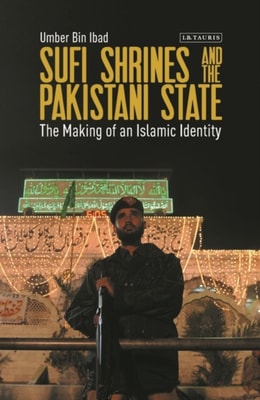
Throughout the Middle East, and in the west as well, there has been much discussion concerning the notion of Islamic rule and the application of shari'ah by the state.
The eruption of violent sectarianism in Iraq following the US invasion in 2003 brought the question of Sunni-Shi'i relations in the country to the forefront of the international public agenda.
From antiquity to the early modern period, many philosophers also studied anatomy and medicine, or were medical doctors themselves -- yet the history of philosophy and of medicine are pursued as separate disciplines.
An accessible and accurate translation of the Quran that offers a rigorous analysis of its theological, metaphysical, historical, and geographical teachings and backgrounds, and includes extensive study notes, special introductions by experts in the field, and is edited by a top modern Islamic scholar, respected in both the West and the Islamic world.
This book focuses on women's important contribution to Sufism by analyzing the lives and seminal contributions of six mystic Sufi women to Islamic spirituality.
Be Equipped to Interact More Fruitfully and Thoughtfully with MuslimsThe Quran with Christian Commentary offers a unique introduction to the primary religious text of Islam.
Recentering the Sufi Shrine is a study of ritual, Sufi eschatology, and vernacular theopoetics of pilgrimage to Sufi shrines in the Indus region of Pakistan.
This mirror for princes sheds light on the relationship between spiritual and political authority in early modern Egypt This guide to political behavior and expediency offers advice to Sufi shaykhs, or spiritual guides, on how to interact and negotiate with powerful secular officials, judges, and treasurers, or emirs.
A game-theoretical analysis of interactions between a human being and an omnipotent and omniscient godlike being highlights the inherent unknowability of the latter''s superiority.
The Ahmadiyya Muslim community represents the followers of Mirza Ghulam Ahmad (1835-1908), a charismatic leader whose claims of spiritual authority brought him into conflict with most other Muslim leaders of the time.