Locke and Leibniz on Substance gathers together papers by an international group of academic experts, examining the metaphysical concept of substance in the writings of these two towering philosophers of the early modern period.
Locke and Leibniz on Substance gathers together papers by an international group of academic experts, examining the metaphysical concept of substance in the writings of these two towering philosophers of the early modern period.
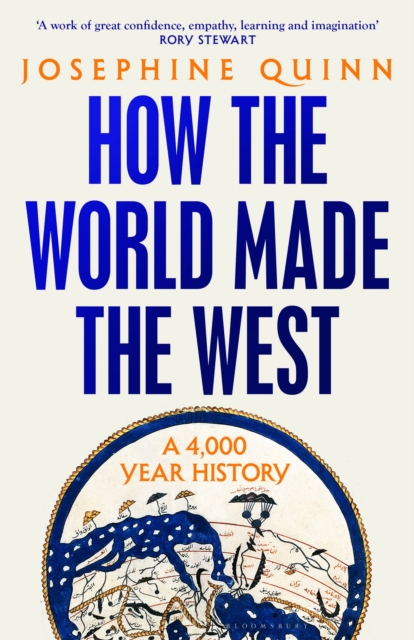
A BOOK OF THE YEAR FOR: The Times/Sunday Times, Observer, Economist, Guardian, BBC History Magazine, i-paper, Novara Media and History Today'Quinn has done a lot more than reinvent the wheel.
The primary concern of this study is to present, elucidate and analyse the developments which have characterized the sociology of knowledge, and which have set for it the outlines of its major problematics.
The primary concern of this study is to present, elucidate and analyse the developments which have characterized the sociology of knowledge, and which have set for it the outlines of its major problematics.
In this book, Bryan Wesley Hall breaks new ground in Kant scholarship, exploring the gap in Kant's Critical philosophy in relation to his post-Critical work by turning to Kant's final, unpublished work, the so-called Opus Postumum.
In this book, Bryan Wesley Hall breaks new ground in Kant scholarship, exploring the gap in Kant's Critical philosophy in relation to his post-Critical work by turning to Kant's final, unpublished work, the so-called Opus Postumum.
This volume responds to the growing interest in finding explanations for why moral claims may lose their validity based on what they ask of their addressees.
This volume responds to the growing interest in finding explanations for why moral claims may lose their validity based on what they ask of their addressees.
Adam Smith's contribution to economics is well-recognised, but in recent years scholars have been exploring anew the multidisciplinary nature of his works.
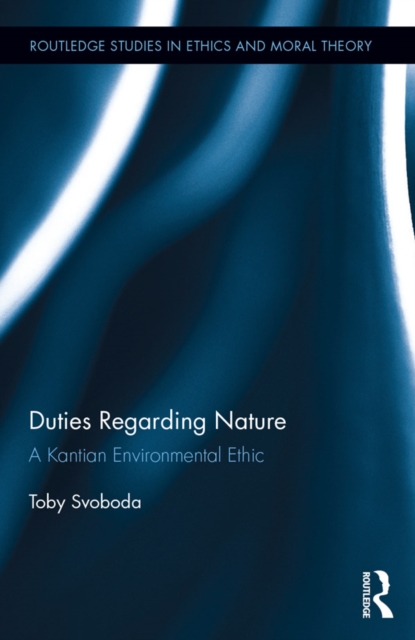
In this book, Toby Svoboda develops and defends a Kantian environmental virtue ethic, challenging the widely-held view that Kant's moral philosophy has little to offer environmental ethics.
In this book, Toby Svoboda develops and defends a Kantian environmental virtue ethic, challenging the widely-held view that Kant's moral philosophy has little to offer environmental ethics.
Kant's Inferentialism draws on a wide range of sources to present a reading of Kant's theory of mental representation as a direct response to the challenges issued by Hume in A Treatise of Human Nature.
Kant's Inferentialism draws on a wide range of sources to present a reading of Kant's theory of mental representation as a direct response to the challenges issued by Hume in A Treatise of Human Nature.
Gonthier sets Montesquieu's work in the context of early eighteenth-century Anglo-French relations, taking a comparative approach to show how Montesquieu's engagement with English thought and writing persisted throughout his writing career.
Gonthier sets Montesquieu's work in the context of early eighteenth-century Anglo-French relations, taking a comparative approach to show how Montesquieu's engagement with English thought and writing persisted throughout his writing career.
The first important scholarly consideration of Enlightenment historiography of the twentieth century, this book, originally published in 1926, critically examines the ideas of Voltaire, Hume, Robertston and Gibbon with respect to the theory and practice of historiography.
The first important scholarly consideration of Enlightenment historiography of the twentieth century, this book, originally published in 1926, critically examines the ideas of Voltaire, Hume, Robertston and Gibbon with respect to the theory and practice of historiography.
Sensibility in the Early Modern Era investigates how the early modern characterisation of sensibility as a natural property of the body could give way to complex considerations about the importance of affect in morality.
Sensibility in the Early Modern Era investigates how the early modern characterisation of sensibility as a natural property of the body could give way to complex considerations about the importance of affect in morality.
In this book, Stephen Acreman follows the development and reception of a hitherto under-analyzed concept central to modern and postmodern political theory: the Kantian ein erweiterte Denkungsart, or enlarged mentality.
This is an updated edition of John Cottingham''s acclaimed translation of Descartes''s philosophical masterpiece, including an abridgement of Descartes''s Objections and Replies.
This is an updated edition of John Cottingham''s acclaimed translation of Descartes''s philosophical masterpiece, including an abridgement of Descartes''s Objections and Replies.