The thesis of this book, first published in 1972, is that Kant's notions of 'absolute worth', the 'unconditioned' and 'unconditioned worth' are rationalistic and confused, and that they spoil his ontology of personal value and tend to subvert his splendid idea of the person as an End in himself.
This book, first published in 1951, is an examination of Hume's 'Treatise of Human Nature', 'An Enquiry Concerning the Principles of Morals', and 'An Enquiry Concerning Human Understanding'.
This book, first published in 1987, offers a reconstruction of Berkeley's doctrine on notions by examining the implications of his repeated suggestion that there is a close relationship between his doctrine and his semantic theory.
This book, first published in 1931, provides a valuable account of Rousseau's early years, giving an insight into his later philosophies, as well as showing the development of his thought.
This edition of George Berkeley's Philosophical Commentaries, first published in 1989, provides an accurate transcription of Berkeley's manuscript, and introduction to set it in perspective, extensive notes to aid in interpreting it, and a full index to facilitate the use of it.
This book, first published in 1974, studies the similarities between Rousseau's thought and that of the Stoics, examining Rousseau's ideas on man, society, the state and government.
This book, first published in 1935, is an examination of Hume's theories of causal inference and belief in substance and his analysis of the understanding.
This book, first published in 1935, is an examination of Hume's theories of causal inference and belief in substance and his analysis of the understanding.
Published in 1938: The new volume presents a full and profusely illustrated account of progress made during the eighteenth century in Mathematics, Mechanics, Astronomy, Physics, Meteorology, Geography, Chemistry, Biology, Medicine, Psychology, Demography, Economics, Philosophy, and Technology.
Published in 1938: The new volume presents a full and profusely illustrated account of progress made during the eighteenth century in Mathematics, Mechanics, Astronomy, Physics, Meteorology, Geography, Chemistry, Biology, Medicine, Psychology, Demography, Economics, Philosophy, and Technology.
Kant's Religion Within The Bounds of Mere Reason was written late in his life, following his most famous works including Critique of Pure Reason and Groundwork of Metaphysics of Morals.
Briefly: Kant's Groundwork of the Metaphysics of Morals is a summarized version of Immanual Kant's original treatsie, which is designed to assist university and sixth-form students in acquiring knowledge and understanding of this key text.
Kant's Critique of Practical Reason (1788) is one of his most important works and a key text to understanding Kant's philosophy and it the impact it had on later developments of moral philosophy and ethics.
The SCM Briefly series is made up of short, accessible volumes which summarize books by philosophers and theologians, books that are commonly used on theology and philosophy A level (school leaving) and Level One undergraduate courses.
Briefly: Hume's Dialogues is a summarized version of David Hume's Dialogues Concerning Natural Religion, which is designed to assist university and sixth-form students in acquiring knowledge and understanding of this key text in the Philosophy of Religion.
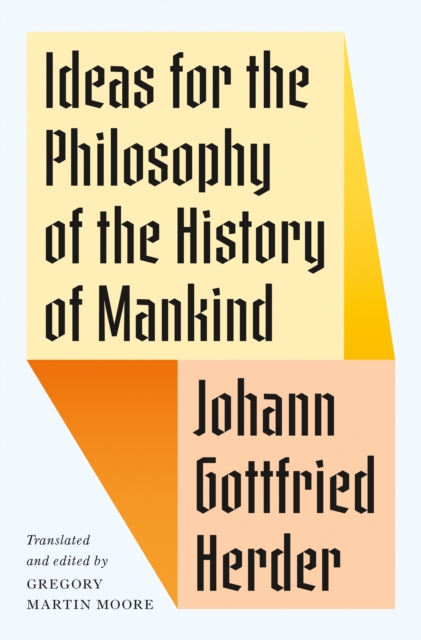
One of the most important works of the Enlightenmentin the first new, unabridged English translation in more than two centuriesPublished in four volumes between 1784 and 1791, Herder's Ideas for the Philosophy of the History of Mankind is one of the most important works of the Enlightenmenta bold, original, and encyclopedic synthesis of, and contribution to, the era's philosophical debates over nature, history, culture, and the very meaning of human experience.
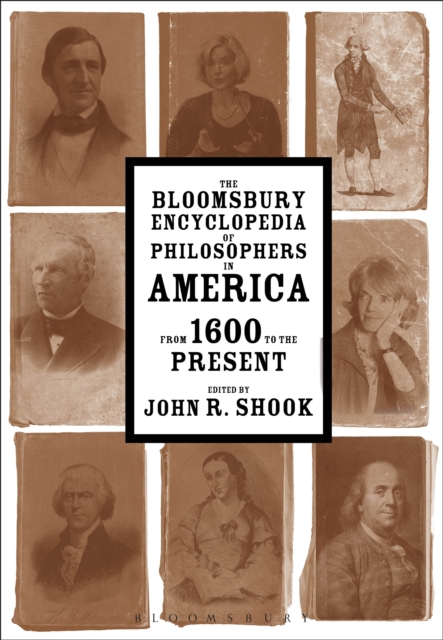
For scholars working on almost any aspect of American thought, The Bloomsbury Encyclopedia to Philosophers in America presents an indispensable reference work.
For scholars working on almost any aspect of American thought, The Bloomsbury Encyclopedia to Philosophers in America presents an indispensable reference work.
The seventeenth-century philosopher Spinoza was expelled from the Jewish community of Amsterdam the age of twenty-four for 'horrendous heresies', and was eventually reviled by all religious authorities for claiming that human beings are parts of a single, unified nature, that God is identical with nature, and that reason, not revelation, supplies the truth of any aspect of God.
Between Two Worlds is an authoritative commentary on--and powerful reinterpretation of--the founding work of modern philosophy, Descartes's Meditations.
Unnerved by the upheavals of the seventeenth century, English writers including Thomas Hobbes, Richard Blackmore, John Locke, Jonathan Swift, and Daniel Defoe came to accept that disorder, rather than order, was the natural state of things.
In the late Enlightenment, a new imperative began to inform theories of interpretation: all literary texts should be read in the same way that we read the Bible.
The unlikely story of how Americans canonized Adam Smith as the patron saint of free marketsOriginally published in 1776, Adam Smith's The Wealth of Nations was lauded by America's founders as a landmark work of Enlightenment thinking about national wealth, statecraft, and moral virtue.
Demystifying the key ideas of the world's greatest philosophers, and exploring all of the most important branches of thought including philosophy of science, philosophy of religion and feminist philosophy in a uniquely visual way, this ebook is the perfect introduction to the history of philosophy.
'The best single-volume study of the Enlightenment that we have' Literary ReviewThe Enlightenment is one of the formative periods of Western history, yet more than 300 years after it began, it remains controversial.